Scotch Creek Ventures: A Desperation Play with No Skin in the Game and a Dilution Trap Looming
Scotch Creek Ventures is operating on a shoestring. The company's financial position is so tight that its own website lists "Financial position" as a "New major risk" for the third time in recent months. This isn't just a cautionary note; it's the core reality of a business scrambling to stay afloat. The most recent lifeline came in February 2025, when it closed a first tranche of a private placement by issuing 4.33 million units at four cents per unit for gross proceeds of just $173,200. The money was earmarked to retire debt and fund operations-a classic sign of a company using new capital to pay old bills.
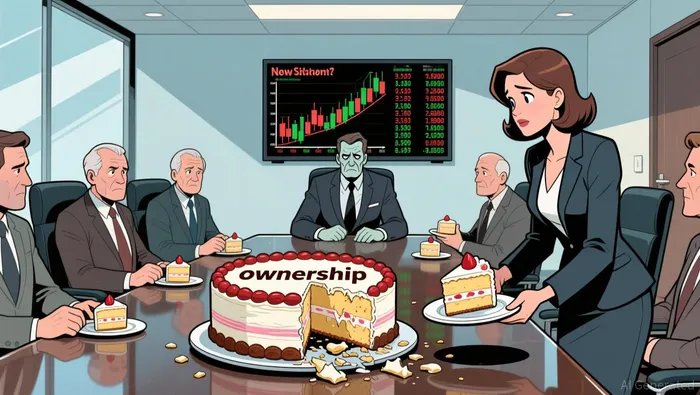
The cost of this survival move was steep. The issuance of those 4.33 million units represents a massive dilution for existing shareholders. In the past year, total shares outstanding have grown by 45.9%. That kind of expansion in the share count is a direct hit to the value of every existing stake. It's a desperate tactic, but one that tells you how little room for error the company has.
Adding to the vulnerability is a complete absence of institutional oversight. The company is covered by 0 analysts, meaning there's no external financial scrutiny or research to lend credibility to its story. This vacuum often attracts speculative interest, not smart money. The leadership's own alignment is equally weak. CEO David Ryan's ownership stake is just 2.8%, and his total compensation is CA$120,000. That's a modest salary for a CEO of a public company, especially one facing such severe financial strain. When the skin in the game is this thin, it's hard to argue the leadership has much to lose if the stock crashes.
The Smart Money Signal: What Insiders Are Actually Doing
| Total Trade | 0 |
| Winning Trades | 0 |
| Losing Trades | 0 |
| Win Rate | 0% |
| Average Hold Days | 0 |
| Max Consecutive Losses | 0 |
| Profit Loss Ratio | 0 |
| Avg Win Return | 0% |
| Avg Loss Return | 0% |
| Max Single Return | 0% |
| Max Single Loss Return | 0% |
More telling is the CEO's own stake. David Ryan's ownership is just 2.8%. That's a tiny slice of the company, especially for a CEO leading a public firm through a financial crisis. When the skin in the game is this thin, the alignment of interest with shareholders is fundamentally broken. His total compensation of CA$120,000 is modest, but the real cost of his position is the dilution he's presiding over. With shares outstanding having grown by 45.9% in the past year, his personal wealth is being eroded just like everyone else's.
The pattern of funding rounds confirms the persistent capital needs. In recent months, the company has announced receiving CAD 0.3 million, CAD 0.41 million, and CAD 0.24 million in funding. These are not large, transformative infusions. They are a series of small, stop-gap measures to keep the lights on. This is the classic setup for a trap: a company that can't fund itself, relying on a constant stream of tiny private placements to avoid default. The smart money stays away from such setups. They see the dilution, the thin ownership, and the lack of a credible path to profitability. For now, the only money moving is the company's own, being used to pay for its survival.
Catalysts and Risks: What Could Break the Stalemate
The stalemate hinges on one thing: a major discovery at its Clayton Valley lithium projects. That's the only real catalyst that could change the narrative. The company has a 100% interest in two lithium projects in Nevada's lithium hotspot, and recent work has identified lithium-enriched sandstone. A significant find could spark a new round of investor interest and potentially unlock a larger capital raise. But here's the catch: the company lacks the capital for significant exploration. Its recent funding rounds have been small, stop-gap measures. Without a major discovery, the next exploration push is likely beyond its means.
The major risk is continued dilution. The company has already shown it can't fund itself, relying on a constant stream of tiny private placements. The next tranche could further erode shareholder value, especially if insiders aren't buying. The pattern of funding rounds-CAD 0.3 million, CAD 0.41 million, CAD 0.24 million-shows a company in a cycle of survival financing. Each new placement is a vote of no confidence from the broader market, forcing the company to sell more shares at potentially lower prices to cover basic costs. This is the classic trap: a company that can't fund its own growth or exploration, so it dilutes shareholders to pay for its existence.
The only potential contrarian signal would be a shift in insider behavior. The current data shows insufficient data to determine if insiders have bought more shares than they have sold. That blank page is telling. If we see a clear pattern of insider accumulation in the coming months, it could be a sign that someone with inside knowledge sees value in the current price. More specifically, watch for any change in the CEO's ownership percentage. David Ryan's ownership stake is just 2.8%. If he were to buy shares personally, it would be a rare vote of confidence from the top. For now, the smart money is staying away. The setup is simple: a company with a valuable asset but no cash to develop it, relying on dilution to survive. The catalyst is a discovery; the risk is more dilution. Watch the filings, not the hype.





