
BNB Update: BNB Climbs While YZi Labs Fights to Recover from CEA's 92% Share Drop
- YZi Labs, led by Binance's Zhao, seeks to oust CEA Industries (BNC) leadership over poor governance and a 92% stock plunge. - The proposal includes board expansion, bylaw repeal, and installing nominees to address operational failures and CEO loyalty concerns. - CEA's mNAV ratio at 0.79x highlights undervaluation despite BNB's 17.8% YTD gains, intensifying scrutiny of crypto treasury strategies. - With 5% ownership, YZi Labs' board changes could trigger leadership overhaul, impacting investor confidence
YZi Labs Moves to Take Over CEA Industries Amid Management Criticism
YZi Labs, the investment firm established by Binance founder Changpeng Zhao, has initiated a campaign to gain control of CEA Industries, a publicly listed company with a substantial BNB treasury. This action comes in response to accusations of ineffective leadership and diminishing returns for shareholders.
In a recent regulatory submission, YZi Labs outlined its intention to expand the company’s board, reverse recent amendments to corporate bylaws, and appoint its own candidates. The firm contends that the current management has not adequately addressed operational issues or the company’s lagging market performance. Should YZi Labs succeed, it would secure significant influence over CEA Industries—a company it previously supported with a $500 million private investment in public equity (PIPE) in August 2025.
CEA Industries, now operating under the name BNB Network, has experienced a dramatic decline in its share price, falling nearly 92% from a July high of $82.88 to just $6.47 as of Monday. This sharp drop stands in contrast to the performance of BNB, which, despite a 40% decrease from its October peak of $1,367 to $829, remains up 17.8% for the year, significantly outperforming CEA’s stock, according to recent analysis.

YZi Labs attributes the company’s poor stock performance to delayed communications with investors, insufficient marketing, and the CEO’s alleged support for rival digital asset treasuries. The regulatory filing singles out CEO David Namdar, who also serves as an executive at 10X Capital, criticizing his commitment to CEA and highlighting his involvement in other crypto treasury ventures.
This dispute highlights ongoing challenges within the cryptocurrency sector, where institutional treasury management strategies are under increased scrutiny due to market volatility. CEA’s shift toward a BNB-centric approach was initially praised for offering transparent access to the Binance ecosystem, but YZi Labs claims the strategy has not been executed effectively. The company’s market net asset value (mNAV) ratio has dropped to 0.79x, reflecting a growing gap between its share price and the value of its crypto assets. Meanwhile, BNB’s recent decline to a three-month low has intensified calls for governance reform at CEA, with YZi Labs stressing the need for swift board changes to protect shareholder interests.
For YZi Labs’ proposals to be implemented, they must receive approval from a majority of outstanding shareholders. The firm currently owns 5% of CEA’s stock. If the measures pass, the new board could bring about significant leadership changes, including the possible replacement of Namdar. As of now, CEA Industries has not issued a response to the allegations or the proposed changes. The resolution of this governance dispute is expected to have a significant impact on investor sentiment toward BNB-based treasuries, an area that is attracting increasing attention from institutions seeking diversified exposure to digital assets, according to market analysts.
Disclaimer: The content of this article solely reflects the author's opinion and does not represent the platform in any capacity. This article is not intended to serve as a reference for making investment decisions.
You may also like
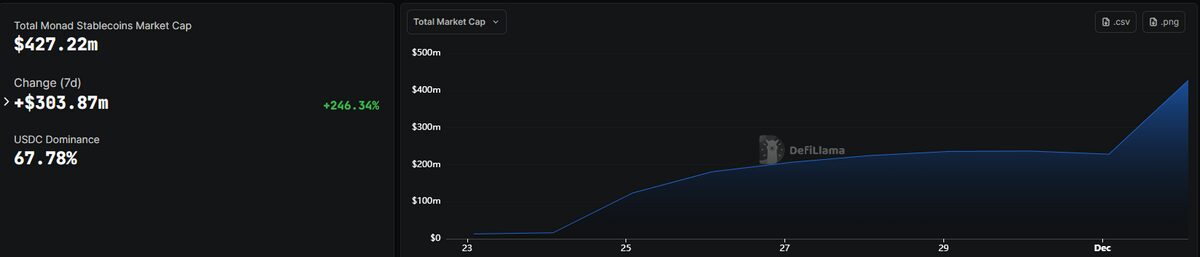
Transak Joins Monad, Unlocking Global MON Access
Astar 2.0's Market Rally and Growing Institutional Interest: Evaluating the Long-Term Strategic Impact for Cryptocurrency Investors
- Astar 2.0's 2025 market surge driven by cross-chain tech and partnerships with Sony/Animoca Brands. - Institutional $3.16M ASTR acquisition and 4.32% inflation reduction via tokenomics reforms. - Governance shifts to community council and regulatory clarity boost institutional trust. - Projected $0.80–$1.20 ASTR price by 2030, contingent on roadmap execution and macro risks.

BitMine Invests $70M in Ethereum Despite Market Crash
ZK Atlas Upgrade: Transforming DeFi with Enhanced On-Chain Scalability
- ZKsync's 2025 Atlas Upgrade introduces ZKPs and modular architecture, enabling 15,000-43,000 TPS with $0.0001 proof costs, addressing DeFi scalability challenges. - Full EVM compatibility and 70% lower gas fees attracted Deutsche Bank/UBS for asset tokenization, while TVL surged to $28B with $15B in Bitcoin ETF inflows. - ZK token value rose 50% post-upgrade, supported by deflationary mechanics, as analysts project 60.7% CAGR for ZK Layer-2 solutions through 2031. - Upcoming Fusaka upgrade (Dec 2025) aim
Trending news
MoreCrypto prices
More






