Bitget unified trading account (UTA) explained: what is UTA? How can UTA significantly improve capital efficiency?
What is Bitget unified trading account (UTA)?
Bitget unified trading account (UTA), is Bitget's next-generation trading infrastructure designed to solve common issues in traditional crypto trading, such as fragmented accounts, frequent fund transfers, and low capital efficiency. It integrates multiple trading products, including spot, margin, and futures, including USDT-M, USDC-M, and Coin-M futures, into a single account, using a shared fund pool for unified management and risk control.
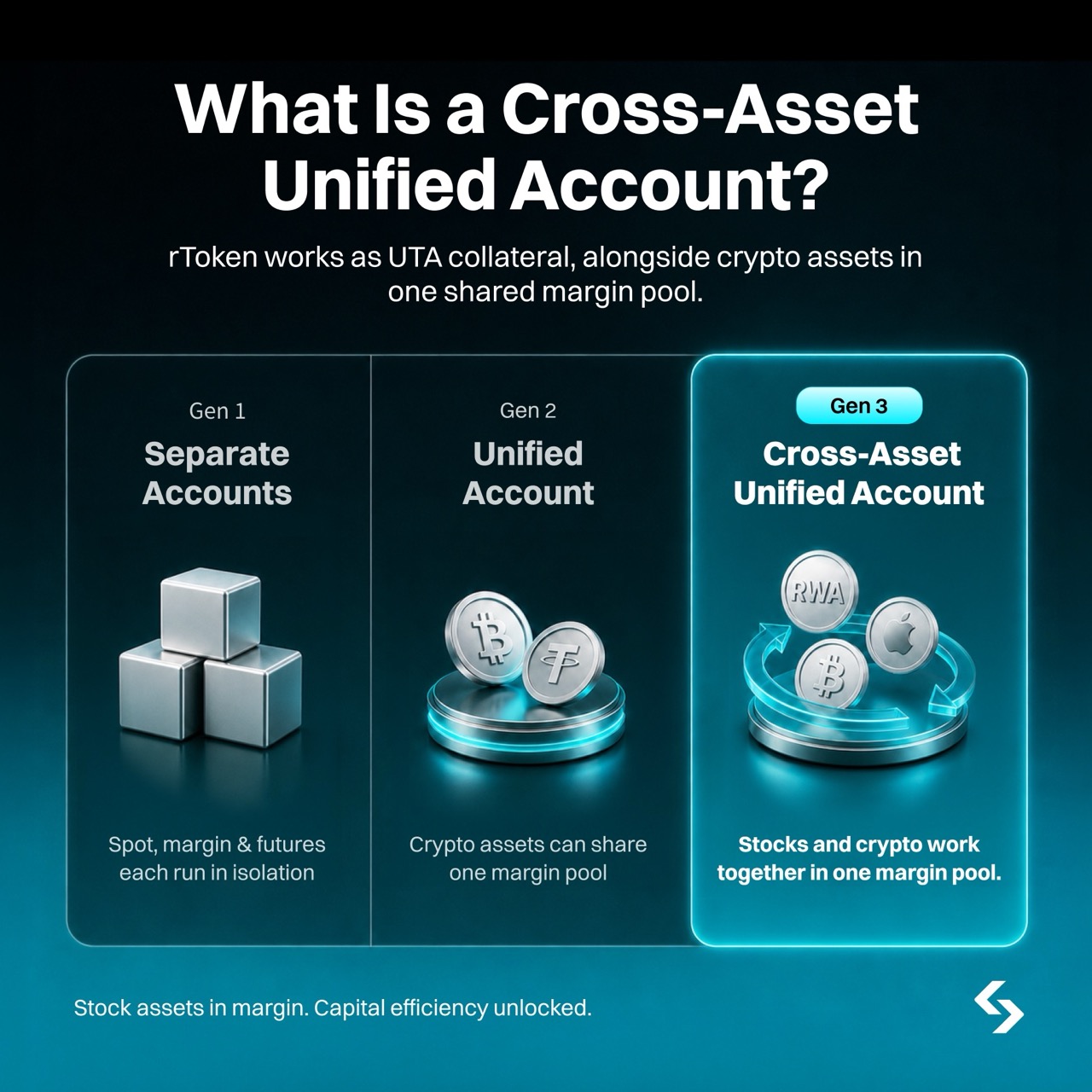
Key differences between UTA and classic accounts
| Aspect |
Classic account |
Unified trading account (UTA) |
| Account structure |
Separate sub-accounts for spot, margin, and futures |
One account with a shared fund pool |
| Fund transfers |
Frequent manual transfers required |
No transfers required; assets are managed together |
| Margin system |
Separate margin for each product |
Multi-asset unified margin, calculated by collateral ratio |
| PnL handling |
Each product is settled separately |
PnL across products offsets in real time |
| Capital efficiency |
Lower, with idle funds more likely |
Significantly higher, with funds reused across products |
| Risk control |
More fragmented and harder to manage |
Unified view and layered risk control for greater efficiency |
| Eligibility |
Beginners or users with simple trading needs |
Intermediate and advanced traders seeking efficiency and flexibility |
Three account modes supported by Bitget UTA
| Account mode |
Main features |
Tradable products |
Margin support |
Best for |
| Isolated margin |
Fully isolated risk |
Spot + isolated futures |
Multi-asset unified collateral not supported |
Strict control of single-position risk |
| Basic mode |
Improved efficiency with shared stablecoin margin |
Spot + USDT/USDC isolated futures |
Shared USDT/USDC pool |
Entry-level efficient trading |
| Advanced mode |
Highest capital efficiency with cross-asset hedging |
Spot/margin + all types of futures |
Multi-asset collateral with collateral ratio + advanced risk control |
Professional traders and complex strategies |
Bitget UTA's unique technical mechanisms
-
Coin collateral ratio: Different assets are assigned different weights based on liquidity, volatility, and risk profile. For example, highly liquid assets usually have a higher collateral rate, which determines how much effective margin they can contribute.
-
Auto-borrow: Assets can be borrowed automatically when needed for positions. A certain interest-free quota may apply, with tiered interest charged beyond the quota.
-
Layered risk control: UTA uses multi-layer risk controls, reducing the chance that volatility in a single product causes instant liquidation of the entire account.
-
Unified PnL calculation: Profits and losses across products are combined in real time, improving overall account health.
Upgrade requirements and notes: Account equity is generally required to be at least $1000, subject to the platform's latest rules. Main accounts can switch back to classic mode, while sub-accounts cannot switch back once upgraded. Note: Some voucher functions may be restricted after the upgrade.
How to use UTA to improve capital efficiency? (Using rToken as an example)
rToken is a core product of Bitget Stocks 2.0, issued by Reality Protocol. Each rToken, such as rTSLA, rNVDA, rAAPL, rSPY, and rQQQ, corresponds to a specific U.S. stock or ETF. It uses a 1:1 economic mapping, trades in USDT, connects to real NYSE/Nasdaq liquidity, supports dividends paid in stablecoins, and offers 24/7 trading flexibility for selected assets.
UTA now supports rToken trading under cross margin mode, greatly improving capital efficiency.
Practical examples:
1. Shared fund pool for multiple uses
-
Suppose you hold USDT or other supported assets. In UTA advanced mode, these assets can be used directly as margin for futures trading and can also be used to buy rToken stocks, such as rNVDA.
-
No transfers are required. Profits from selling rTokens can be used immediately to open futures positions, and vice versa. In a classic account, this would require multiple transfers, creating idle funds and opportunity costs.
2. Cross-asset hedging and arbitrage
-
While holding a long rToken position, you can use part of your funds in UTA to open a corresponding short crypto futures position, or vice versa, to achieve delta neutrality or hedge risk.
-
rTokens can be used as margin, based on their collateral ratio, allowing you to use stock assets to support margin trading and maximize the value of your holdings.
3. Strategy trading and automation
-
rTokens can be used with tools such as grid trading, copy trading, and Crypto Loans. In UTA, these strategies share the same margin pool, improving fund utilization.
-
For example, you can buy and hold rTSLA with USDT while using funds in the shared UTA pool to run futures strategies. Profits and losses are settled together, without fragmented account management.
4. 24/7 flexibility and liquidity
-
rTokens combine the 24/7 trading features of crypto platforms with real stock market liquidity, allowing you to adjust positions flexibly even when the U.S. stock market is closed.
-
UTA's unified management reduces delays and costs across platforms or accounts, further improving efficiency.
Real efficiency comparison:
-
Classic account: After buying rTokens, funds are locked in the stock spot section. If you want to trade futures, you need to transfer funds, which may delay execution and create hidden opportunity costs.
-
UTA + rToken: One shared fund pool supports stock holdings, derivatives leverage, and automated strategies. Capital efficiency can increase severalfold, risk is more diversified, and operations are smoother.
Usage tips and risk reminder
-
Getting started: Upgrade to basic or advanced mode first, and become familiar with margin calculations and collateral ratio. Start by testing rToken trades with small amounts, then gradually build your portfolio.
-
Use platform tools: Pay attention to account mode switching, risk indicators, and borrowing details in the Bitget app. Use official tutorials to learn advanced features.
-
Risk management: Both crypto and stock markets can be highly volatile, and margin trading amplifies risk. Set reasonable stop-loss levels, diversify your assets, and avoid excessive leverage.
-
Stay updated: Check platform updates regularly, as supported rToken assets and UTA features are still expanding.
Final thoughts: Bitget UTA is a key step toward becoming a Universal Exchange. It breaks down account barriers and allows capital to move more efficiently. Together with innovative products such as rToken, users can efficiently allocate crypto and traditional stock assets on a single platform, unlocking greater capital return potential and a more convenient global investing experience.


- What is Bitget unified trading account (UTA)?
- How to use UTA to improve capital efficiency? (Using rToken as an example)
- Usage tips and risk reminder