
Public Statements Weaken Sun's Cryptocurrency Privacy Case, Court Decides
- U.S. court dismissed Justin Sun's lawsuit against Bloomberg over crypto portfolio disclosure, ruling no confidentiality breach or safety risks. - Judge highlighted Sun's prior public disclosures of Bitcoin holdings, undermining his privacy claims about $3B+ crypto assets. - Bloomberg denied confidentiality assurances, with court finding no evidence of agreements to withhold Sun's TRX, BTC, ETH, and USDT holdings. - Ruling emphasizes crypto privacy challenges for public figures, setting potential preceden

A U.S. federal judge has rejected
Court documents showed that Bloomberg’s article referenced estimates of Sun’s crypto assets: 60 billion Tron (TRX), 17,000
Bloomberg’s legal representatives refuted any claims of confidentiality, with journalist Muyao Shen and her team maintaining that no such assurances were given. The court found no proof in chat records or sworn statements to back Sun’s assertion of a confidentiality deal. Judge Connolly also determined that publishing Sun’s crypto holdings was not “objectively offensive,” especially since the data was less detailed than what Sun himself had made public. The judge further dismissed Sun’s claim that the disclosure would increase his risk of being targeted, noting that his own public statements lessened such concerns.
This decision adds to the ongoing examination of Sun’s business practices and legal challenges. The Tron founder is also involved in a 2023 lawsuit brought by the U.S. Securities and Exchange Commission (SEC) over alleged unregistered securities sales. That case was put on hold after President Donald Trump took office, following a request from the SEC. At the same time, Sun has invested in crypto projects linked to Trump, such as
The court’s ruling highlights the difficulties of maintaining privacy in the cryptocurrency industry, especially for high-profile individuals. Sun’s case was undermined by his own pattern of revealing asset information, a point the judge considered pivotal. Bloomberg’s coverage reflects a broader movement toward transparency in tracking the wealth of billionaires, particularly as digital assets become more mainstream. This outcome could influence future legal battles over the publication of crypto asset information, stressing the importance of explicit agreements to ensure confidentiality.
Sources:
Disclaimer: The content of this article solely reflects the author's opinion and does not represent the platform in any capacity. This article is not intended to serve as a reference for making investment decisions.
You may also like
Exchanges Call on SEC: Deny Exemptions to Maintain Fairness in the Market
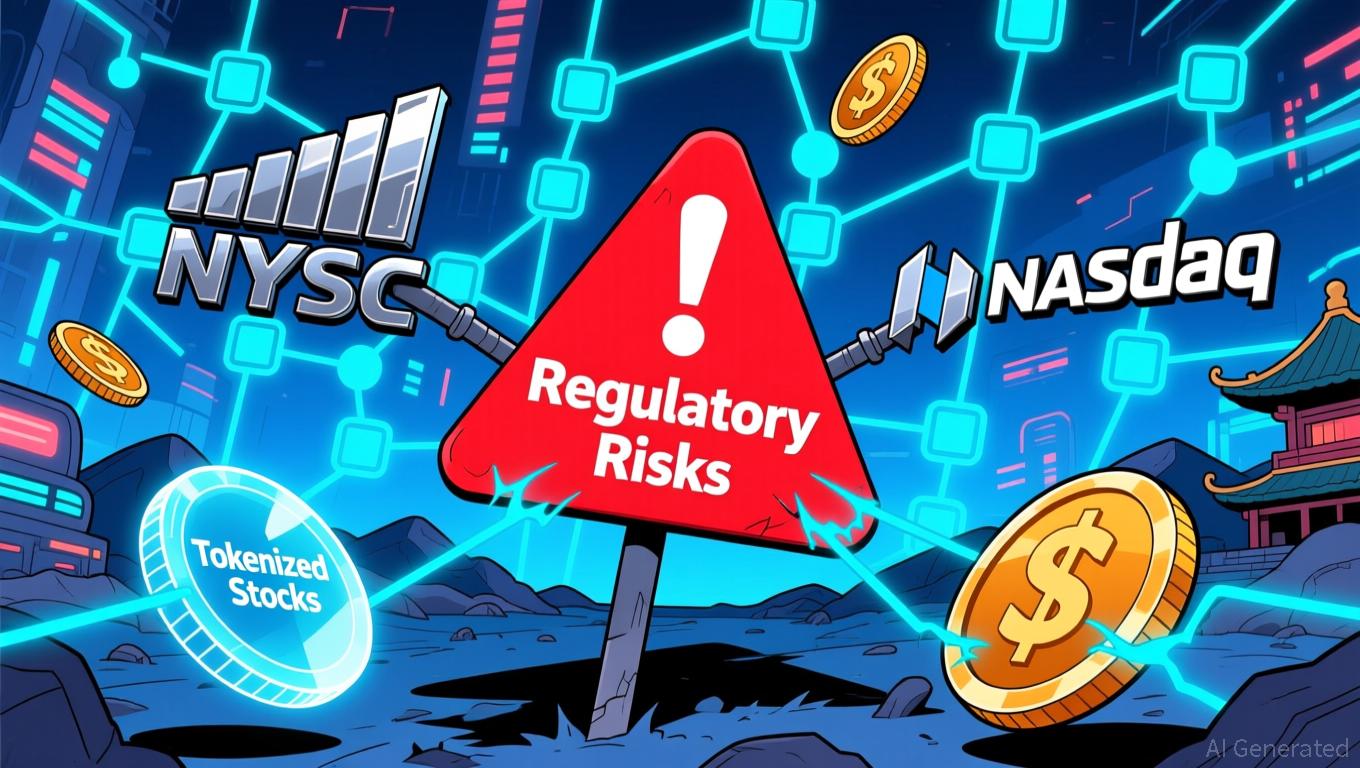
- WFE warns SEC against broad crypto exemptions for tokenized stocks, citing risks to investor protections and market integrity. - Tokenized stocks lack dividend rights, voting access, and custody frameworks, creating "mimicked products" with weaker safeguards. - SEC's sandbox-style exemptions risk regulatory arbitrage, allowing crypto platforms to bypass rules enforced on traditional exchanges. - Global bodies like IOSCO warn tokenization amplifies data integrity and custody risks, urging unified standard
Decentralized AI Network Cocoon Takes on Centralized Titans with a Privacy-Centric Approach
- Telegram founder Pavel Durov launched Cocoon, a TON-based decentralized AI network enabling GPU owners to earn cryptocurrency by processing private AI requests. - The platform challenges centralized providers like Amazon and Microsoft by using Trusted Execution Environments (TEEs) to ensure secure, verifiable model execution with user data privacy. - Cocoon connects GPU providers with developers for confidential tasks, reducing reliance on costly intermediaries while aligning with ethical AI principles t

Ethereum News Update: Fusaka Upgrade Signals New Era of Unified Scaling for Ethereum
- Ethereum's Fusaka upgrade (Dec 3, 2025) introduces PeerDAS and BPO forks to enhance scalability via reduced data verification costs and incremental rollup capacity expansion. - Gas limit raised to 60M through "Pump The Gas" initiative lowers fees and congestion, while L2 data costs could drop 40-60% to boost developer adoption. - EIP-7917/7951 improves security and UX with deterministic finality and P-256 signatures, aligning Ethereum with fintech standards while reducing node storage demands. - Upgrade

UAE's regulatory initiatives set the stage for a surge in institutional DeFi adoption
- DWF Labs commits $75M to DeFi projects enhancing institutional-grade infrastructure across Ethereum , BNB Chain, and Solana . - UAE's new Central Bank Law mandates licensing for DeFi protocols, balancing innovation with regulatory oversight and consumer protection. - Doma Protocol and ORA introduce liquid domain trading and cash-flow-driven models, expanding DeFi's functional scope beyond speculative tokenomics. - Institutional adoption faces hurdles including regulatory uncertainty, smart contract risks

Trending news
MoreCrypto prices
More





