
Bitcoin Updates Today: Bitcoin’s Sharp Drop Ignites Clash Between Institutional Confidence and Investor Anxiety
After reaching a record high close to $126,000 in October 2025, Bitcoin has dropped by more than 30%, now trading around $84,000 as of late November,
This downturn follows a dramatic "flush-out" on October 10, when $20 billion in leveraged positions were wiped out after a sudden escalation in U.S. tariff tensions.

Institutional involvement continues to play a significant role. Harvard University increased its spot Bitcoin ETF investment to $443 million, and the U.S. Strategic Bitcoin Reserve is estimated to hold 198,000 BTC. Japan’s Metaplanet dedicated ¥15 billion (over $100 million) for Bitcoin acquisitions in 2026. Experts note that macroeconomic themes—such as anticipated Federal Reserve rate cuts and a weakening dollar—are positive for Bitcoin, though short-term caution remains.
Price predictions vary widely. Extremely optimistic forecasts of $150,000–$225,000 depend on Fed policy easing and renewed ETF inflows, while more conservative views expect prices to stabilize between $80,000 and $100,000.
The vulnerability of the market is further highlighted by its connections to other asset classes.
With Bitcoin hovering near crucial support, upcoming factors such as Federal Reserve decisions, ETF inflow patterns, and further institutional buying are likely to shape its path. For now, the market teeters between a fragile bullish outlook and intensifying short-term negativity.
Disclaimer: The content of this article solely reflects the author's opinion and does not represent the platform in any capacity. This article is not intended to serve as a reference for making investment decisions.
You may also like
Exchanges Call on SEC: Deny Exemptions to Maintain Fairness in the Market
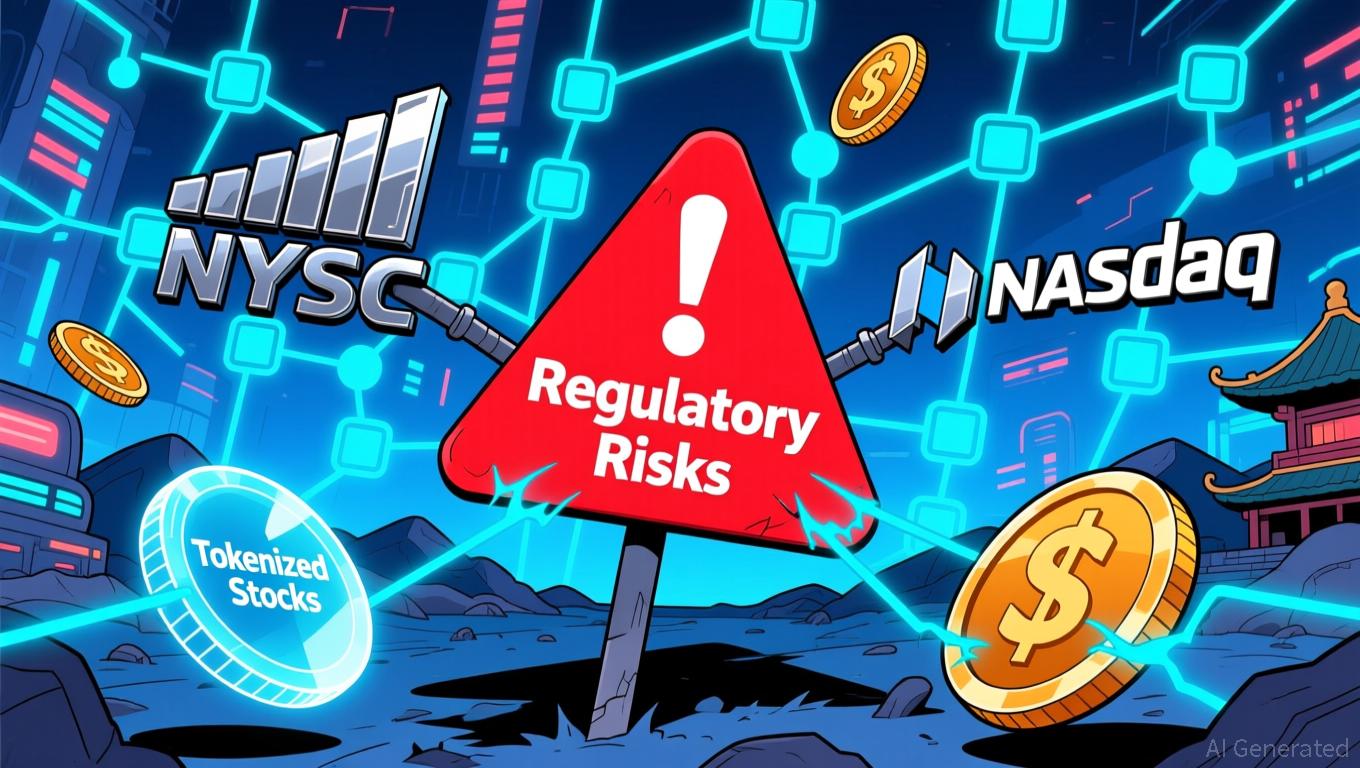
- WFE warns SEC against broad crypto exemptions for tokenized stocks, citing risks to investor protections and market integrity. - Tokenized stocks lack dividend rights, voting access, and custody frameworks, creating "mimicked products" with weaker safeguards. - SEC's sandbox-style exemptions risk regulatory arbitrage, allowing crypto platforms to bypass rules enforced on traditional exchanges. - Global bodies like IOSCO warn tokenization amplifies data integrity and custody risks, urging unified standard
Decentralized AI Network Cocoon Takes on Centralized Titans with a Privacy-Centric Approach
- Telegram founder Pavel Durov launched Cocoon, a TON-based decentralized AI network enabling GPU owners to earn cryptocurrency by processing private AI requests. - The platform challenges centralized providers like Amazon and Microsoft by using Trusted Execution Environments (TEEs) to ensure secure, verifiable model execution with user data privacy. - Cocoon connects GPU providers with developers for confidential tasks, reducing reliance on costly intermediaries while aligning with ethical AI principles t

Ethereum News Update: Fusaka Upgrade Signals New Era of Unified Scaling for Ethereum
- Ethereum's Fusaka upgrade (Dec 3, 2025) introduces PeerDAS and BPO forks to enhance scalability via reduced data verification costs and incremental rollup capacity expansion. - Gas limit raised to 60M through "Pump The Gas" initiative lowers fees and congestion, while L2 data costs could drop 40-60% to boost developer adoption. - EIP-7917/7951 improves security and UX with deterministic finality and P-256 signatures, aligning Ethereum with fintech standards while reducing node storage demands. - Upgrade

UAE's regulatory initiatives set the stage for a surge in institutional DeFi adoption
- DWF Labs commits $75M to DeFi projects enhancing institutional-grade infrastructure across Ethereum , BNB Chain, and Solana . - UAE's new Central Bank Law mandates licensing for DeFi protocols, balancing innovation with regulatory oversight and consumer protection. - Doma Protocol and ORA introduce liquid domain trading and cash-flow-driven models, expanding DeFi's functional scope beyond speculative tokenomics. - Institutional adoption faces hurdles including regulatory uncertainty, smart contract risks

Trending news
MoreCrypto prices
More





