
Clean Energy Market Fluidity: How REsurety's CleanTrade Platform is Transforming Institutional Participation and Risk Strategies in Renewable Energy Trading
- REsurety's CleanTrade platform standardizes green energy trading, boosting institutional liquidity and risk management. - Launched in 2025, it facilitated $16B in trades, enabling transparent VPPA/PPA/REC trading and ESG-aligned hedging. - CFTC oversight reduces counterparty risk, aligning with decarbonization goals amid policy uncertainties. - Despite challenges like rising rates, CleanTrade bridges gaps by standardizing pricing and aggregating demand.
Transforming Clean Energy Trading: The Rise of Standardized Markets
Historically, the clean energy sector has struggled with inconsistent pricing, unclear risk assessment, and a lack of liquidity—factors that have discouraged large institutional investors from fully engaging with green energy assets. In 2025, however, the landscape began to change dramatically. Innovations such as REsurety’s CleanTrade platform—a Swap Execution Facility (SEF) approved by the CFTC—are bringing much-needed structure and efficiency to green energy trading. By tackling long-standing inefficiencies, CleanTrade is not only boosting market liquidity but also reshaping how institutional investors approach risk in the evolving energy sector.
A Leap Forward in Liquidity and Market Structure
Since its debut in September 2025, CleanTrade has rapidly attracted institutional players, facilitating more than $16 billion in notional trades within just two months. This swift uptake highlights the market’s appetite for a transparent, regulated environment to trade instruments like Virtual Power Purchase Agreements (VPPAs), Power Purchase Agreements (PPAs), and Renewable Energy Certificates (RECs). Previously, these products suffered from inconsistent contract terms and limited access to secondary markets, making them less appealing to major investors.
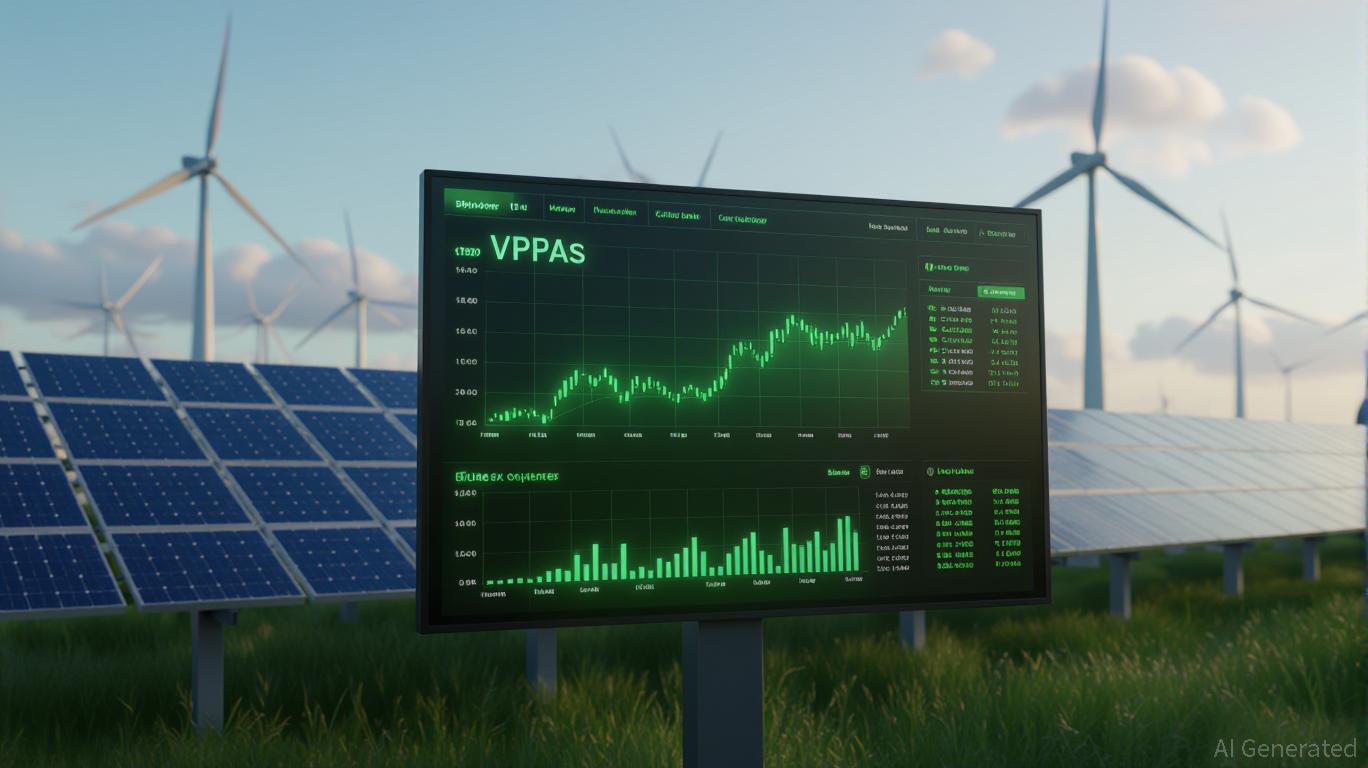
By centralizing the trading process and automating compliance, CleanTrade has converted these assets into standardized derivatives, closely resembling the structure of established energy markets. The platform’s integration of real-time analytics and reliable ESG data empowers investors to manage exposure to fossil fuel price swings while supporting their sustainability objectives. For example, institutional investors can now secure renewable energy prices through VPPAs—a strategy once limited to corporate buyers. This has drawn in a wider range of participants, including pension funds and endowments, as ESG-focused investing gains momentum.
According to a Morgan Stanley Sustainable Signals survey conducted in November 2025, 86% of asset owners intend to increase their allocations to sustainable investments within the next two years, with 22% citing robust financial performance as the main motivator.
Enhancing Risk Management and Regulatory Assurance
CleanTrade’s most notable achievement lies in its ability to reduce counterparty risk, a persistent issue in green energy transactions. Operating under CFTC regulation, the platform ensures compliance with federal standards, giving institutional investors the confidence to expand their involvement. This regulatory clarity is especially vital in a market vulnerable to policy changes—such as the Trump-era rollbacks that led to a 36% drop in U.S. renewable investment in 2025—which can threaten long-term returns. CleanTrade’s use of standardized contracts and post-trade performance monitoring further minimizes execution risks, allowing investors to track carbon metrics and project outcomes in real time.
The platform’s liquidity has also opened up new avenues for hedging. In an environment of low yields, institutions are turning to clean energy derivatives to diversify their portfolios and buffer against volatility from regulatory or technological shifts. Sectors like long-duration energy storage and hydrogen infrastructure, both experiencing rapid growth in 2025, are now accessible through structured products that balance financial and environmental considerations.
Ongoing Challenges and Future Prospects
Despite these breakthroughs, obstacles remain. Higher interest rates and restricted access to capital continue to challenge smaller renewable projects, while regulatory uncertainty still dampens investor enthusiasm. Nevertheless, platforms like CleanTrade are helping to close these gaps by aggregating demand and standardizing pricing, which lowers transaction costs and channels investment into underserved areas of the market.
Looking forward, investments by the U.S. Department of Energy in fusion and hydrogen technologies, alongside private infrastructure initiatives, are expected to broaden the spectrum of investable clean energy assets. CleanTrade is poised to play a pivotal role in this expanding ecosystem, evolving from a trading venue into a comprehensive risk management solution for institutional portfolios.
Conclusion
REsurety’s CleanTrade platform is ushering in a new era for clean energy markets by resolving liquidity challenges and overcoming institutional reluctance through standardization, transparency, and regulatory compliance. With global investments in the energy transition reaching $2.1 trillion in 2024, institutional capital is set to become a driving force in decarbonization. CleanTrade’s achievements highlight that green energy is no longer a niche investment, but a foundational element of modern portfolio management—where financial returns and sustainability goals go hand in hand.
Disclaimer: The content of this article solely reflects the author's opinion and does not represent the platform in any capacity. This article is not intended to serve as a reference for making investment decisions.
You may also like
Aster DEX’s Cross-Chain Lending Feature: Driving Liquidity and Enhancing Token Worth in DeFi
- Aster DEX integrates cross-chain lending protocols (Pendle, Venus) to enhance liquidity and capital efficiency via tokenized yields and dual-income models. - Q3 2025 metrics show $27.7B daily volume, $1.399B TVL, and 2M users, driven by multi-chain operations and institutional adoption. - ASTER token's 2,324% price surge and 19.3% perpetual DEX market share highlight its deflationary mechanics and institutional-grade privacy roadmap. - Strategic partnerships with Trust Wallet/Phemex and ZKP-based Aster C

Clean Energy Market Liquidity: The Institutional-Grade Transformation and the Emergence of VPPA Transactions on CleanTrade
- REsurety's CleanTrade platform, a CFTC-approved SEF, is transforming clean energy derivatives by enhancing liquidity and transparency through standardized VPPA/PPA/REC trading. - Cargill and Mercuria's 2025 landmark transaction on CleanTrade validated institutional adoption, enabling verifiable renewable energy asset trading with $16B in notional volume achieved within two months. - ESG-driven investments surged to $75B in Q3 2025, with the market projected to grow from $39T to $125T by 2032 as CleanTrad

Kevin Hassett Reaffirms Fed Independence as Markets Watch Rate Outlook
Aster DEX Reports $28 Million Stage 4 $ASTER Buybacks in Latest Weekly Update

Trending news
MoreCrypto prices
More





