
Gold Breaks Below $4,100: Oil Prices and Higher-for-Longer Rate Expectations Put Pressure on XAUUSD, With $4,000 in Focus
Gold’s recent decline has intensified. Spot gold (XAUUSD) fell below the key psychological threshold of $4,100 per ounce during intraday trading, touching a low of $4,066.56—the weakest level since October 14. At the time of writing, gold was down nearly 2% on the day, trading around $4,070.
After consolidating around the $4,100 level for several sessions, gold has now broken below this support area. The move reflects growing market concerns that elevated oil prices, renewed inflation pressures, and the possibility of the Federal Reserve keeping interest rates high for longer could continue to weigh on the metal. If selling pressure persists, gold may test the key $4,000 psychological level in the near term.
Elevated Oil Prices Fuel Inflation Concerns, Weighing on Gold
One of the key factors behind gold’s recent weakness is the renewed rise in global oil prices. Brent crude oil (UKOIL) has recently moved back above $110 per barrel, while ongoing tensions in the Middle East continue to raise concerns over potential supply disruptions.
Higher oil prices typically increase transportation, manufacturing, and consumer costs, raising the risk of another pickup in inflation. For markets, this suggests that the Federal Reserve may need to maintain restrictive monetary policy for longer and could potentially keep the door open to further rate hikes.
Although gold is often viewed as an inflation hedge, markets tend to focus first on the impact of higher real interest rates and a stronger US dollar in a “higher-for-longer” environment. Since gold does not generate interest income, rising bond yields and cash returns increase the opportunity cost of holding the non-yielding asset.
Fed Rate Decision and PCE Data Take Center Stage
Markets are now closely watching the Federal Reserve’s upcoming policy meeting, along with the release of US PCE inflation data.
According to the CME FedWatch Tool, expectations for an imminent rate hike remain relatively limited. However, market pricing still indicates a strong expectation that interest rates will remain elevated. Traders are reassessing whether persistently higher energy prices could cause US inflation to move further away from the Fed’s target, forcing policymakers to maintain a hawkish stance.
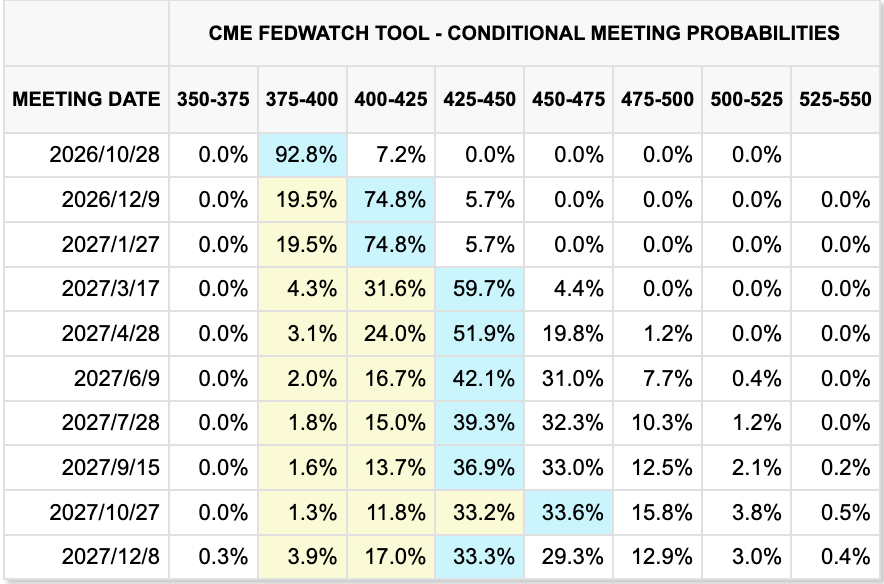
Gold’s next move is likely to be influenced by three key factors:
1. The Federal Reserve’s rate decision and Chair’s remarks
If the Fed delivers a hawkish message or emphasizes that inflation risks remain unresolved, the US dollar and Treasury yields could rise further, putting additional pressure on gold prices.
2. US PCE inflation data
PCE is one of the Fed’s preferred inflation measures. A reading above market expectations could reinforce the case for keeping rates higher for longer, limiting the potential for a gold rebound.
3. Oil prices and geopolitical risks
Further gains in oil prices could intensify inflation concerns. However, a sudden escalation in geopolitical tensions could revive safe-haven demand and increase volatility in gold.
XAUUSD Technical Outlook: $4,066 Emerges as Key Near-Term Support
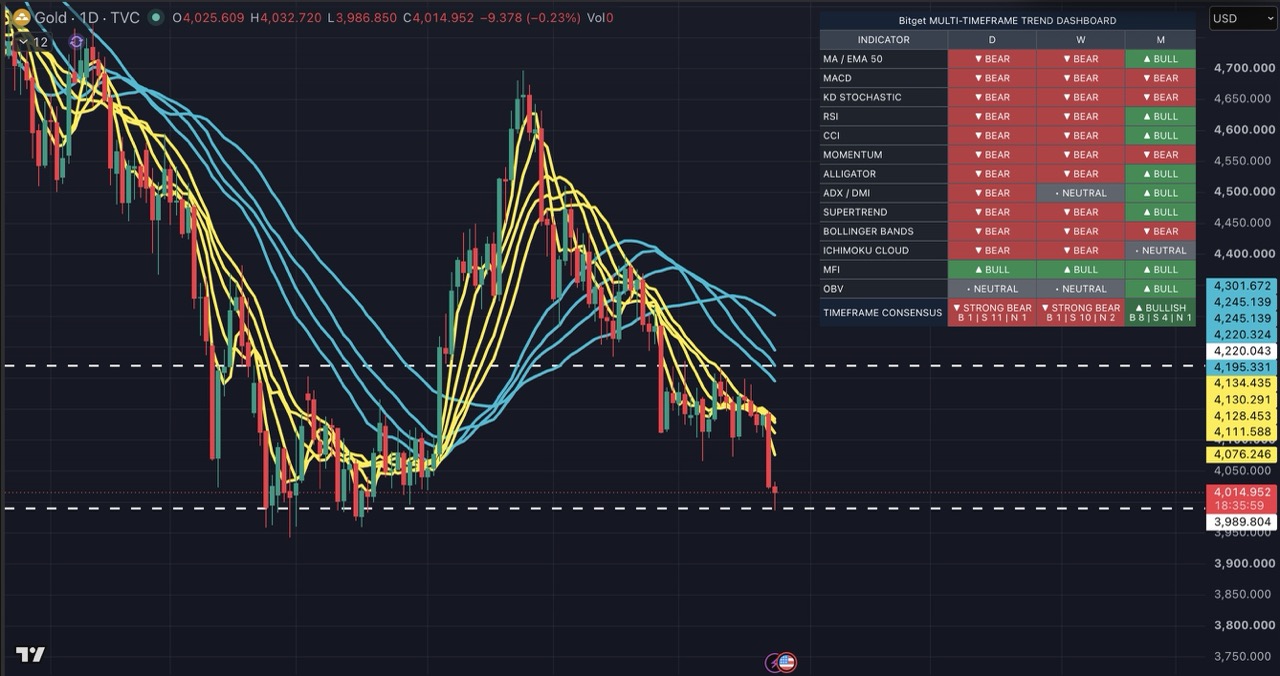
From a technical perspective, the break below $4,100 shifts market attention toward the recent low near $4,066. This level is not only the intraday low but also an important dividing line between bullish and bearish momentum in the short term.
Bearish Scenario: A Break Below $4,066 Could Bring $4,000 Into View
If gold fails to hold above the $4,066 support level, short-term selling pressure could intensify and open the door for a move toward the $4,000 round-number level. Beyond its strong psychological significance, $4,000 could become an area where the market reassesses the balance between buyers and sellers.
Traders may watch whether a downside break is accompanied by stronger trading momentum, as well as whether the US Dollar Index and US Treasury yields rise simultaneously. If these factors remain aligned to the downside, gold’s decline could extend further.
Rebound Scenario: A Move Back Above $4,140 Is Needed to Ease Pressure
On the upside, gold would first need to reclaim $4,100 and then move above $4,140 to ease the current short-term bearish structure. A sustained recovery above this zone could indicate that buying interest is returning at lower levels, potentially shifting attention toward higher resistance areas.
However, before the Fed decision and inflation data are released, gold is likely to remain highly volatile. Traders should remain alert to rapid price swings driven by unexpected headlines and economic developments.
Gold Outlook: Focus on Key Levels and Risk Management in a Volatile Market
Gold is currently being influenced by a combination of elevated oil prices, interest-rate expectations, and US dollar movements. In the short term, $4,066 and $4,000 are key support levels to monitor, while $4,100 and $4,140 are important levels that bulls need to reclaim.
For CFD traders, markets shaped by major macroeconomic events can create more trading opportunities, but they also involve greater volatility and risk. Before entering a trade, it is important to establish a clear entry and exit plan, set stop-loss levels, and manage position size carefully to avoid losses that exceed expectations during sharp market moves.
Trade Gold CFDs on Bitget and Capture Two-Way XAUUSD Opportunities
Whether gold continues moving toward $4,000 or rebounds from a major support zone, CFD trading allows traders to seek both long and short opportunities based on changing market conditions.
With Bitget CFD trading, you can follow popular markets including XAUUSD, crude oil, indices, and forex, and implement your trading strategy during volatile market conditions. Visit Bitget to monitor real-time gold price movements, stay updated on key economic data, and plan your next CFD trade with robust risk management.
All trading education provided by Bitget is for educational purposes only and should not be considered financial advice. The strategies and examples shared are for reference only and may not reflect actual market conditions. CFD trading involves significant risk, including the potential loss of capital. Past performance does not guarantee future results. Please conduct thorough research and ensure that you understand the risks involved. Bitget is not responsible for any trading decisions made by users.


- Elevated Oil Prices Fuel Inflation Concerns, Weighing on Gold
- Fed Rate Decision and PCE Data Take Center Stage
- XAUUSD Technical Outlook: $4,066 Emerges as Key Near-Term Support
- Gold Outlook: Focus on Key Levels and Risk Management in a Volatile Market