
News
Stay up to date on the latest crypto trends with our expert, in-depth coverage.

1Bitget UEX Daily | US Plans to Implement 15% Global Tariffs This Week; Trump Nominates Walsh as Fed Chair; BlackRock Continues to Increase Bitcoin Holdings Recently (March 05, 2026)2Broadcom FY2026 Q1 Earnings: AI Revenue Doubles, Record Results, Strong Guidance, $10B Buyback3Broadcom CEO Predicts AI Chip Revenue Will Surpass $100 Billion by 2027
Egrag Crypto Releases XRP Weekly Structure Breakdown and Price Targets
TimesTabloid·2026/03/05 10:03
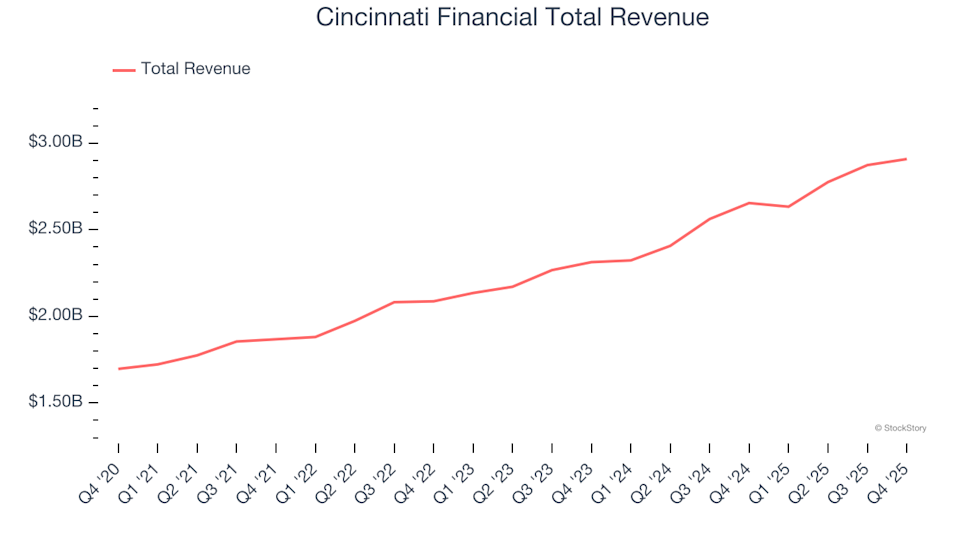
Property & Casualty Insurance Stocks Q4 Analysis: Cincinnati Financial (NASDAQ:CINF) Compared to Its Peers
101 finance·2026/03/05 10:00
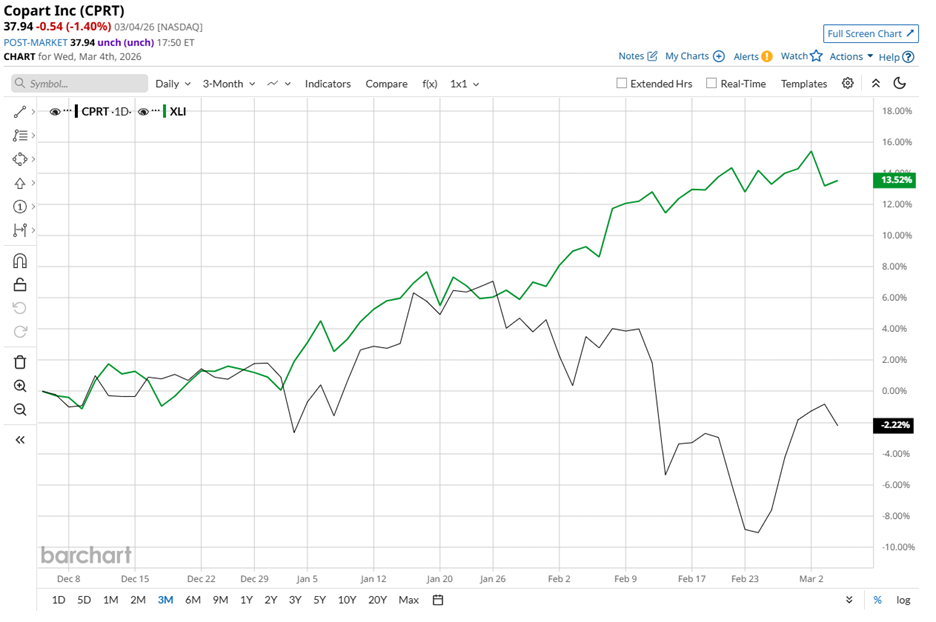
Copart Stock: Is CPRT Lagging Behind the Industrial Sector?
101 finance·2026/03/05 09:48
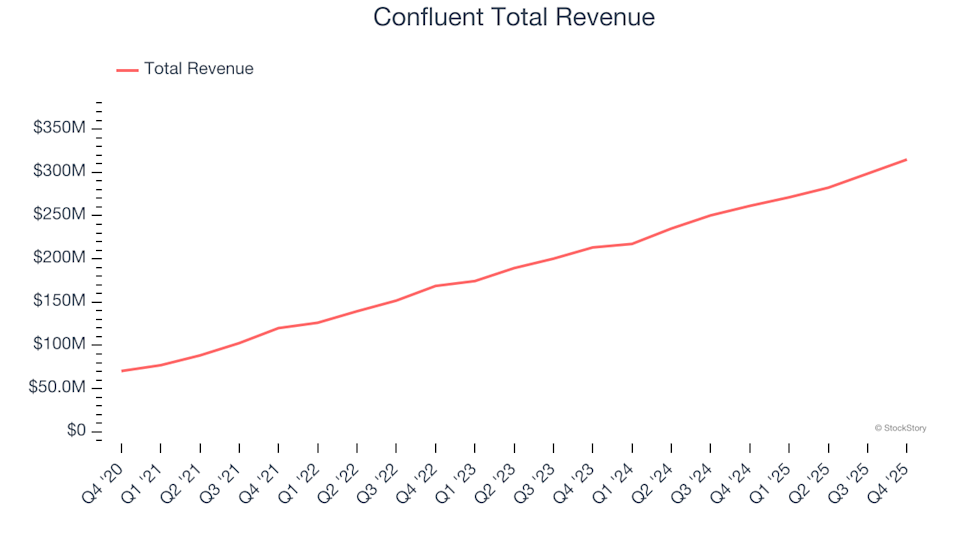
Q4 Financial Peaks and Valleys: Comparing Confluent (NASDAQ:CFLT) With Other Data Infrastructure Stocks
101 finance·2026/03/05 09:45
Tesla's Earnings Surpass Expectations While Amazon Boosts Capital Spending: Assessing the Tactical Catalysts
101 finance·2026/03/05 09:42
The Five Most Important Analyst Inquiries During Assured Guaranty’s Fourth Quarter Earnings Call
101 finance·2026/03/05 09:36
5 Essential Analyst Inquiries From Rocket Companies’s Q4 Earnings Conference
101 finance·2026/03/05 09:36
Payoneer Q4 Earnings Conference: The Five Key Analyst Questions
101 finance·2026/03/05 09:36
Flash
10:07
Polkadot to Reset Tokenomics on March 12 With Major DOT Supply and Staking ChangesPolkadot will introduce a new monetary framework on March 12 that sets DOT’s supply cap at 2.1 billion and lowers emissions by 53.6%.
The overhaul will also create a Dynamic Allocation Pool and shorten the DOT unbonding period from 28 days to 24–48 hours.
On March 12, Polkadot will reset its tokenomics with a new monetary framework that changes DOT supply, issuance, staking, and treasury flows. The update will cap total DOT supply at 2.1 billion, cut emissions by 53.6% at launch, remove treasury burns, and route funds from transaction fees, slashes, and coretime sales into a new Dynamic Allocation Pool, or DAP.
The overhaul targets lower emissions, more direct capital allocation, and a structure tied closely to on-chain governance.
On March 12, Polkadot resets its economic model.
Issuance, staking, and capital allocation are being fundamentally redesigned for long-term sustainability.
Here’s what’s changing and what it means for Polkadot’s future 🧵
— Polkadot (@Polkadot) March 4, 2026
Under the new model, governance will direct DAP resources across validator rewards, staking incentives, treasury budgets, and strategic reserves. That change replaces the earlier burn-based approach with a permanent on-chain pool that governance can distribute according to network priorities.
The staking system will also change on the same date. Validators will need to lock 10,000 DOT as self-stake, while the minimum validator commission will rise to 10%. At the same time, nominators will become unslashable, and the unbonding period will be reduced from 28 days to 24-48 hours. Those changes will tighten validator requirements while giving other participants faster access to unlocked capital.
In January, Polkadot announced a runtime upgrade to speed up app execution, shorten transaction finality, and simplify development. CNF noted that the upgrade added native smart contracts and targeted a more Web2-like user experience for real apps.
Polkadot 2.0 Transition Lays Groundwork for March 12 Reset
The tokenomics reset follows the Polkadot 2.0 transition. That rollout brought asynchronous backing, agile coretime, and elastic scaling to the network. Asynchronous backing reduced block time from 12 seconds to 6 seconds, agile coretime replaced parachain auctions with a more flexible resource model, and elastic scaling expanded real-time access to multiple cores for parachains.
Polkadot still faces the task of expanding ecosystem activity in a market where developers continue to favor larger chains such as Solana and Ethereum. The update, therefore, comes at a time when the network is trying to pair technical upgrades with a more durable economic structure.
Previously, we covered that Polkadot’s governance approved Referendum 1710, setting a hard cap of 2.1 billion DOT and shifting from inflation to a scarcity model. The proposal also introduced a stepped issuance schedule that reduces emissions every two years.
Meanwhile, DOT price traded around
$1.52
at the time of reporting after rising about
37%
from its February low near
$1.2260
. The token had formed a double-bottom pattern and then pulled back into a bullish flag, while the Supertrend indicator flipped bullish.
10:04
ECB's Nagel: If the Iran war persists, it will push up inflation and drag down growth⑴ European Central Bank Governing Council member and Bundesbank President Nagel stated on Thursday that if the Iran war continues for a long time, it will push up inflation in the eurozone and damage economic growth. However, he also pointed out that it is still too early to draw conclusions about the impact of the conflict. ⑵ In his speech, Nagel distinguished between different scenarios: if the conflict ends quickly, the consequences for inflation will be short-term and generally limited. He emphasized that for monetary policy, the key is to determine whether these are temporary supply shocks that should be "looked through." ⑶ However, if energy prices remain high for a prolonged period, it will lead to rising inflation and weaker economic activity in the eurozone. Nagel believes that in the current turbulent situation, it is still too early to draw any monetary policy conclusions regarding interest rate settings. ⑷ When releasing the Bundesbank's 2025 annual report, Nagel disclosed that due to the impact of bonds purchased during the stimulus programs over the past decade, the Bundesbank lost 8.6 billions euros last year. Although the loss is shrinking, he expects a deficit to be recorded in 2026 as well. In addition, the annual accounts show that the Bundesbank's 3,350 tons of gold reserves remain stored in the same locations: Frankfurt, New York, and London.
10:02
US Stock Movement|CoreWeave drops 1% in pre-market trading; Citi lowers target price after earnings格隆汇 March 5|CoreWeave (CRWV.US) fell 1.08% in pre-market trading, quoted at $78.64. According to the news, after CoreWeave announced its Q4 2025 results and guidance, Citi lowered its earnings forecast for the company. Citi reduced CoreWeave's full-year 2026 earnings per share estimate from $0.75 to -$2.97, and its full-year 2027 earnings per share estimate from $3.11 to -$1.74. In addition, Citi also lowered CoreWeave's target price from $135 to $126. (Gelonghui)
News