
Lumia and Avail team up for secure, scalable real-world asset tokenization

Lumia, a blockchain platform focused on real-world asset (RWA) tokenization, is rolling out a new cross-chain model through a strategic integration with Avail Stack, according to a statement shared with CryptoSlate.
The partnership aims to improve how tokenized assets are created, verified, and moved across different blockchain networks.
Through this integration, Lumia will access Avail’s modular infrastructure, which is designed to tackle blockchain fragmentation.
Avail Stack’s core tools include scalable data availability, secure asset messaging, and cross-chain communication protocols.
Lumia plans to leverage these features to enable seamless liquidity for tokenized assets across chains while preserving security and data integrity.
Meanwhile, a key component of this upgrade is Avail Nexus. This messaging layer allows for the secure transfer of assets and the verification of data without relying on centralized systems.
Anurag Arjun, the co-founder of Avail, said:
“The full potential of tokenization will only be realized when assets are liquid, programmable, and globally verifiable. To enable that, we need infrastructure that guarantees a composable and interoperable environment; one where tokenized assets aren’t locked into singular ecosystems, but can move freely across chains with compliance, security and scalability embedded at the base layer.”
Scaling real-world assets
The move aligns with Lumia’s broader vision of bringing RWAs into mainstream crypto finance. The platform already supports tokenized real estate projects worth over $220 million, including two significant developments in Istanbul.
Lumia has also signed a $1 billion asset agreement with the Sen Group and distributed over 25,000 HyperNodes.
Lumia offers tokenization services for various assets, including real estate, luxury goods, and commodities. It uses Polygon’s CDK to implement zero-knowledge security and maintain compliance with global regulations.
The upcoming launch of Lumia Hub will allow developers and users to tokenize and manage RWAs using lightweight NFT and smart contract tools.
The platform is positioning itself for what analysts say could be a $16 trillion tokenization market by 2030. According to CEO Kal Ali, the need for scalable, secure RWA infrastructure is growing rapidly as institutions look to tap into blockchain-based finance.
The post Lumia and Avail team up for secure, scalable real-world asset tokenization appeared first on CryptoSlate.
Disclaimer: The content of this article solely reflects the author's opinion and does not represent the platform in any capacity. This article is not intended to serve as a reference for making investment decisions.
You may also like
Storage Risks: Can "Long-term Protocols" Truly Be "Executed Long-term"?
The AI boom has led to unprecedented large-scale long-term supply contracts, linking the entire supply chain from memory chips to cloud computing and AI devices. Manufacturers such as Micron use these contracts to promise stable revenue to investors, resulting in significant stock price increases this year. However, analysts point out that similar contracts during the COVID-19 pandemic were frequently waived when supply and demand reversed, indicating that the binding power of these contracts is far weaker than it appears. If demand for AI cools, the "protective effect" of these contracts may quickly disappear.
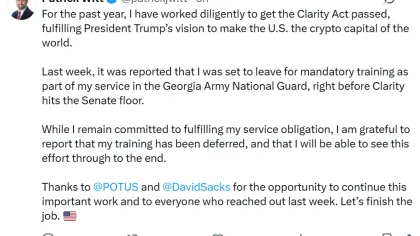
Patrick Witt defers military training as CLARITY heads to Senate
Imposing 50% tariffs on some Canadian products, the U.S. restarts the trade war!
The White House has announced an additional 50% tariff on certain Canadian products, including dairy, alcohol, apparel, and furniture, citing Canada's "discriminatory measures" against American auto trade. The new tariffs will take effect on August 19. Notably, products that comply with the USMCA agreement are not exempt from these tariffs. Doug Ford, Premier of Ontario, has called for retaliatory tariffs. The Canadian Chamber of Commerce has urged both countries to negotiate within the next 30 days.
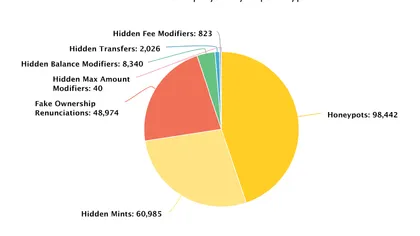
How to spot a crypto scam or a rug pull?
Crypto prices
More


