
Bank of Korea creates crypto asset division amid local stablecoin momentum: report

Quick Take South Korea’s central bank has installed a virtual asset division to monitor the crypto market and lead internal discussions on local currency stablecoins. It also renamed its existing digital currency team, likely indicating a more active stance towards digital currency initiatives.
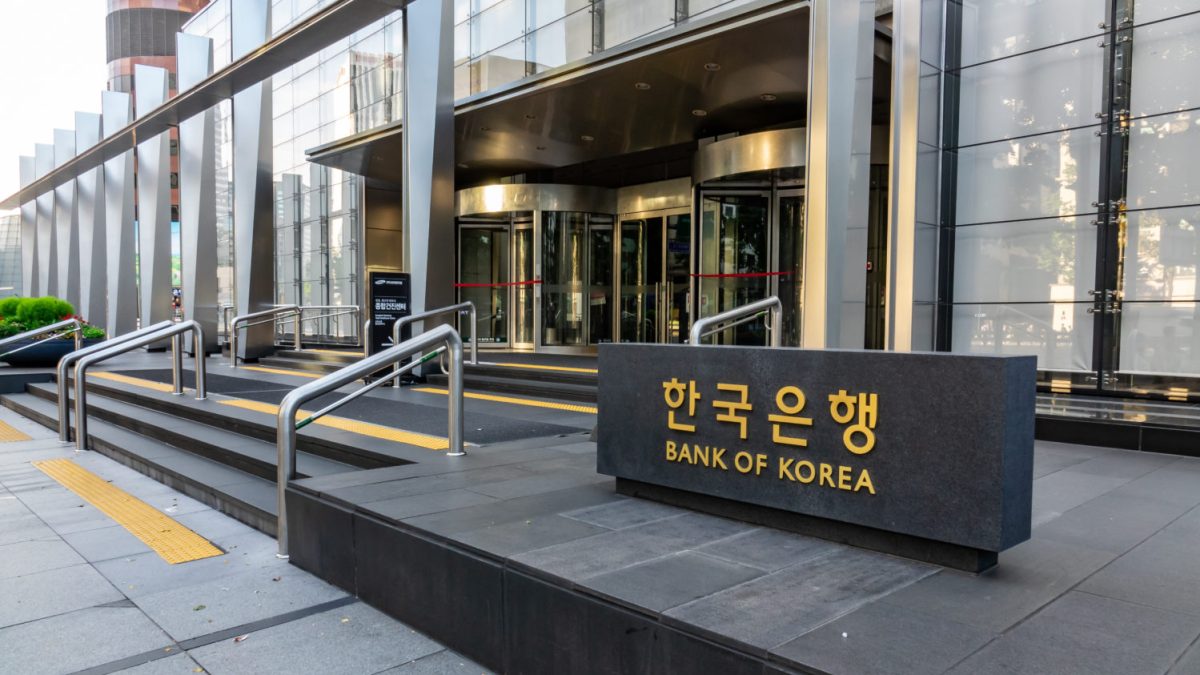
The Bank of Korea (BOK) has newly installed a division for virtual assets to monitor the crypto market and discuss legislation on the asset class, local news agency News1 reported Tuesday.
The new virtual asset division is positioned under the central bank's financial payment systems bureau, and is expected to spearhead the BOK's internal discourse on Korean won-based stablecoins , according to the report citing the central bank.
The BOK also officially renamed its Digital Currency Research Team to the Digital Currency Team, a change that signals a shift from theoretical exploration toward more active digital currency initiatives. The Block has reached out to the BOK for further comments.
South Korea's discussion surrounding stablecoins started gaining traction as the U.S. moved to endorse USD-backed stablecoins under President Donald Trump's leadership.
The country's recently elected President Lee Jae Myung vowed to promote a local currency-based stablecoin market as a measure to prevent capital flight, while a ruling party lawmaker has already submitted a bill to establish a fundamental regulatory framework for KRW stablecoins.
Such developments were quickly matched by the private sector, where South Korea's leading banks and payment service providers submitted trademark applications for stablecoin ticker symbols.
Recently, the BOK reportedly decided to temporarily pause its CBDC project due to stablecoins making headway. The central bank governor Lee Chang-yong previously said that he sees a need for KRW stablecoins, but warned that allowing non-banking institutions could cause chaos.
Disclaimer: The content of this article solely reflects the author's opinion and does not represent the platform in any capacity. This article is not intended to serve as a reference for making investment decisions.
You may also like
Samsung Unveils Next-Generation Storage Roadmap: HBM5 Performance Doubles HBM4E, zHBM Delivers 8x Acceleration
The HBM5 base chip process will be upgraded to 2 nanometers, aiming to achieve twice the performance of HBM4E, with a 20% improvement in performance per watt and a 20% reduction in thermal resistance. Mass production is expected in 2028. The newly architected zHBM targets 8 times the performance of HBM4E, a 3-fold increase in performance per watt, and a reduction in thermal resistance by 75% to 90%. It is expected to launch after 2029.
Felix Pago raises $200 million in Series B to expand stablecoin remittance services
Belgium Police Target Crypto Wallets In Cross-Border Piracy Crackdown
Update: Wall Street's Pullback Deepens as Oil, Yields Surge
Crypto prices
More


