
FOMC Retains Interest Rates, Inflation Still Top Concern


- The Fed left rates unchanged in July, aligning with a 98% chance priced in by markets.
- Two FOMC members voted for a cut, but the majority backed holding rates steady.
- CME FedWatch shows a 63.7% chance of a 25-bps cut at the upcoming September FOMC meeting.
The Federal Reserve decided to keep the interest rate unchanged after its July FOMC meeting, as wider market expectations had a 98% likelihood of no change and correctly controlled the Fed’s decision. This is the fifth consecutive time that the funds rate remains at 4.25 to 4.5%, considering its meetings in January, March, May and June.
The statement published by the FOMC showed that the committee would continue to evaluate economic information before the rate adjustments. Authorities added that inflation and the overall economic direction are on their radar. There was no unanimous decision on the vote with nine members in favor of the decision. Yet, Christopher Waller and Michelle Bowman preferred to cut the interest rates to 25 basis points.
Trump Pressures Fed, But Policy Stays Firm
President Donald Trump urged the Fed to cut rates ahead of the meeting. Hours before the announcement, he stated that recent GDP numbers supported an immediate rate cut, emphasizing that lower rates would further boost the U.S. economy. Trump has criticized Fed Chair Jerome Powell several times in recent weeks.
Despite this pressure, the Fed did not shift policy. Officials remain concerned about inflation risks considering tariffs and trade uncertainty. The Committee appears to be taking a cautious approach. The July decision shows the Fed is not responding to political calls for action.
Powell Sticks to Inflation Fight
Fed Chair Jerome Powell reiterated that the Fed is mainly concerned with inflation control and explained that the lowering of the amount that the government has to pay as interest in its borrowings, or lowering of mortgage rates is not the goal of the central bank. The Fed will continue with its current stance because there remains the threat of persistent inflation fueled by trade and policy. Meanwhile, Trump claimed that sources told him the Fed might cut rates in September and admitted a rate cut was unlikely in July. Still, he insisted the latest data supports easing rates.
Related: Trump’s Crypto Policy Report: Impact on Blockchain, Tokenization, and Stablecoin Governance
Comparing the Fed to the European Central Bank, Trump pointed out that the ECB has made several cuts over the past year while the Fed has moved slower than its global peers. Trump reiterated that a rate cut would support continued growth.
On the market front, expectations for rate cuts are rising. According to CME FedWatch data, there is a 63.7% probability of a 25-basis-point reduction in September, which would bring the federal funds rate down to a range of 4% to 4.25%. Additionally, the likelihood of a further cut in December stands at 44.4%.
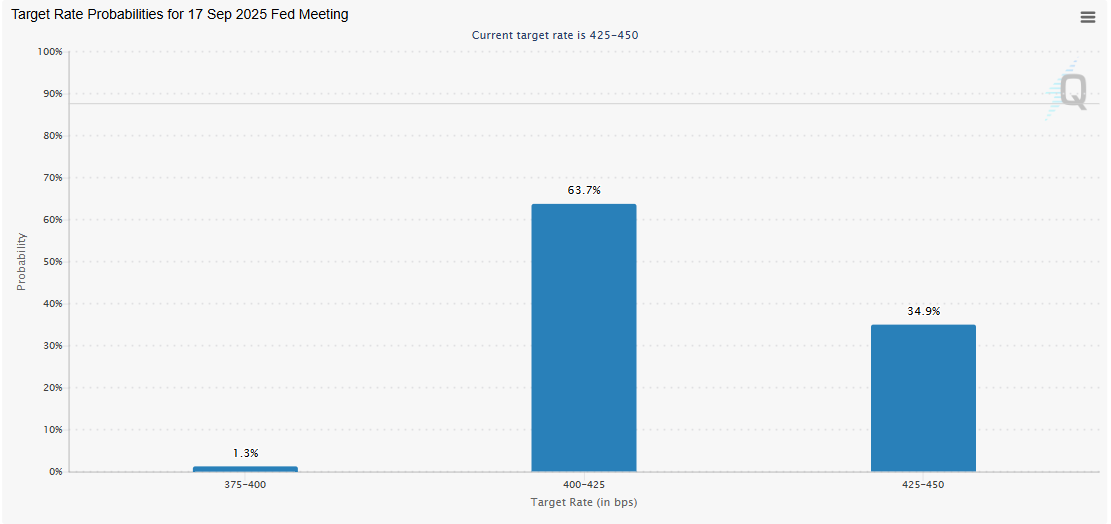
Source: CME FedWatch
However, traders are not expecting a change in October as the probability of a cut during that meeting remains low. Current market pricing indicates that investors are focusing on September and December for possible adjustments. This aligns with Powell’s earlier remarks that the Fed will act if the data supports it.
The July FOMC outcome reinforces the Fed’s cautious, data-driven approach. Policymakers are seeking more definitive signals on the economy’s path. While strong GDP figures offer optimism, inflation risks and global instability remain key concerns. So far, political influence has not altered their course. The next meeting is set for September 16–17, with additional sessions in October and December.
According to market watchers, the coming weeks will be critical for rate expectations. Upcoming data releases will shape the outlook for the September meeting and Powell’s public statements will also guide market sentiment. For now, the Fed has chosen stability over speculation.
The post FOMC Retains Interest Rates, Inflation Still Top Concern appeared first on Cryptotale.
Disclaimer: The content of this article solely reflects the author's opinion and does not represent the platform in any capacity. This article is not intended to serve as a reference for making investment decisions.
You may also like
Bitcoin, Ethereum, Tron, and Cardano Tell Four Very Different Stories Through Active Addresses
Hawkish Statement from Waller Shakes Markets, JPMorgan Temporarily Abandons Bullish Stance on US Stocks, Turns Cautious in the Coming Weeks
JP Morgan's trading team has temporarily abandoned its previous bullish stance on the US stock market and has instead adopted a cautious outlook for market trends in the coming weeks.

The US dollar weakens for the second consecutive month! Increased US Treasury repo raises policy concerns; Wall Street expects a further decline in September
The US dollar weakened for the second consecutive month in August. The US Treasury's plan to accelerate the repurchase of government bonds has led overseas investors to express new concerns about US policy direction, reviving market speculation that the Trump administration's policies may favor a weaker dollar.

Oxford Economics: Canada’s Economic Output May Drop 0.3% by 2027 as Retaliatory Tariffs Against U.S. Could Backfire
Oxford Economics warns that the new round of retaliatory tariffs against the US, scheduled to be implemented by Canada on September 8, may provide protection for some domestic manufacturers, but overall could cause more industries to face increased cost pressures and drag down Canada’s economic growth.

Crypto prices
More


