
South Korea's Economy Contracts Unexpectedly Amid Widespread Slowdown

South Korea Faces Economic Contraction Amid Policy Challenges
South Korea's economy experienced a decline in the last quarter of 2025, reflecting a widespread reduction in demand. This downturn highlights the difficulties faced by policymakers, who have limited tools to boost growth due to a fragile currency and increasing financial vulnerabilities.
According to the Bank of Korea, the nation’s gross domestic product fell by 0.3% between October and December compared to the previous quarter. This marks a significant slowdown from the revised 1.3% growth seen earlier and falls short of the 0.2% growth anticipated by analysts. For the entire year, the economy grew by 1%, matching expectations.
Top Stories from Bloomberg
Earlier in the year, growth was supported by government spending, exports, and a rebound in consumer activity. However, these drivers have lost momentum as officials grapple with persistent increases in housing prices, rising household debt, and a weak won. The central bank recently adopted a neutral policy stance, removing hints of possible rate cuts from its communications.
Despite the recent contraction, the central bank is unlikely to change course. The strong third-quarter growth had already surpassed the economy’s estimated potential, making a slowdown at year-end almost unavoidable. Additionally, some figures may have been distorted during the data compilation process.
Exports, adjusted for real values, dropped by 2.1% from the previous quarter, reversing a similar gain seen earlier. The depreciation of the won during this period likely increased the cost of imports, impacting the trade balance.
The data also reveal an uneven recovery, with export-driven industries—especially those linked to semiconductors—outperforming sectors like construction and small businesses, which continue to face difficulties. This divergence has raised concerns that headline growth numbers may be masking deeper structural issues.
Financial markets reflect this disparity. The Kospi index has climbed in nearly every session this year, building on a 76% surge in 2025 and briefly surpassing the symbolic 5,000 mark—a target long promoted by President Lee Jae Myung.
Policy Initiatives and Market Trends
During his campaign, President Lee promised to nearly double the Kospi’s value, emphasizing the importance of capital market reforms for economic revitalization. Since taking office, his administration has established a committee to enhance market access, improve corporate governance, and attract overseas investment.
The stock market’s gains have been mirrored in the real estate sector, particularly in Seoul’s upscale districts. Apartment prices in the capital have risen for 50 consecutive weeks as of mid-January, despite repeated government attempts to cool the market. This ongoing rally has made policymakers cautious about loosening policy, fearing it could fuel household debt and increase financial instability.
Consumer spending has weakened as government stimulus fades, though the decline was amplified by strong results in the previous quarter. Private consumption growth slowed to 0.3%, while government expenditures rose by 0.6%. Investments in construction and equipment fell by 3.9% and 1.8%, respectively.
Insights from Bloomberg Economics
“The unexpected contraction in South Korea’s fourth-quarter GDP is largely a technical correction following robust growth in the third quarter, rather than a major setback. The economy faced a fiscal cliff after heavy spending was front-loaded earlier in the year. The decline in net exports is not a significant concern, as nominal shipments remained strong.”
— Hyosung Kwon, Economist
Read the full analysis for more details.
Currency Pressures and External Risks
Ongoing weakness in the won has intensified challenges. Since late June, the currency has dropped over 8% due to capital outflows, global interest rate differences, and trade policy uncertainties. This has made it difficult for the central bank to ease monetary policy, as lower rates could further weaken the currency. Officials have cautioned that additional depreciation could worsen financial instability and drive up inflation.
Export Performance and Trade Policy
Exports helped maintain South Korea’s external balance for much of the past year, supported by higher semiconductor prices and lower energy costs. The country posted a current-account surplus of about $118 billion in 2025, with expectations to reach $135 billion in 2026. However, vulnerabilities remain, as shipments to the US fell by 3.8% last year, and uncertainty surrounds the implementation of a $350 billion investment pledge in the US, part of a deal to cap tariffs on Korean goods.
Due to currency pressures, Seoul may delay fulfilling up to $20 billion of its US investment commitment this year, according to sources familiar with the situation.
Stock market gains are concentrated in a few large technology firms, notably Samsung Electronics and SK Hynix. Similarly, semiconductor exports rose by about 22%, while other sectors, such as automobiles and steel, lagged behind.
This concentration increases South Korea’s vulnerability to changes in US trade and industrial policy, particularly those targeting the chip industry. US officials have warned that Korean and Taiwanese chipmakers could face tariffs of up to 100% unless they expand manufacturing in the US. The White House has indicated that new tariffs and incentives for domestic production may be announced soon.
Outlook and Government Response
With the currency remaining weak and housing prices climbing, monetary policy is expected to remain unchanged through 2027, especially given ongoing financial risks and a prolonged semiconductor boom, according to Citigroup economist Jin-Wook Kim.
The central bank raised its 2026 growth forecast to 1.8% and its 2025 estimate to 1%, while projecting inflation to reach 2.1% next year. The government is more optimistic, predicting 2% growth this year, driven by stronger consumption and exports. Authorities have pledged to closely monitor household debt, consider establishing a dedicated real estate regulator, and expand onshore foreign exchange trading to a 24-hour system to attract foreign investment and enhance productivity.
As 2026 begins, South Korea’s growth remains intact but increasingly fragile, supported by chip exports and asset markets but constrained by currency weakness, limited policy options, and rising external risks. Should momentum weaken further, policymakers may find themselves with few effective tools to respond.
More from Bloomberg Businessweek
©2026 Bloomberg L.P.
Disclaimer: The content of this article solely reflects the author's opinion and does not represent the platform in any capacity. This article is not intended to serve as a reference for making investment decisions.
You may also like
Take away the violent weekends and Bitcoin’s bull run is still alive while the dollar continues to fall
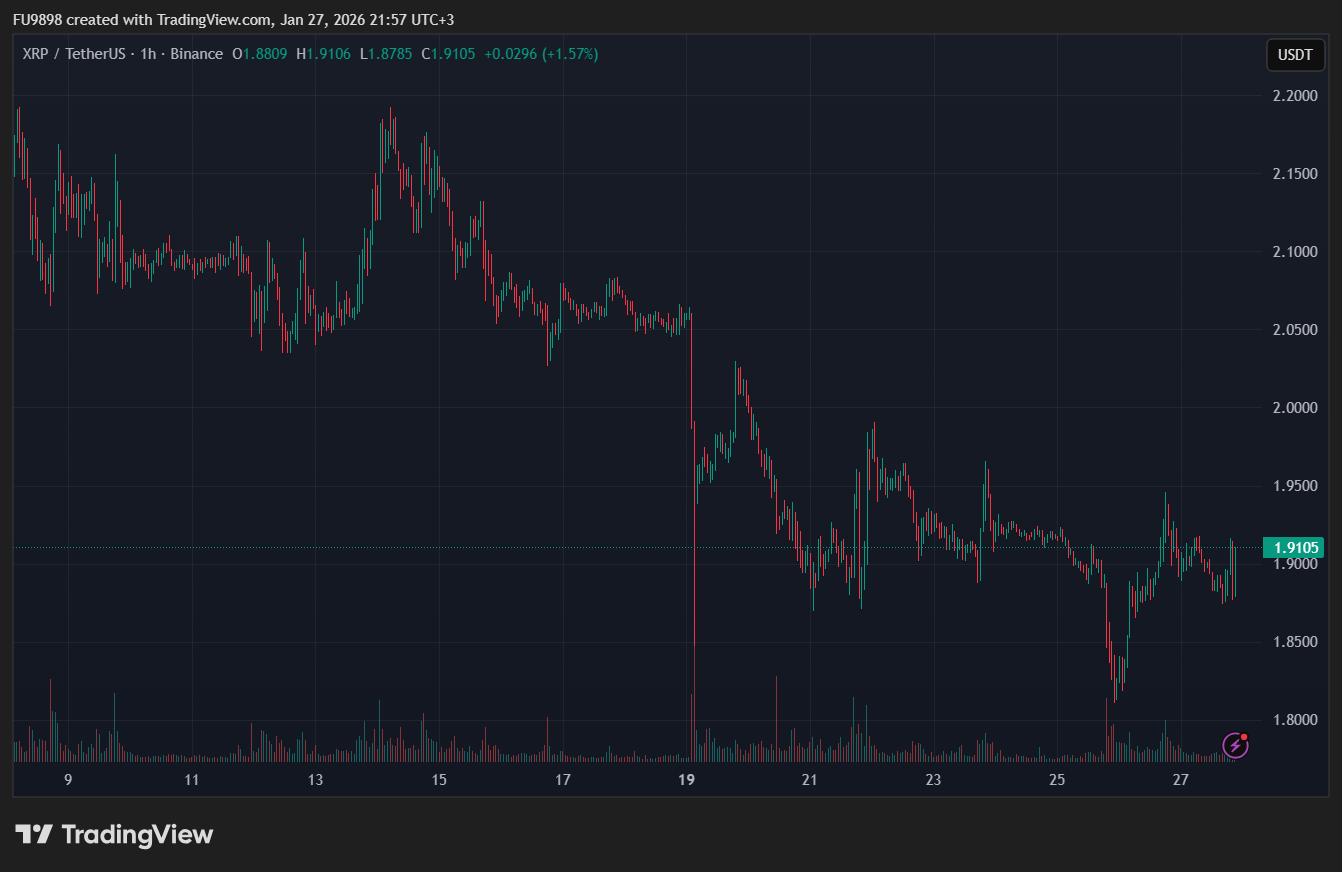
XRP Price at Critical Turning Point: German Analysis Firm Comments
Donald Trump Stirs Global Markets with Unexpected Currency Remarks
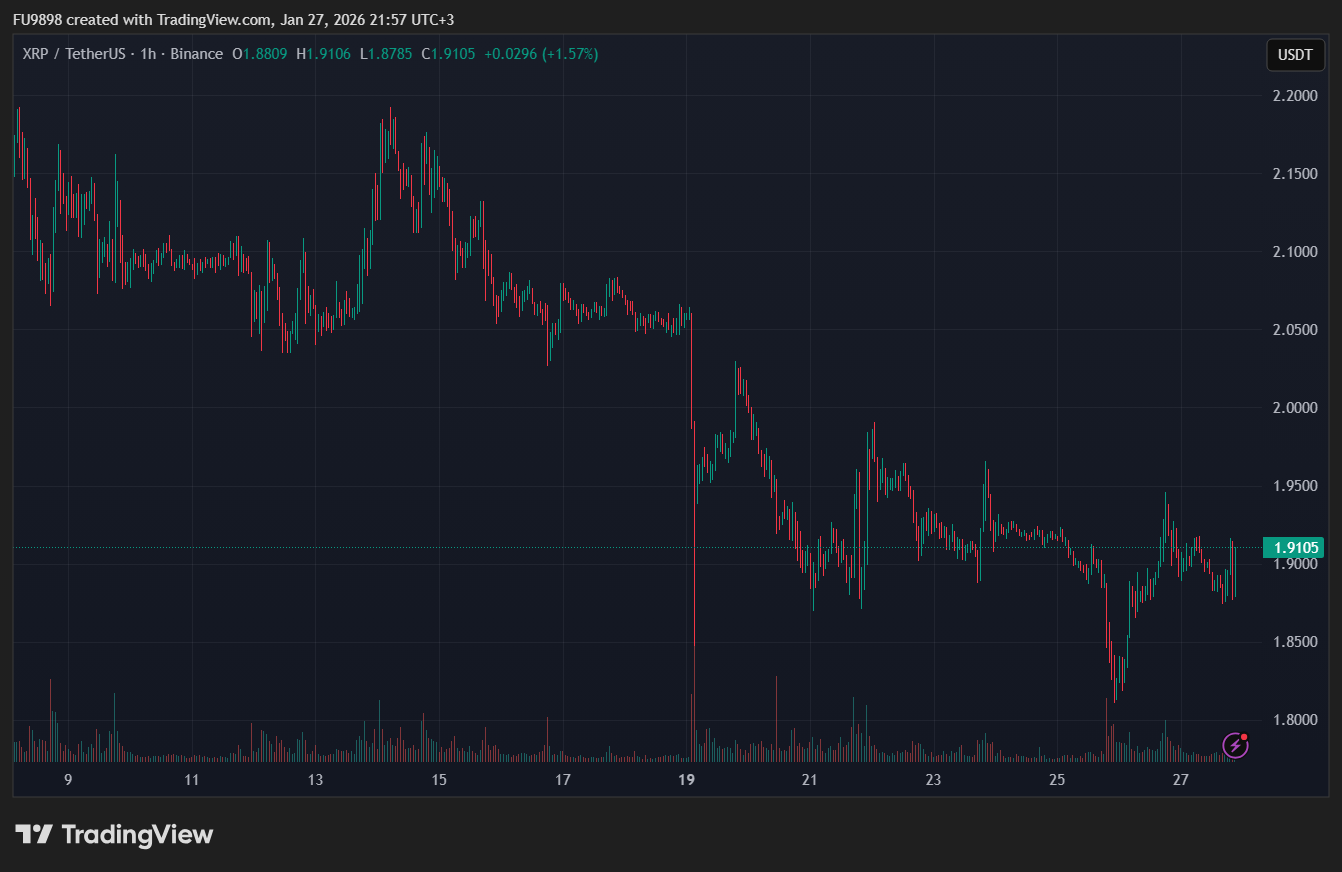
XRP Price at Critical Turning Point: German Analysis Firm Comments
Trending news
MoreCrypto prices
More






