
Research Report|In-Depth Analysis and Market Cap of Tria (TRIA)
Bitget2026/02/03 09:02
By:Bitget
Bitget offers one-stop trading for cryptocurrencies, stocks, and gold. Trade now!
A welcome pack worth 6200 USDT for new users! Sign up now!

I. Project Overview
Tria is a chain abstraction infrastructure project focused on building routing and execution layers for modern finance. It enables seamless asset transfers across any virtual machines and supports the development of a self-custodial Web3 neo-bank, allowing users to spend, trade, and earn without gas fees, seed phrases, or blockchain complexity.
The project launched its closed beta in October 2025 and achieved significant growth within just four months. As of January 2026, Tria has surpassed 300,000 users, reached $20 million in annual recurring revenue (ARR), and processed over $100 million in cumulative transaction volume.
Unlike traditional crypto wallets or centralized exchanges, Tria adopts a vertically integrated model, deeply combining a self-custodial wallet, multi-chain trading terminal, yield generation, and physical payment cards. The project emphasizes real revenue and real-world application rather than token speculation.
From a technical perspective, Tria’s core is BestPath AVS, a permissioned chain abstraction and intent market built on the EigenLayer restaking ecosystem. It optimizes cross-chain routing through a Pareto-optimal incentive framework. The underlying settlement layer, Unchained L2, is built on Arbitrum Orbit and MoveVM, utilizing Threshold Signature Schemes (TSS) and Asynchronous Distributed Key Generation (ADKG) to ensure security and cross-chain compatibility.
$TRIA is the project’s native utility token, serving functions including governance, BestPath settlement, fee subsidies, staking rewards, and membership benefits. It is designed as a deflationary model (zero inflation, all tokens pre-minted). In 2025, Tria raised $12 million in an undisclosed-valuation Pre-Seed round, followed by a community round on Legion in November 2025, which was oversubscribed by 4,300%. The mainnet is live, and trading officially opened on February 3, 2026, demonstrating strong product-market fit driven by rapid growth and real cash flow.
II. Project Highlights
Business Model: Self-Custodial Neo-Bank + Chain Abstraction
Tria is the first to combine a
self-custodial neo-bank with
chain abstraction technology, delivering a “
balance-first” user experience through BestPath AVS. Users can spend, trade, or earn using any asset on any chain without manually bridging assets or managing gas tokens.
The platform integrates:
-Visa payment cards (supporting 1,000+ tokens across 150+ countries),
-AI-optimized trading routes (BestPath integrates 70+ protocols including Polygon, Arbitrum, and Sentient),
-Embedded yield products (such as stablecoin and BTC staking),
forming a closed-loop ecosystem from spending to yield generation.
Compared with traditional CeFi solutions (e.g., Revolut), Tria delivers a comparable banking experience while preserving self-custody security, directly addressing crypto’s core usability problem.
Innovative Tokenomics and Utility Model
The $TRIA token establishes a usage-driven economic flywheel. Users earn tokens through spending (up to 6% cashback), trading, referrals, and governance participation. Tokens can be used to pay fees, upgrade benefits (e.g., card tier multipliers), or stake for rewards.
The key innovation lies in the direct linkage between token utility and platform revenue:
-All platform fees (0.1–0.5%) are burned, creating deflationary pressure.
-BestPath settlement and routing demand continuously drive token consumption.
The model emphasizes community ownership, with 41.04% allocated to the community, avoiding VC-dominated extraction. Multi-stage vesting schedules are designed to reduce early sell pressure.
Large-Scale Real-World Adoption and Commercialization
While most chain abstraction projects remain conceptual, Tria achieved explosive real-world growth:
-0 to 300,000 users in 4 months
-75% daily active rate
-$20 million ARR (as of January 2026)
The Legion community round was oversubscribed by 6,670% ($66.7 million requested vs. $1 million target), reflecting strong community confidence. The platform has processed over $100 million in transactions and distributed more than $1 million in user rewards, validating the effectiveness of its incentive model.
Partners include Upshift (institutional treasury), Sentora (yield strategies), and Agora (stablecoins), with ecosystem expansion into AI agent payments.
Addressing Multi-Chain Fragmentation
Tria targets one of Web3’s core challenges: fragmented user experience caused by isolated chains. BestPath AVS operates a competitive solver market (“PathFinders”) that dynamically computes optimal cross-chain routes, enabling sub-second execution and cost optimization.
It supports Ethereum, Solana, Cosmos, Move-based chains, and Bitcoin, with a long-term vision of becoming the on-chain payment infrastructure for humans and AI. The project estimates total on-chain payment volume could reach $100 trillion by 2030, with Tria driving mainstream adoption by abstracting complexity.
III. Market Capitalization Outlook
Tria raised approximately
$13 million across its Pre-Seed and community rounds. The Legion community round offered
FDV options of $100 million or $200 million:
-$100M FDV:
30% unlocked at TGE
-$200M FDV:
60% unlocked at TGE
Baseline Valuation Assumptions
Company valuation: Undisclosed (Pre-Seed); community FDV options imply $100–200M
ARR multiple:
5× at $100M FDV
10× at $200M FDV
These are reasonable for high-growth SaaS/fintech, compared with Revolut’s ~15–20× ARR multiple.
Token FDV Scenarios
-Conservative ($100–200M): Reflects community round valuation; early-stage chain abstraction risk remains, but real ARR supports a premium. Initial circulating market cap estimated at
$30–60M (21.89% circulating).
-Base Case ($200–500M): If FDV converges toward mature chain abstraction benchmarks, Tria’s user and revenue growth could justify valuation expansion.
-Bull Case ($500M–1B): Comparable to DePIN valuations (e.g., Helium Mobile ~$2B FDV), contingent on AI payment adoption and global expansion.
Key variables include TGE timing (February 3, 2026), circulating supply (21.89%), sector sentiment, and ARR sustainability (targeting
$100M ARR in 2026).
However, current crypto market liquidity may not fully support these valuation expectations.
IV. Token Economics
Total Supply: 10 billion $TRIA
Initial Circulating Supply: 2.1885 billion (21.89%)
Allocation:
-Investors (13.96%): 0% at TGE, 36-month linear vesting
-Core Contributors (12.00%): 0% at TGE, 12-month cliff + 36-month vesting
-Community (41.04%): 8.9% at TGE, no cliff, 37-month vesting
-Foundation (18.00%): 7.0% at TGE, 12-month cliff + 48-month vesting
-Ecosystem & Liquidity (15.00%): 6.0% at TGE, 12-month cliff + 48-month vesting
Token Utilities:
-BestPath settlement fees
-Staking and routing access
-Gas and fee subsidies
-Governance voting
-Membership benefits (e.g., Premium card with 6% cashback)
V. Team & Funding
Team
-Parth Bhalla (Co-founder & CEO): Former Binance and Polygon executive
-Vijit Katta (Co-founder & CTO): Infrastructure specialist leading BestPath AVS and Unchained L2
-Team members from OpenSea, Nethermind, Intel, combining crypto-native and traditional tech experience
Funding History
-Pre-Seed (Oct 14, 2025): $12M led by P2 Ventures (Polygon Ventures) and Aptos, valuation undisclosed
-Community Round (Legion, Nov 2025): $1M target, $66.7M demand (6,670% oversubscription), FDV options $100M or $200M
Total funding: ~$13M, allocated toward product development, global expansion, and ecosystem growth.
VI. Risk Factors
Fundamental Risks
-Technical execution risk: Complex chain abstraction architecture; reliance on EigenLayer security and cross-VM compatibility
-Competition risk: LayerZero, Axelar, and traditional neo-banks integrating crypto features
Token Sell Pressure
-Phase 1 (TGE): Community unlocks drive distributed selling pressure
-Phase 2 (2–12 months post-TGE): Investor and contributor vesting may increase volatility
-Phase 3 (Long-term): Community emissions vs. burn-driven deflation; ARR growth is critical
Overall, sell pressure is concentrated in the
short-to-mid term, particularly dependent on community investor behavior.
VII. Official Links
Website:
https://www.tria.so/zh
Docs:
https://docs.tria.so
X (Twitter):
https://x.com/useTria
GitHub:
https://github.com/tria-so
Disclaimer: This report is generated by AI and manually reviewed. It does not constitute investment advice.
1
0
Disclaimer: The content of this article solely reflects the author's opinion and does not represent the platform in any capacity. This article is not intended to serve as a reference for making investment decisions.
Understand the market, then trade.
Bitget offers one-stop trading for cryptocurrencies, stocks, and gold.
Trade now!
You may also like
Zcash Developers Say Users Can Verify ZEC Supply Locally
Coinedition•2026/07/30 14:09
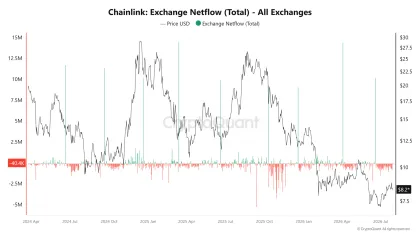
Can Chainlink flip $9? Whale buys 800K LINK amid growing demand
AMBCrypto•2026/07/30 14:06
Institutional crypto trading hits a record 72% as Wall Street calms crypto's wild swings
CryptoNewsNet•2026/07/30 14:03

Solana Price Prediction 2026 Targets $100 Amid Tightened Crypto Regulations: Is MemeToro The Best Memecoin Presale On BNB?
BitcoinSistemi•2026/07/30 14:03
Crypto prices
More
Bitcoin
BTC
$64,660.81
+0.59%

Ethereum
ETH
$1,918.03
+1.03%

Tether USDt
USDT
$0.9989
+0.01%

USDC
USDC
$0.9997
-0.01%

XRP
XRP
$1.08
+0.92%

Solana
SOL
$74.32
+1.22%

TRON
TRX
$0.3279
+0.48%

Hyperliquid
HYPE
$53.56
-2.87%

Dogecoin
DOGE
$0.07014
-0.30%

Zcash
ZEC
$472.64
+1.79%
How to buy BTC
Bitget lists BTC – Buy or sell BTC quickly on Bitget!
Trade now
Become a trader now?A welcome pack worth 6200 USDT for new users!
Sign up now