
Crypto’s Infrastructure Pivot: Inside BeInCrypto’s Executive Council

By:BeInCrypto
Executives from Bitpanda, Dune, and Libertex identify AI agents and demographic shifts as defining forces for 2026 More than fifteen years after the Bitcoin white paper sparked a revolution in how we think about money, the cryptocurrency industry is entering a period of rapid transformation. It now sits at the intersection of three powerful forces: co-option by incumbent financial institutions, the rise of AI agents, and the shifting demographics that come with mainstream adoption. What started as a fringe, ideologically pure attempt to escape centralised financial control is now being embraced by the very institutions it was designed to disrupt. The idealistic manifesto published by the mysterious Satoshi Nakamoto, and the blockchain innovations that followed, is no longer confined to the margins. Crypto is quietly sliding into the plumbing of global finance. Cryptos real-world use cases are no longer playing out in headlines, theyre being embedded quietly into the backend of global financial infrastructure. Many would argue this is a sign of maturity, and perhaps inevitable. But this transition brings with it a new set of challenges alongside the opportunities. That shift is forcing a rethink across the industry. The next phase of growth will not be driven by hype cycles, but by companies that understand how information is consumed and produced by both humans and AI systems, particularly autonomous agents whose transaction volumes may soon eclipse those of people. At the same time, cryptos audience is expanding well beyond its early adopters, reshaping how distribution works. Take this as a case in point. What was once mocked by the Davos elite now dominates centre stage, generating daily headlines in once hostile TradFi broadsheets like the Financial Times. This new paradigm was clearly articulated at BeInCryptos inaugural Executive Council, where senior leaders from Bitpanda, Dune, and Libertex came together for an extended discussion on the industrys most urgent strategic challenges, and the opportunities emerging from the convergence of AI, blockchain infrastructure, and mainstream financial adoption. The roundtable surfaced one finding that surprised even the participants: traditional performance marketing is becoming obsolete. Traffic to top websites has declined more than 11% over five years, according to SimilarWeb data, and AI agents are increasingly bypassing subscription models entirely consuming content without paying for it. Figure 1: Average monthly web traffic to the top 1,000 sites (Source: Similarweb via Axios) Key Takeaways Crypto moves to the backend. The industry is shifting from hype-driven growth to infrastructure mode. We dont need to explain the concept anymore its becoming invisible, one participant noted. AI agents are economic actors, not tools. Autonomous systems now consume, summarize, and act on content. Traditional monetization models subscriptions, traffic-based advertising face structural disruption. Demographics are diversifying. Banks and traditional financial institutions are mediating crypto adoption, bringing older audiences who consume news through legacy media rather than crypto-native channels. Volatility remains unsolved. While traditional markets have mature volatility management tools, crypto still lacks equivalent infrastructure at scale. Trust still requires humans. Despite rapid AI adoption, authority, expertise, and social proof not algorithms remain the primary trust signals for users. Detailed Findings From Headlines to Backend Infrastructure Cryptos maturation is accelerating. TradFi, fintech, and crypto now operate on similar rails, competing for the same users with similar tools. The competitive boundaries that once separated these sectors have largely dissolved. User acquisition has fragmented across referrals, partnerships, and LLM-powered search a shift that renders traditional performance marketing increasingly ineffective. At the same time, token price appreciation is no longer a reliable revenue driver, forcing projects to reassess opaque or outdated business models. Were entering a new era where success isnt measured by token prices alone. Dune, as the leading onchain data platform, is seeing that shift firsthand. Blockchain teams are increasingly focusing on data points that directly reflect their utility and real-world impact. Alsie Liu, Full-stack Web3 Marketing Manager, Dune The Social Era: Signals Over Opinions Social platforms have become primary news sources, particularly among younger audiences. In the US, 54% of people now access news via social media, with over half of under-35s relying on these platforms as their main source surpassing TV and traditional news websites for the first time. Figure 2: Proportion using each as source of news in the US, 2013-2025 (Source: Reuters Institute) The shift is not merely about platform preference it reflects deeper changes in content expectations. Audiences increasingly demand signals and verifiable facts over opinion-heavy analysis. Personalization is now baseline, not premium. The rise of social media-based news is not unique to the United States, but changes are happening faster there. The US is joining a social-first club that includes Brazil, many African countries, the Philippines, and Indonesia. Meanwhile, European countries and Japan show more resilience toward traditional news brands. Figure 3: Proportion saying social media is their main source of news (Source: Reuters Institute) Boomers are coming to the game. They consume news the old-fashioned way Boomers will go to the banks. Vishal Sacheendran, VP Global Markets Strategy Operations, Bitpanda AI as Economic Actor AI is no longer just a productivity tool. According to McKinseys 2025 survey, 88% of companies now use AI in at least one business function but only 7% have deployed it enterprise-wide. This gap creates a significant first-mover advantage for organizations that scale quickly. Figure 4: AI adoption and deployment phases, 2017-2025 (Source: McKinsey Global Survey) At leading AI-native organizations, 60% of daily work is AI-assisted, delivering a 50% productivity boost. The structural challenge: AI agents can consume, summarize, and publish content autonomously, bypassing traditional monetization entirely. Platforms lose subscriptions and traffic-based ad revenue. No one has yet solved how to monetize agent-driven behavior. Success in the next era means creating content that serves both humans and AI agents. Companies that design for machine-readability alongside human engagement will be positioned at the forefront of how information flows. Alsie Liu, Full-stack Web3 Marketing Manager, Dune Regulatory gray zones compound the challenge. Data center location, jurisdiction, and compliance accountability are now strategic considerations. There is hype coming from managers that we need to add AI everywhere. But we need governance while doing it. Dennis Alexander, CTO, Libertex Trust in the AI Age Despite rapid automation, trust formation remains distinctly human. The attention crisis is real: In this attention-scarce environment, authority and social proof outperform algorithmic recommendations. Younger users follow community signals; older audiences rely on familiar platforms and brands. No evidence in their A/B tests that clients use AI for analysis; they use it for shortcuts. Dennis Alexander, CTO, Libertex Strategic Implications The Executive Council findings point to three strategic imperatives for crypto media: Optimize for AI consumption. Content strategies must account for non-human readers that summarize and redistribute information without traditional engagement metrics. Publishers who build AI-friendly infrastructure first will capture the distribution advantage. Diversify audience channels. As banks and traditional institutions mediate crypto adoption, media platforms must meet users where they are including legacy and local news channels. The audience is fragmenting; reach requires multichannel presence. Prioritize trust signals. In a world of AI-generated content, editorial authority, expertise, and social proof become competitive differentiators. Human voices with real accountability will command premium attention. The Bottom Line for Media Strategy The era of performance marketing and platform dependence is ending. The future belongs to organizations that can: Build direct audience relationships Create AI-consumable content infrastructure Establish human trust signals that algorithms cant replicate About the Executive Council BeInCryptos Executive Council brings together internal leadership and external executives to identify blind spots, debate solutions, and challenge strategic assumptions. The January 2026 session included: Vishal Sacheendran, VP Global Markets Strategy Operations, Bitpanda Alsie Liu, Full-stack Web3 Marketing Manager, Dune Dennis Alexander, CTO, Libertex Discussion was held under Chatham House-style principles. Insights are synthesized to reflect collective perspectives unless individually attributed with speaker approval. Read the article at BeInCrypto
0
0
Disclaimer: The content of this article solely reflects the author's opinion and does not represent the platform in any capacity. This article is not intended to serve as a reference for making investment decisions.
PoolX: Earn new token airdrops
Lock your assets and earn 10%+ APR
Lock now!
You may also like
Crypto Market Downturn Shakes Venture Capitalists Following $19 Billion Investment Wave
101 finance•2026/02/09 15:18

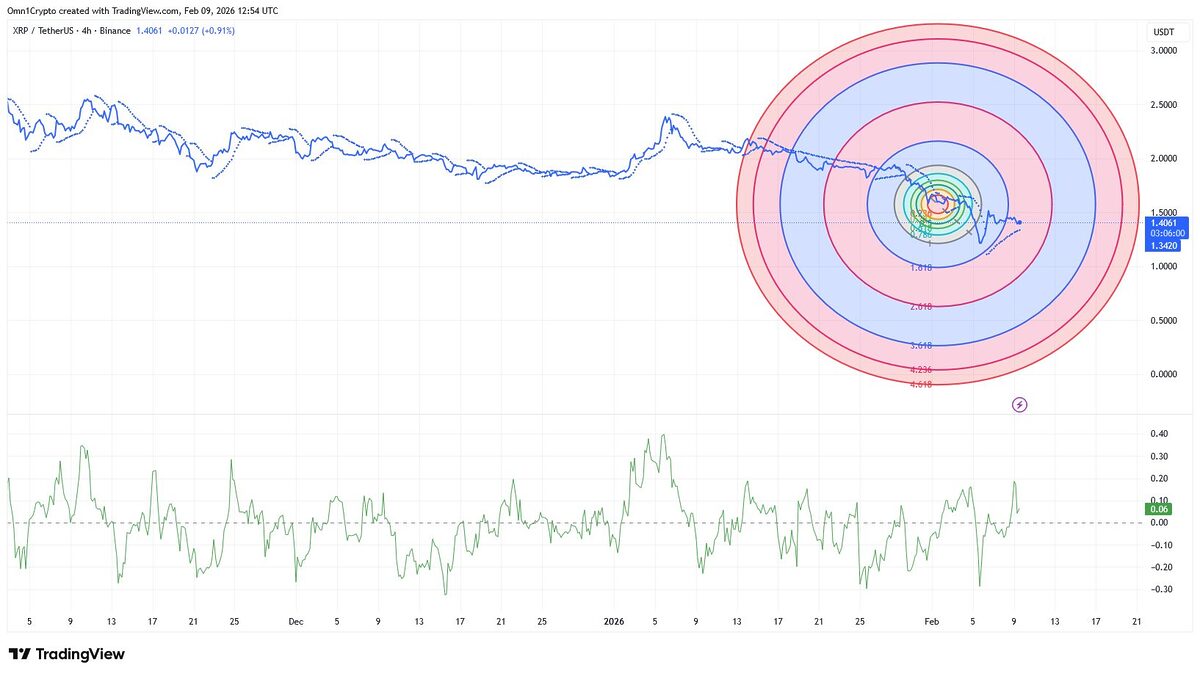
XRP’s Fib Circle Bulls Demand $1.40 Close To Restore $3
DailyCoin•2026/02/09 15:15
BC-US-Foreign Exchange
101 finance•2026/02/09 15:12
BC-Sugar Futures
101 finance•2026/02/09 15:12
Trending news
MoreCrypto prices
More
Bitcoin
BTC
$69,109.29
-2.99%

Ethereum
ETH
$2,041.3
-3.69%

Tether USDt
USDT
$0.9994
+0.00%

XRP
XRP
$1.43
-1.58%

BNB
BNB
$628.14
-2.78%

USDC
USDC
$0.9998
-0.00%

Solana
SOL
$84.67
-4.34%

TRON
TRX
$0.2772
-0.53%

Dogecoin
DOGE
$0.09475
-3.33%

Bitcoin Cash
BCH
$520.71
-2.65%
How to buy BTC
Bitget lists BTC – Buy or sell BTC quickly on Bitget!
Trade now
Become a trader now?A welcome pack worth 6200 USDT for new users!
Sign up now