
Is XRP Ledger Centralized? David Schwartz Challenges Justin Bons’ Claim

By:BeInCrypto
Debate is raging in the crypto community as Justin Bons, founder and CIO of Cyber Capital, argues that Ripples XRP Ledger (XRPL) is centralized. Meanwhile, Ripples CTO Emeritus, David Schwartz, has firmly defended its architecture. This raises crucial questions about what makes a blockchain genuinely decentralized. Justin Bons Labels XRP Ledger Centralized In a recent post on X (formerly Twitter), Bons criticized what he calls centralized blockchains.He argued that several networks rely on permissioned validator structures, pointing to XRP Ledgers Unique Node List (UNL) as an example. Ripple: Has a Unique Node List, which makes the validators effectively permissioned. Any divergence from this centrally published list would cause a fork, effectively giving the Ripple Foundation company absolute power control over the chain, he wrote. He also named Canton, Stellar, Hedera, and Algorand in his post. Bons framed decentralization as a binary choice, arguing that a blockchain is either fully permissionless or it is not. In his view, any permissioned element is anti-thetical to the ethos of crypto. The future of finance is decentralized permissionless, he wrote. But lets not pretend as if these chains are really playing a part in this revolutionif you care about crypto. Reject these permissioned chains demand they decentralize. Bons also outlined what he described as the only three forms of blockchain consensus: Proof of Stake, Proof of Work, and Proof of Authority. He mentioned that any system not based on PoS or PoW then it is, by definition, PoA. The executive said that choosing who we trust is not the same as trustlessness, specifically referencing XRP and XLM. David Schwartz Defends XRP Ledger Bons post sparked notable reactions from the community. Schwartz, one of the chief architects of the XRP Ledger, rejected claims that Ripple has absolute power control. He explained that the XRP Ledger was designed so that Ripple could not control the network. Schwartz said this decision was intentional and rooted in regulatory considerations. Ripple, for example, has to honor US court orders. It cannot say no.But could a US court decide that international comity with an oppressive was more important than XRPL or Ripple? We were quite concerned that could come down either way. We absolutely and clearly decided that we DID NOT WANT control and that it would be to our own benefit to not have that control, he replied. Schwartz also pushed back against Bons claims about potential double-spending and censorship.He explained that validators cannot force an honest node to accept a double-spend or censor transactions. Each node independently enforces protocol rules and only counts the validators it has chosen on its Unique Node List (UNL). If a validator behaves dishonestly, an honest node simply treats it as a validator it disagrees with. Schwartz acknowledged that validators could theoretically conspire to halt the network from the perspective of honest nodes. However, he said this would be equivalent to a dishonest majority attack and would still not allow double-spending. In such a scenario, he argued that the remedy would be to select a new UNL. Transactions are discriminated against all the time in BTC. Transactions are maliciously re-ordered or censored all the time on ETH. Nothing like this has *ever* happened to an XRPL transaction and its hard to imagine how it could, he remarked. He also pointed out that XRPL resolves the double-spend problem through consensus rounds that occur roughly every five seconds. During each round, validators vote on whether transactions should be included in the current ledger. Honest nodes may defer a valid transaction to the next round if a supermajority of trusted validators say they did not see it before the cutoff. According to Schwartz, this mechanism maintains consensus without granting unilateral control to any single party. There are only two reasons you need a UNL: 1) Otherwise a malicious party could create an unbounded number of validators causing nodes to need to do excessive work to reach consensus. 2) Otherwise a malicious party could create validators that just didnt participate in consensus, leaving nodes unable to tell whether they actually had reached a consensus with other nodes, he noted. He further stressed that if Ripple had the ability to censor transactions or execute double spends, using that power would permanently damage trust in XRPL. Therefore, he said the system was intentionally architected to limit the power of any single actor, including Ripple itself.
0
0
Disclaimer: The content of this article solely reflects the author's opinion and does not represent the platform in any capacity. This article is not intended to serve as a reference for making investment decisions.
PoolX: Earn new token airdrops
Lock your assets and earn 10%+ APR
Lock now!
You may also like
Surge in Crypto ETF Inflows on February 24
Coinomedia•2026/02/25 07:30
Stocks Face Long Grind Lower, but Bitcoin May Rally First, Says Gareth Soloway
CryptoNewsNet•2026/02/25 07:15

What Drove MDJM Ltd. (UOKA) Shares To Jump Over 26% After Hours
Finviz•2026/02/25 07:09
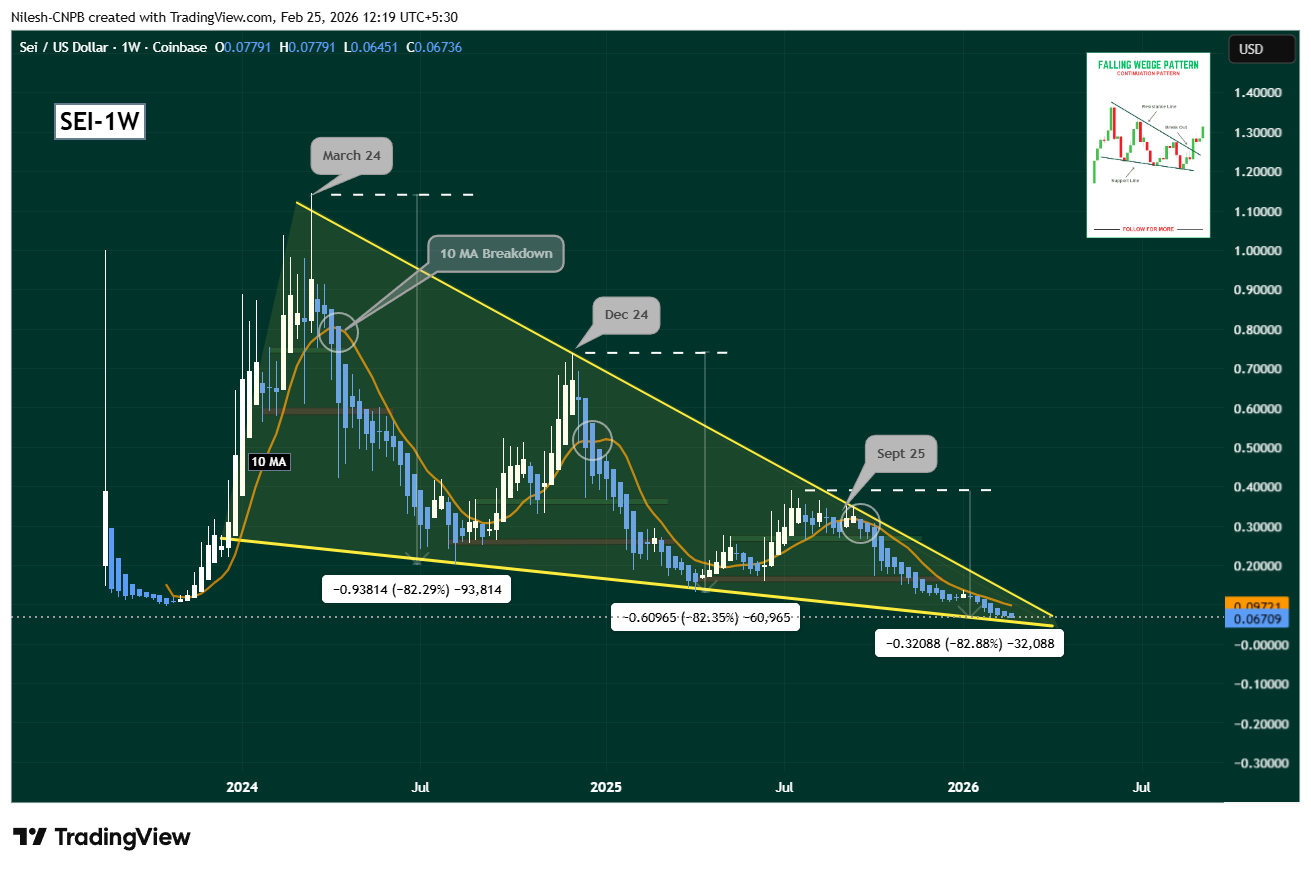
Sei (SEI) Completed Major Fractal Correction – What Could Trigger a Bullish Reversal?
Coinsprobe•2026/02/25 07:06
Trending news
MoreCrypto prices
More
Bitcoin
BTC
$65,053.16
+3.02%

Ethereum
ETH
$1,890.67
+3.84%

Tether USDt
USDT
$0.9999
+0.01%

XRP
XRP
$1.37
+2.88%

BNB
BNB
$595.28
+1.07%

USDC
USDC
$0.9999
+0.00%

Solana
SOL
$82.24
+6.87%

TRON
TRX
$0.2862
+1.64%

Dogecoin
DOGE
$0.09262
+1.66%

Bitcoin Cash
BCH
$489.57
+1.20%
How to buy BTC
Bitget lists BTC – Buy or sell BTC quickly on Bitget!
Trade now
Become a trader now?A welcome pack worth 6200 USDT for new users!
Sign up now