Brad Bao, tech entrepreneur, investor and co-founder of electric scooter company Lime, has been named as a defendant in a federal lawsuit alleging a large-scale cryptocurrency fraud tied to blockchain project Cere Network, according to a complaint filed in the U.S. District Court for the Northern District of California.
The civil suit, filed by investor Vivian Liu and her investment company, Goopal Digital Ltd., seeks $100 million in compensatory and punitive damages.
Sponsored
The case is brought under the Racketeer Influenced and Corrupt Organizations Act (RICO), a law usually applied to organized fraud networks rather than typical token disputes. It also includes claims of fraud, negligent misrepresentation, and breach of agreements.
The complaint alleges that several individuals connected to the project participated in a coordinated scheme that misled investors about token lockups, fund usage, and the project’s financial integrity.
Allegations Center on Cere Network Token Sales
The lawsuit centers on San Francisco entrepreneur Fred Jin, founder and operator of Cere, a blockchain-based cloud data storage platform launched in 2019. Jin previously founded Funler, a mobile gaming company, and Bitlearn, an education-blockchain platform.
Cere launched a native cryptocurrency, the Cere Token, designed for network transactions and to give token holders a governance role.
The project raised roughly $43 million from more than 5,000 retail investors during the token sale in November 2021. The plaintiffs allege Jin promised that insider tokens would remain locked under a strict vesting schedule.
Instead, the lawsuit claims insiders transferred tokens to exchanges, including HTX and KuCoin, and sold them aggressively in the weeks after launch.
The token peaked at about $0.47 on its first trading day before crashing to roughly $0.06 by the end of 2021, a decline the plaintiffs attribute to the alleged insider selling that violated public vesting commitments.
Bao’s Alleged Role as Board Member
In crypto, a recognizable name can make or break a project’s ability to attract investment. According to the complaint, Brad Bao played that role at Cere Network. As a board member and Lime co-founder, his presence signaled credible leadership to investors.
Plaintiffs allege Bao received director’s fees and an early CERE token allocation for his board seat. They claim he approved transactions that funneled investor funds into the personal accounts of Cere CEO Fred Jin and ignored accounting irregularities that any board member should have flagged.
Bao’s legal troubles are not new. He has previously faced a fraud case involving the City of San Francisco and a lawsuit from venture firm Khosla Ventures over a failed $30 million acquisition deal.
Claims of Fund Diversion and Offshore Routing
According to the complaint, around $41.78 million in proceeds from token sales were routed through intermediary wallets and eventually moved into accounts and entities allegedly controlled by Jin and close associates.
The filing references a network of entities across jurisdictions, including Delaware, the British Virgin Islands, Panama, and Germany.
The plaintiffs further allege that an additional $16.6 million was withdrawn from corporate wallets and lost in speculative decentralized finance (DeFi) investments, raising additional concerns about internal financial controls and oversight.
Disputed Token Promises and Market Manipulation Allegations
Vivian Liu claims she was recruited in 2019 to both work for and invest in Cere Network based on assurances of token compensation and profit participation.
The complaint states that Liu was allegedly owed 20 million tokens, while Goopal Digital Ltd. was owed 33.3 million tokens, together valued at around $25 million at peak market prices.
The filing states that despite repeated requests, neither Liu nor her company ever received the promised allocations.
The lawsuit also alleges that market conditions surrounding the token’s launch were artificially influenced. Plaintiffs claim that market-making firm Gotbit Ltd. was engaged to deploy automated trading bots that generated artificial trading volume.
According to the complaint, this activity created the appearance of sustained market demand even as insiders were allegedly selling their holdings, obscuring the true level of downward pressure on the token’s price.
Pattern Allegations And Legal Scope
The complaint portrays CEO Fred Jin as having a recurring pattern of launching ventures, raising capital, and then moving on to subsequent projects, citing earlier initiatives such as Funler and Bitlearn prior to the launch of Cere Network in 2019. Plaintiffs argue that this alleged pattern forms part of a broader racketeering conspiracy underlying the case.
Beyond Jin and Brad Bao, the lawsuit names several additional defendants, including Maren Schwarzer, Xin Jin, CMO Martijn Broersma, and director Francois Granade, as well as corporate entities Cerebellum Network Inc., Interdata Network Ltd., and CEF AI Inc.
The complaint asserts multiple civil claims, including violations of RICO statutes, fraud, aiding and abetting fraud, negligent misrepresentation, and breaches of advisory and token sale agreements.
CERE Price Collapsed
The CERE token is now trading around $0.0027, a staggering drop of nearly 99.96% from its reported all-time high.
Plaintiffs in the lawsuit describe the token as effectively “worthless” and allege that the project was largely abandoned after the early sell-off.
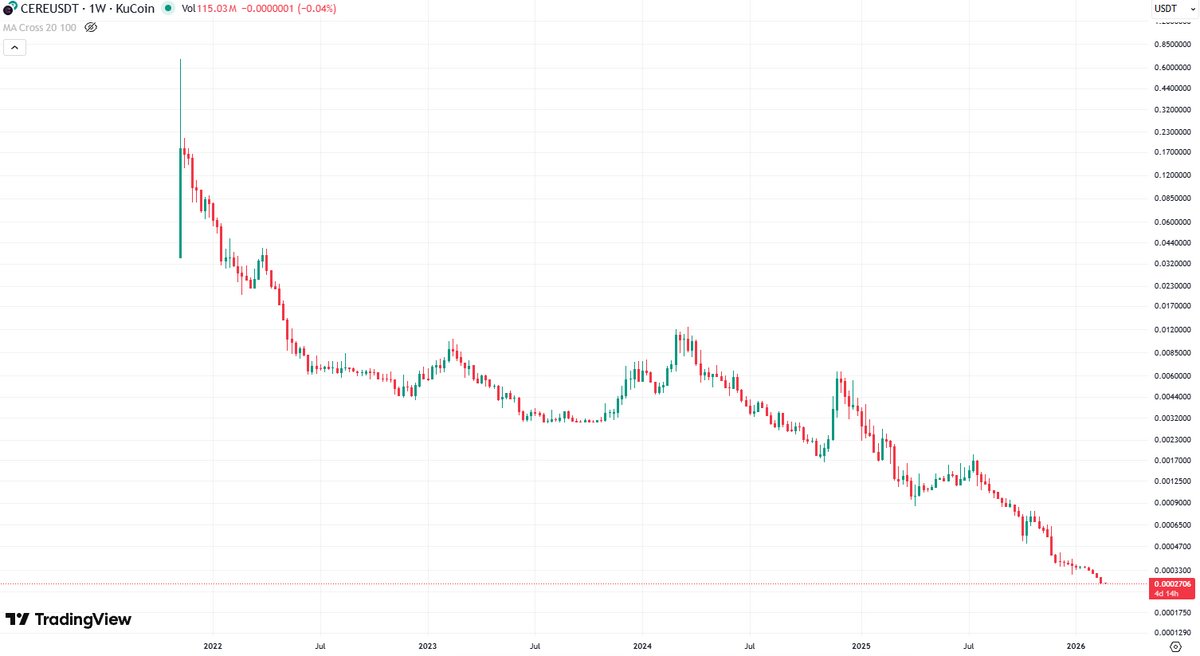 Source: TradingView
Why This Matters
The case stands out for naming a high-profile tech figure on the board and highlights growing scrutiny of governance in token fundraising, including board oversight, vesting transparency, insider liquidity, and investor concerns over lockups, token allocations, and early-stage market practices. Its outcome could set a precedent, reshaping how crypto boards are held accountable worldwide.
Explore DailyCoin’s hottest crypto news right now:
People Also Ask:
Crypto governance refers to how decisions are made in a blockchain project, including protocol changes, fund allocation, and token distribution. Poor governance can create risks for investors.
Early token distributions can give founders or insiders significant control or financial advantage. Transparent policies help ensure fairness and reduce conflicts of interest.
Yes. Legal action can be taken if founders breach agreements, misrepresent facts, or fail to uphold fiduciary responsibilities.