
Sinclair’s Fourth Quarter Outperformance: Temporary Recovery or Evidence of Lasting Momentum?

Sinclair’s Q4 Performance: A Tactical Upswing Amid Broader Challenges
Sinclair recently posted impressive results for the fourth quarter, with total revenue reaching $836 million, surpassing the midpoint of its guidance. Adjusted EBITDA also came in strong at $168 million, exceeding expectations. This marks a notable recovery from the weaker results seen in the second and third quarters, fueled by robust demand for live sports and effective cost management.
However, the annual results paint a more nuanced picture. Despite the quarterly outperformance, Sinclair’s full-year revenue declined by 11% year-over-year, totaling $3.17 billion. The bright spot lies in core advertising, which grew by $71 million compared to the previous year, highlighting some resilience in the company’s foundational business segment.
To reinforce its position, Sinclair completed 15 acquisitions of partner stations and distributed a $0.25 quarterly dividend. While these moves aim to enhance its portfolio and reward shareholders, they do not address the underlying issue of declining overall revenue.
Mixed Outlook: Short-Term Gains, Long-Term Uncertainty
The current environment for Sinclair is complex. The Q4 rebound, driven by core advertising, demonstrates that the company’s main operations can still deliver. Yet, the ongoing annual decline and heavy reliance on political advertising—a segment that surged by an extraordinary 133% quarter-over-quarter—introduce significant volatility. Rather than signaling lasting strength, this rebound appears to be a temporary boost in a single area of the business.
The Political Advertising Factor: Opportunity and Risk
The standout driver behind Sinclair’s Q4 success was a dramatic increase in political advertising revenue. Although the company highlighted “solid core advertising growth,” the real story is the unpredictable nature of political ad spending. Last quarter, political revenue jumped by 133% over the previous quarter, a typical pattern during election years. This windfall, however, is cyclical and not a reliable source of ongoing growth.
Looking ahead, Sinclair’s 2026 forecast underscores this dependency. Management anticipates at least $333 million in political advertising revenue for the year, which would account for nearly half of the projected Adjusted EBITDA of $700–740 million. This reliance means that strong election years can boost results, but off-cycle years could put pressure on profitability.
This dynamic is reflected in the company’s recent share price, which has hovered around $13.86. Investors remain cautious, pricing in the uncertainty of political ad revenue and the possibility that the 2026 cycle may not match the gains seen in 2024. The Q4 surge, driven by political spending, appears to be a one-off event rather than evidence of sustained operational improvement. For Sinclair’s stock to climb, the company must prove that its core advertising and distribution businesses can grow steadily, regardless of the political calendar. Until then, the outlook remains fragile.
Valuation and Analyst Perspectives: A Wait-and-See Approach
Analysts currently rate Sinclair as a “hold,” with a consensus price target of $19.00. However, opinions vary widely, with targets ranging from $13.00 to $27.00. This spread reflects the market’s uncertainty about Sinclair’s prospects for 2026.
The optimistic scenario, with a target near $27, assumes continued growth in core advertising and a strong political ad cycle. The bearish view, at $13, anticipates disappointing political revenue and stagnation in core advertising, making it difficult for Sinclair to achieve its EBITDA goals. The stock’s recent trading near $13.86 suggests that investors are leaning toward the more cautious outlook.
In the near term, the robust Q4 results provide some support for the stock. However, Sinclair’s performance in the coming year will depend on whether core advertising can offset the inherent volatility of political ad revenue. With analysts taking a neutral stance, the market is waiting for the first half of the year to see if the expected political revenue materializes and if the core business can demonstrate consistent growth outside of election cycles. Until then, Sinclair’s shares are likely to remain range-bound, reflecting ongoing uncertainty.
Disclaimer: The content of this article solely reflects the author's opinion and does not represent the platform in any capacity. This article is not intended to serve as a reference for making investment decisions.
You may also like
5 Important Facts to Be Aware of Before the Stock Market Starts
Bitcoin’s 4-Year Cycle Still Intact as On-Chain Signals Realign

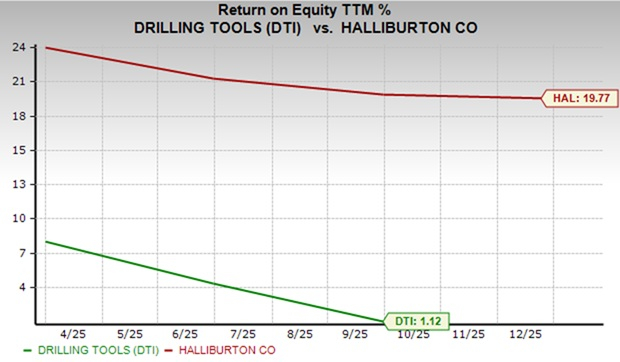
DTI or HAL: Which Oilfield Services Stock Provides Greater Value?
NVIDIA’s China AI Market Projections and Rubin Ramp Timeline Clash in Earnings Call
Trending news
MoreCrypto prices
More





