
Ares Defies Skeptical Analysts With 1.72 Gain Despite 262nd Ranked 0.5B Volume And Private Credit Premium Doubts

Market Snapshot
Ares Management Corporation (ARES) closed on February 25, 2026, with a 1.72% gain, marking a positive move despite mixed analyst sentiment. The stock’s trading volume reached $0.50 billion, ranking it 262nd in daily trading activity. This performance contrasts with recent analyst downgrades, as three major firms—UBS, TD Cowen, and RBC Capital—reduced their price targets, reflecting growing skepticism about the sustainability of private credit premiums in a maturing market.
Key Drivers
The recent analyst revisions highlight a shift in market dynamics. UBS cut its price target from $198 to $148 while maintaining a Neutral rating, signaling that the stock’s growth potential is now seen as fully priced in. TD Cowen similarly lowered its target to $167 from $200 but retained a Buy rating, emphasizing its overweight stance on alternative asset managers. RBC Capital, meanwhile, reduced its target to $180 from $200 but kept an Outperform rating, noting favorable capital deployment trends and Ares’s strong credit underwriting history. These adjustments underscore a broader debate about whether the private credit sector’s historically high returns can persist amid rising competition and evolving macroeconomic conditions.
Ares’s fourth-quarter performance provided a counterpoint to the analyst caution. The company reported revenue of $1.50 billion, exceeding the $1.33 billion consensus estimate. CEO Michael Arougheti highlighted a “strong Q4” that capped an “exceptional year,” with assets under management (AUM) surpassing $600 billion and annual fundraising and investing exceeding $100 billion. The acquisition of GCP International further expanded its real estate and digital infrastructure capabilities. CFO Jarrod Phillips noted a 29% year-over-year increase in AUM, a 32% rise in fee-paying AUM (FPAUM), and a 25% growth in management fees, alongside a 20% dividend hike. These metrics suggest robust operational momentum, yet the stock’s recent decline indicates market skepticism about translating this performance into long-term value.
Analysts and market participants are increasingly focused on structural risks to Ares’s business model. One key concern is the potential dilution of the private credit premium as competition intensifies. The sector’s rapid growth—driven by constraints on regional bank lending and favorable macroeconomic conditions—has attracted more capital, particularly through semi-liquid vehicles targeting retail investors. This influx raises questions about whether the illiquidity premium that historically justified higher returns can be maintained. Additionally, risks such as the use of payment-in-kind (PIK) facilities and performance deterioration at large platforms could erode investor confidence. Analysts warn that even isolated negative events at major players might spill over into broader market sentiment, pressuring AresARES+1.72% despite its strong fundamentals.
Upcoming catalysts will test Ares’s ability to sustain its premium in a competitive environment. The pace of deal flow relative to supply will be critical, as a structural imbalance favoring lenders could reinforce pricing discipline. Sustained investor inflows, particularly from wealth-channel semi-liquid vehicles, will also validate the durability of capital deployment trends. Meanwhile, the company’s next earnings report will need to detail the quality of fee-generating assets and address risks such as market convergence, where traditional and alternative asset managers increasingly compete for capital. For now, the stock’s valuation reflects a cautious equilibrium: it has priced in growth but demands proof of premium sustainability in a sector where the easy money may already be accounted for.
Strategic Positioning and Long-Term Outlook
Ares’s recent strategic moves, including the GCP International acquisition, aim to diversify its revenue streams and strengthen its position in high-growth sectors like digital infrastructure. However, the market’s focus has shifted from growth to durability. While RBC Capital praised the company’s long track record in credit underwriting, the broader analyst community is now scrutinizing whether Ares can maintain its competitive edge as private credit becomes more mainstream. The firm’s scale and sponsor relationships are assets, but they also expose it to heightened scrutiny in a sector where performance headlines can swiftly reshape perceptions. For investors, the challenge lies in balancing Ares’s operational strengths with the structural risks of a maturing industry. Until these dynamics resolve, the stock’s trajectory will likely remain tied to the sector’s ability to defend its premium amid intensifying competition.
Disclaimer: The content of this article solely reflects the author's opinion and does not represent the platform in any capacity. This article is not intended to serve as a reference for making investment decisions.
You may also like

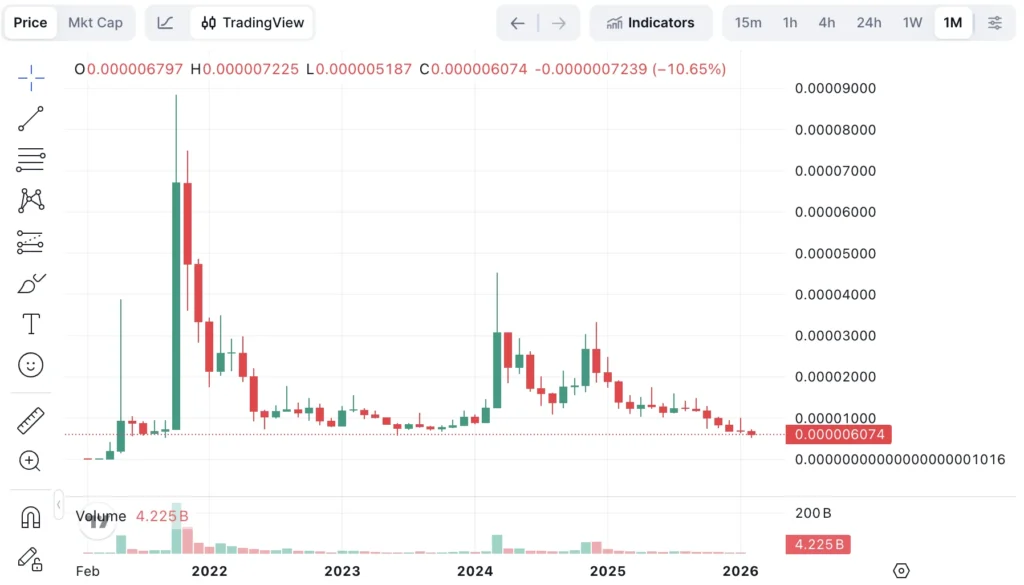
Shiba Inu (SHIB) Price Prediction
Klaviyo (KVYO) Partners With Google to Deliver Next Gen Customer Experience

Klarna Group (KLAR) Reaches 55 Million Monthly Active Users

Trending news
MoreCrypto prices
More





