
China aims to curb the yuan's appreciation by reducing the expense of shorting the currency

China Eases Measures to Slow Yuan’s Rise
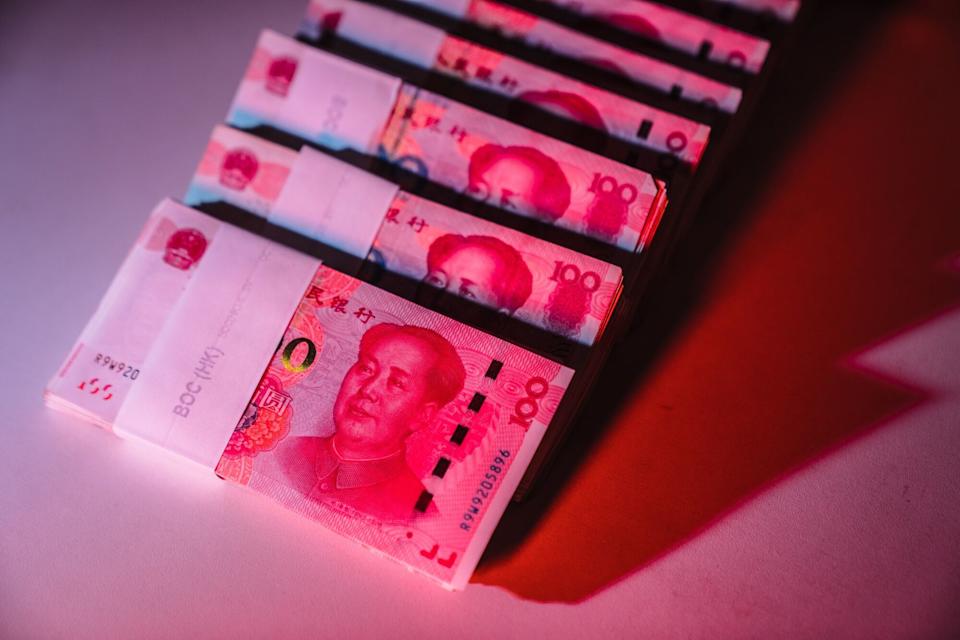
China has taken new steps to limit the yuan’s appreciation by eliminating an extra fee for betting against the currency in the derivatives market.
The People’s Bank of China (PBOC) announced it will remove the 20% reserve requirement on foreign-currency forward contracts starting March 2. This adjustment makes it less expensive for investors to take short positions on the yuan through derivative deals with banks.
Top Stories from Bloomberg
According to the PBOC, this policy change is intended to help businesses better manage foreign-exchange risks. The central bank also reaffirmed its commitment to keeping the yuan’s value steady within a reasonable range and guiding financial institutions to enhance their FX hedging services.
This adjustment comes as the yuan has reached its strongest levels in years against a weakening US dollar. Authorities have repeatedly cautioned against excessive currency appreciation, which could hurt Chinese exporters and intensify deflationary pressures.
“This is one of the measures expected to be used to moderate the yuan’s gains versus the dollar,” said Fiona Lim, a strategist at Maybank in Singapore. “The PBOC’s recent actions signal that while the central bank does not object to a stronger yuan, it wants to prevent rapid appreciation.”
On Thursday, the onshore yuan climbed to its highest point since April 2023, marking its longest rally since 2010. Factors such as strong foreign-exchange inflows, improving US-China relations, and a weaker dollar have all contributed to the yuan’s rise.
Previously, the PBOC had been setting daily reference rates for the yuan that were weaker than market expectations to slow its ascent. The central bank’s “fixing” mechanism allows the yuan to move up to 2% in either direction from the set rate.
On Friday, the PBOC set the daily reference rate 793 pips below the average forecast in a Bloomberg survey—a record deviation—indicating the central bank’s intent to restrain the currency’s appreciation.
Meanwhile, the offshore yuan slipped 0.2% to 6.8585 per dollar in Hong Kong trading on Friday morning.
Bloomberg Strategists’ Perspective
The central bank is not trying to halt the yuan’s gains entirely, but wants to remind currency traders that it does not favor a one-way bet on the dollar-yuan pair.
—Mark Cranfield, Markets Live strategist
Background and Additional Insights
The PBOC has adjusted the reserve requirement on foreign-exchange forward contracts multiple times since 2015. The last time this tool was used was in 2022, when the charge was reintroduced to support the yuan amid depreciation pressures.
Most Read from Bloomberg Businessweek
©2026 Bloomberg L.P.
Disclaimer: The content of this article solely reflects the author's opinion and does not represent the platform in any capacity. This article is not intended to serve as a reference for making investment decisions.
You may also like
Can XPL bulls absorb the $10.79 mln token unlock? Assessing…
FirstEnergy’s $36 Billion Gamble: Is This a Quality Strategy or Overpaying for Growth?
FirstEnergy's $36B Bet: A Quality Factor Play or Growth-at-a-Price?
Exclusive-Nintendo plans around $1.9 billion share sale by Kyoto bank and others, sources say
Trending news
MoreCrypto prices
More





