
Under Pressure, Berkshire-Owned Utility Seeks to Shift Wildfire Costs

PacifiCorp Faces Mounting Wildfire Liabilities
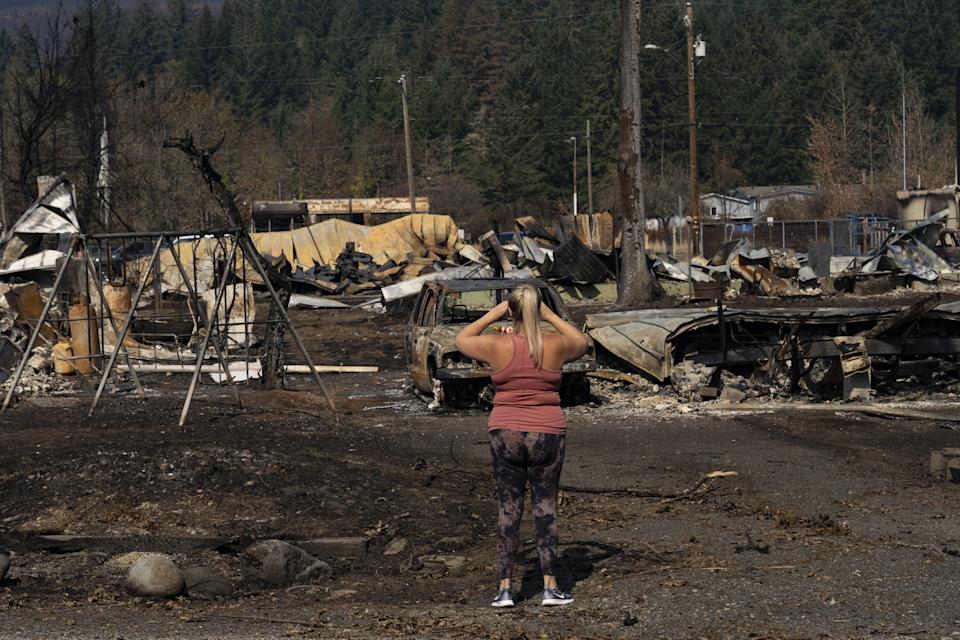
Photo by Go Nakamura/Bloomberg
When a fast-moving wildfire swept through his Oregon property in 2020, retired firefighter Fred Cuozzo barely escaped with his life, driving through flames as his home was consumed. Only one building on his 16-acre land survived the blaze.
Top Stories from Bloomberg
Now, more than five years later, Cuozzo, 80, is still waiting to receive over $6 million in damages awarded by a jury, which found that PacifiCorp, a Berkshire Hathaway-owned utility, was responsible for the fire. His case is just one among thousands, with total claims from Oregon’s devastating Labor Day fires reaching into the billions. “Warren Buffett owns PacifiCorp, and we know he has the resources—this won’t break them,” Cuozzo remarked. PacifiCorp, however, is aggressively working to limit its wildfire-related payouts, lobbying for laws to cap victim compensation and seeking to pass costs onto customers. The company is also appealing jury verdicts, including Cuozzo’s.
Photo by Katie Falkenberg/Bloomberg
The scale of PacifiCorp’s legal and legislative campaign highlights how severe wildfire risks have become for utilities in the western U.S. These challenges now fall to Greg Abel, Buffett’s successor at Berkshire Hathaway, as he takes the helm.
PacifiCorp has already settled claims totaling $2.2 billion, but Berkshire estimates the utility could face up to $55 billion in wildfire-related liabilities. After a credit downgrade last year, PacifiCorp has warned investors that more financial trouble could be ahead. Berkshire Hathaway declined to comment on the situation.
In his 2024 letter to shareholders, Buffett admitted he underestimated the growing financial and regulatory dangers posed by wildfires, warning that such risks could threaten the survival of utilities in some states. He stated, “We won’t keep investing in problems we can’t solve,” emphasizing the need for caution with investor funds.
Legal Battles and Legislative Efforts
Three years ago, a jury found PacifiCorp grossly negligent for failing to shut off power lines during hazardous fire conditions—a first for a utility defending itself in court rather than settling. So far, juries have ordered PacifiCorp to pay over $1 billion to about 145 victims, with thousands more claims pending. Most awards have been for non-economic damages, such as emotional distress, averaging over $5 million per person.
Michael Wara, director of Stanford’s Climate and Energy Policy Program, noted, “This outcome alarmed states across the West and prompted utilities to seek greater legal protections.” PacifiCorp is appealing the 2023 verdict, arguing that victims from different fires should not have been grouped together in a class action, which increased the company’s legal exposure. The appeals court’s decision is still pending.
Photo by Daniel Acker/Bloomberg
Meanwhile, PacifiCorp has been pushing for legislative changes in the states where it operates, seeking to limit wildfire liability and establish state funds for victims. This strategy mirrors efforts by California utilities, which, after a series of catastrophic fires, led to new laws requiring wildfire mitigation plans, cost recovery rules, and the creation of a $21 billion wildfire fund to stabilize utility finances.
In Oregon, PacifiCorp’s legislative proposals—including a wildfire safety certification and an emergency fund for victims who agreed not to sue—were defeated amid strong opposition from trial lawyers. State Representative Pam Marsh, who co-authored the bills, said the timing was poor, as public anger toward PacifiCorp was still high after the 2020 fires.
Photo by Dan Brouillette/Bloomberg
However, PacifiCorp and other investor-owned utilities have succeeded in other states. In 2025, Arizona, Hawaii, Idaho, Montana, North Dakota, Texas, and Wyoming all passed laws providing some form of liability protection for utilities, such as caps on damages, recovery funds, and legal shields for following approved safety plans.
Denni Ritter of the American Property Casualty Insurance Association observed, “Momentum in one state can help drive change elsewhere, even where the political climate is less favorable.” Utah, in particular, is seen as a model for utility-friendly legislation, having capped damages, created a wildfire fund, and provided liability protections.
Concerns Over Utility Immunity
Advocates for wildfire victims remain wary of PacifiCorp’s legislative agenda. Eli Wade-Scott, a lawyer representing Oregon plaintiffs, said, “Regulatory reform is necessary, but PacifiCorp is focused on shielding itself from responsibility.” Lee Ann Alexander of APCIA expects utilities to continue pushing for favorable laws, even in states where previous efforts failed.
California, often a trendsetter, recently increased its wildfire fund by $18 billion after concerns that a major fire could exhaust available resources. Utilities there are also advocating for a permanent fund and a streamlined compensation system to replace litigation.
In Oregon, Representative Marsh hopes utility-backed legislation will be reconsidered in the next session, acknowledging that the risk of future fires remains high due to the nature of utility infrastructure.
Berkshire Hathaway’s Utility Strategy Tested
Buffett’s initial investment in utilities was based on the idea that regulated industries with high barriers to entry would provide stable returns. However, PacifiCorp’s wildfire challenges have complicated this strategy. “We should have split the company by state when we bought it,” Buffett admitted, noting that some states have become much more difficult to operate in.
Greg Abel, now Berkshire’s CEO, is well aware of these difficulties. He previously oversaw the utility business and has described how rising wildfire risks have forced operational changes, such as proactively shutting off power in high-risk areas. Abel has also expressed frustration that PacifiCorp is often blamed for fires, even when investigations do not find the company at fault.
The ongoing litigation has strained PacifiCorp’s finances and impacted Berkshire’s returns. Despite suspending dividends to conserve cash, PacifiCorp’s financial health has deteriorated, with its funds from operations to debt ratio dropping significantly.
Photo by David McNew/Getty Images
Analyst Cathy Seifert of CFRA Research believes the market has not fully appreciated the risks, but notes that Berkshire has the resources to support PacifiCorp if necessary. James Balfour of LOM Financial, a PacifiCorp bondholder, also doubts bankruptcy is likely, given Berkshire’s backing.
Who Should Bear the Cost?
As wildfires become more frequent and destructive due to climate change, the question of who should pay for the damages is increasingly urgent. Stanford’s Wara argues that focusing solely on utilities is too narrow. If utilities are forced to shoulder all the costs, electricity rates could rise as investment becomes riskier. On the other hand, limiting victims’ ability to sue could push insurance costs higher for homeowners. Ultimately, the financial burden will fall somewhere—either on customers, insurers, or both.
Photo by Katie Falkenberg/Bloomberg
For now, Oregon residents like Cuozzo remain in limbo as PacifiCorp continues to fight in court. At 80, Cuozzo doubts he’ll ever fully rebuild his home. “I’m tough—I survived Vietnam—but the fire still haunts me,” he said. “It’s hard not to get emotional when I think about it.”
More from Bloomberg Businessweek
©2026 Bloomberg L.P.
Disclaimer: The content of this article solely reflects the author's opinion and does not represent the platform in any capacity. This article is not intended to serve as a reference for making investment decisions.
You may also like
OPNUSDT now launched for pre-market futures trading
Join the BGB holders group—unlock Spring Festival Mystery Boxes to win up to 8888 USDT and merch from Morph
Trading Club Championship (Margin)—Trade to share 58,000 USDT, with up to 3000 USDT per user!
CandyBomb x XAUT: Trade futures to share 5 XAUT!
Trending news
MoreCrypto prices
More





