
Mining stocks have become the latest favorites in the market, driven by rising geopolitical tensions and increasing demand for artificial intelligence.

Geopolitical Tensions Drive Surge in Mining Stocks
For the first time in decades, rising global tensions are fueling gains in mining shares, reversing the sector’s traditional response to geopolitical uncertainty.
According to analysts at Jefferies, this shift reflects mining’s evolution from a simple play on industrial expansion to a critical asset class tied to national security, resource control, and government influence.
This new trend signals a broader transformation in global markets. Previously, geopolitical instability would dampen growth forecasts and reduce demand for raw materials. Now, investors increasingly view conflict as a threat to supply chains, prompting them to invest in companies that extract essential resources.
Over the last half-year, the S&P 500 has delivered an 8% return. In contrast, US mining stocks have soared by 48%, and their international counterparts have climbed 57%.
Historically, mining equities were closely linked to worldwide economic growth, making them vulnerable during times of market turbulence. Trade disputes, armed conflicts, and sanctions would typically tighten financial conditions, slow demand in emerging markets, and delay investments—factors that hurt metal consumption and mining profits.
That pattern has changed over the past year. The conflict in Ukraine and new US tariffs have disrupted global metal flows, while instability in the Middle East has heightened risks for energy and shipping. The ongoing US-China trade war has also led to export restrictions on key minerals and industrial technologies.
New resource supplies are further limited by stricter environmental regulations in Western nations and a rise in resource nationalism in regions like Latin America and Africa. For example, the Democratic Republic of Congo now controls about 75% of the world’s cobalt production.
Simultaneously, governments are prioritizing domestic access to metals vital for defense, renewable energy, and electrical infrastructure.
Jefferies analysts Christopher LaFemina and Giovanni Holmes note, “Geopolitical risk no longer signals weaker demand, but rather points to tighter supply, export restrictions, sanctions, and stockpiling. This dynamic increases scarcity premiums and effectively lowers the cost of capital for mining companies.”
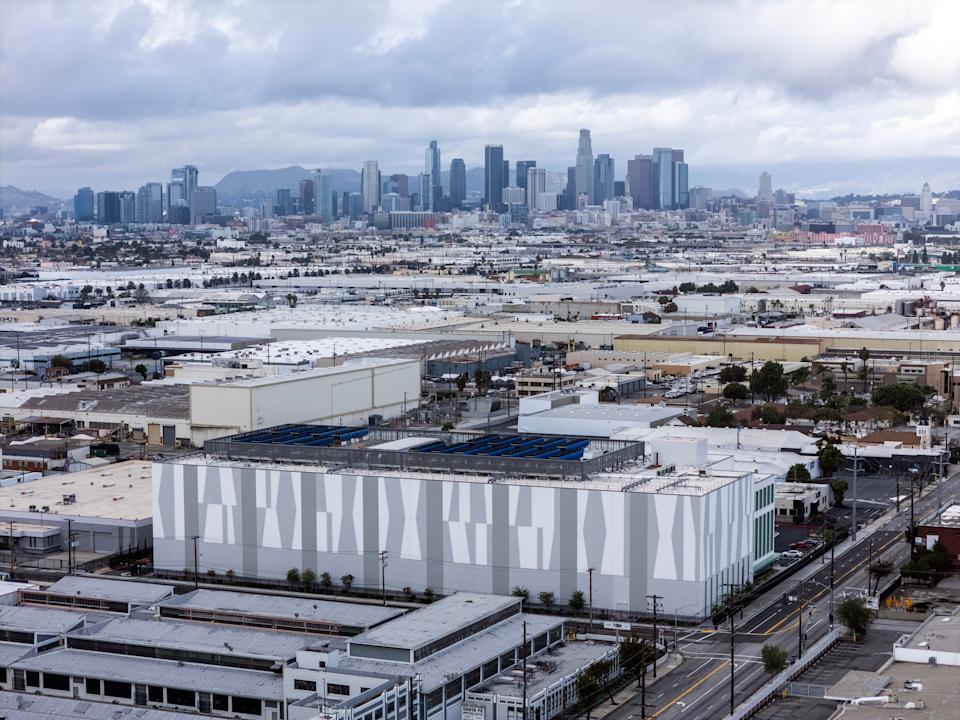
Data center growth is driving up demand for metals. (Myung J. Chun/Los Angeles Times via Getty Images)
AI Boom and Mining: A Dual Boost
The artificial intelligence revolution is providing mining stocks with a second wind.
A widespread shift known as the "AI scare trade" has seen investors move away from intangible assets like software, real estate, and financial services, and toward sectors tied to energy, materials, and physical production.
Ulrike Hoffman-Burchardi of UBS Wealth Management recently stated that her firm is reallocating investments away from software and into mining, power generation, and heavy machinery manufacturing.
Meanwhile, the rapid expansion of AI infrastructure has sent demand for metals such as copper and steel as well as aluminum and gold soaring. Manufacturers are racing to supply data center cooling systems, GPU chips, transformers, and other components that rely heavily on metals.
Analysts argue that the intersection of AI-driven demand and geopolitical risk has created a solid baseline for metals consumption, even as global economic growth remains uneven. While software and digital services can expand with minimal physical resources, the infrastructure supporting AI—such as power generation, transmission, cooling, and security—requires substantial material input.
Goldman Sachs strategists recently advised clients to focus on sectors with significant physical assets and low risk of obsolescence—so-called HALO businesses. They highlighted industries like energy grids, pipelines, transportation infrastructure, and long-term industrial capacity, including mining.
“Markets are now favoring capacity, networks, infrastructure, and engineering complexity—assets that are expensive to duplicate and less susceptible to rapid technological change,” the Goldman team wrote.
In summary, mining is increasingly viewed as a vital, long-term infrastructure investment—integral to power generation, defense supply chains, grid expansion, and the physical backbone of the AI economy.
As Jefferies analysts put it, “Copper, aluminum, and other metals are essential for grids, AI data centers, defense, and digital infrastructure.”
Further Reading and Contact
Disclaimer: The content of this article solely reflects the author's opinion and does not represent the platform in any capacity. This article is not intended to serve as a reference for making investment decisions.
You may also like
US tariff lawsuits returned to trade court to determine next steps
Why Visa's Prisma and Newpay Deals Come at a Critical Moment
Is Palomar (PLMR) a Solid Growth Stock? 3 Reasons to Think "Yes"

Trending news
MoreCrypto prices
More





