
Bank of England cautions it is unable to shield households from the impact of rising energy costs

Energy Price Surge: Bank of England Warns of Limited Protection Amid Middle East Conflict
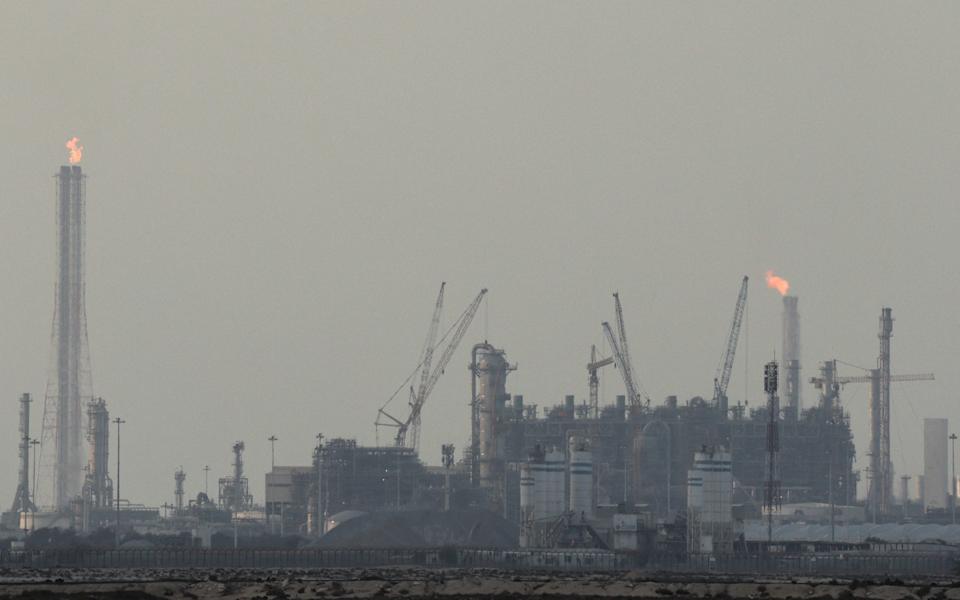
On Monday, a drone attack by Iran targeted QatarEnergy’s liquefied natural gas facility, intensifying concerns over global energy markets.
A senior figure at the Bank of England has cautioned that the institution is unable to shield the UK from sudden spikes in energy costs. Experts have highlighted that ongoing conflict in the Middle East could drive annual household energy expenses up to £2,500. Alan Taylor, a member of the Bank’s Monetary Policy Committee, explained that the central bank’s tools for managing inflation are too slow to counteract rapid increases in energy prices, which quickly translate into higher costs for both consumers and businesses.
“Major energy shocks unfold more rapidly than central banks can react through inflation targeting,” Taylor remarked.
Recent military actions in the Middle East have disrupted energy flows, causing natural gas prices to soar by 50% in a single day, while oil prices surged nearly 9%.
Analysts warn that if the turmoil continues, the UK’s energy price cap could jump from its current level of £1,758 per year to £2,500.
Taylor emphasized that central banks are not equipped to resolve every inflationary challenge, especially those caused by significant external shocks in recent years. He also noted that it is too early to determine the full impact of the latest Middle East conflict on the UK’s economy, but pointed out that energy crises over the past five decades have often triggered sharp inflation spikes.
“We must monitor developments closely as the situation remains highly unpredictable,” Taylor added, acknowledging the UK’s vulnerability due to its reliance on energy imports and exposure to geopolitical risks.
Central Bank Response and Historical Context
While Taylor acknowledged that central banks are now better prepared to handle energy price shocks than during the 1970s oil embargo, he stressed that their ability to prevent immediate price increases remains limited.
Calls for Government Action
This warning increases pressure on Chancellor Rachel Reeves to introduce measures supporting households and businesses in the upcoming Spring Statement. Advocacy groups and industry representatives have urged her to abandon plans for higher fuel duties, especially as wholesale prices continue to climb.
Market Impact and Supply Disruptions
Ongoing airstrikes in the Middle East have driven gas prices up at the fastest rate since the start of the Ukraine conflict in 2022. The European benchmark gas price jumped 50% to €47 (£41) per megawatt hour after Iranian attacks disrupted Qatar’s LNG exports. QatarEnergy, the state-owned company, suspended production at its Ras Laffan and Mesaieed plants following the strikes. The UK sources about 2% of its gas imports from Qatar.
Experts caution that continued instability in the Strait of Hormuz—a vital passage for Qatari exports—could push gas prices even higher.
Extended Outlook and Industry Reactions
Goldman Sachs has projected that if the crisis persists for two months, European gas prices could double to €100 per megawatt hour. Oil prices have also surged, nearing $79 a barrel after Iran reportedly struck Saudi Arabia’s Ras Tanura, the world’s largest oil export terminal.
The rapid escalation in energy costs has raised fears of further increases in household bills. Analysts warn that ongoing disruptions to gas shipments from Qatar and the UAE could trigger a repeat of the 2022 energy crisis, with household expenses soaring.
According to research by Stifel, if European gas prices reach €100 per megawatt hour, the UK’s energy price cap could rise to £2,500 annually. The current cap is £1,758, set to decrease to £1,641 in April.
Industry and Retail Concerns
- Logistics UK, representing the transport sector, has called for the cancellation of planned fuel duty increases, citing the impact of higher oil prices due to disruptions in the Strait of Hormuz.
- Ben Fletcher, CEO of Logistics UK, noted that about 20% of global oil passes through this corridor daily, and the resulting price hikes will soon be felt at UK fuel stations.
- He urged the Chancellor to reconsider fuel duty hikes to avoid adding to inflationary pressures during a period of global economic instability.
- Andrew Opie from the British Retail Consortium warned that shipping delays and increased costs could affect product availability and prices, especially if energy costs remain high for an extended period. He pointed out that higher energy prices, as seen after Russia’s invasion of Ukraine, directly raise manufacturing and retail costs.
Market Expectations and Inflation Fears
Concerns over rising inflation have led traders to scale back expectations for an imminent interest rate cut by the Bank of England. The likelihood of a reduction to 3.5% in March has dropped to 50%, compared to an 80% chance just a week ago.
Disclaimer: The content of this article solely reflects the author's opinion and does not represent the platform in any capacity. This article is not intended to serve as a reference for making investment decisions.
You may also like
US tariff lawsuits returned to trade court to determine next steps
Why Visa's Prisma and Newpay Deals Come at a Critical Moment
Is Palomar (PLMR) a Solid Growth Stock? 3 Reasons to Think "Yes"

Trending news
MoreCrypto prices
More





