
Gold and silver values are expected to decline further before hitting their lowest point, though ongoing tensions with Iran and ambiguity around tariffs are providing some support – Heraeus

Gold and Silver Prices Expected to Decline Further
According to Heraeus precious metals analysts, both gold and silver may continue to drop before stabilizing, despite ongoing geopolitical tensions with Iran and uncertainties surrounding tariffs that are currently lending some support to gold. Meanwhile, silver remains popular among ETF investors.
Historical Patterns Indicate More Downside
In their recent analysis, Heraeus experts pointed out that past trends suggest gold and silver have not yet reached their lowest points. They highlighted that the sharp rallies ending in late January saw silver surge by 72% in a single month and 322% since the start of 2025, while gold climbed 30% and 115% over the same periods. After a steep fall, silver rebounded to a new February high, recovering half of its previous losses. Gold has fared better, regaining about 70% of its decline. Although geopolitical events have boosted precious metals, the sustainability of these gains will likely depend on the outcome of the Gulf conflict.
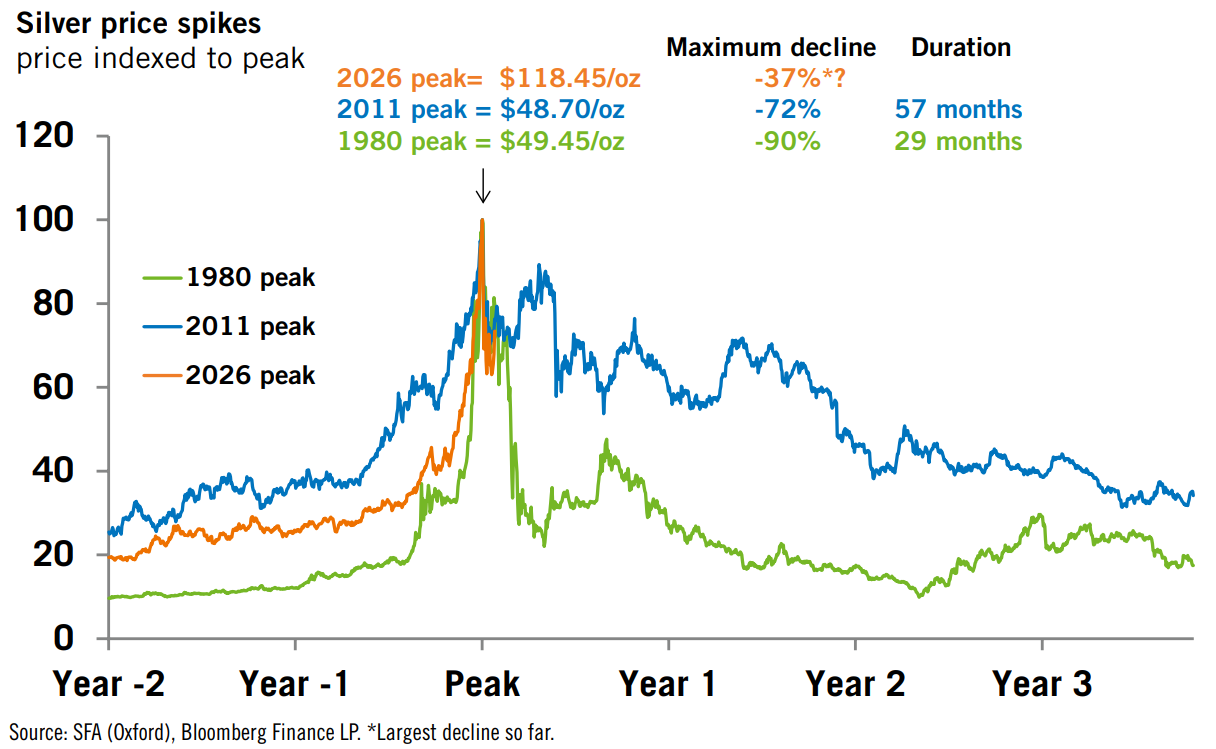
The analysts cautioned that previous major rallies, such as those in 1980 and 2011, drove silver close to $50 per ounce, followed by years of significant price drops.
Volatility and Market Behavior
They further observed that after past rapid surges, silver prices typically fell between 40% and 70%. The recent 37% drop in silver over just over a week aligns with historical patterns, though in earlier cases, reaching the bottom often took months or even years. An exception occurred in 2006, when silver fell 35% within a month during an ongoing bull market, marking both the quickest and smallest correction after a major rally.
Heraeus noted that the fundamental reasons for holding gold and silver remain unchanged since January. However, market reactions to the swift price increases have mirrored previous episodes. Silver tends to be more volatile than gold, but both metals are likely to require more time and lower prices to shake off the excessive optimism that fueled their recent rallies.
Geopolitical and Economic Influences
Focusing on gold, the analysts attributed recent price movements to the escalating conflict with Iran. Over the weekend, US and Israeli missile strikes on Iran prompted retaliatory actions targeting Israel and several Gulf nations. The immediate market response included a sharp rise in oil prices, a sell-off in equities, and increased demand for safe-haven assets like gold and the US dollar. Other precious metals followed gold’s upward trend. Some of the risk had already been priced in, as gold rebounded over 10% in February after a sharp late-January decline.
Economic uncertainty has also grown after the Supreme Court ruled that President Trump did not have the authority to implement most of his trade tariffs. While Section 232 tariffs, such as those on auto imports, remain, the US president quickly imposed a blanket 10% tariff using alternative legislation. This move has cast doubt on existing trade agreements and altered costs for US importers. The new tariffs are set for 150 days unless extended by Congress, giving the administration time to consider further measures.
Mining Sector Developments
Regarding major mining companies, Heraeus analysts reported that Newmont’s gold output is projected to decrease by 0.6 million ounces to 5.3 million ounces in 2026 due to planned mine sequencing. Growth is anticipated to resume in 2027, with a long-term target of 6 million ounces. This increase will be supported by the ramp-up of Ahafo North in Ghana, completion of stripping at Boddington to access higher-grade ore, and the finalization of the Tanami Expansion 2 project.
Current Gold and Silver Market Performance
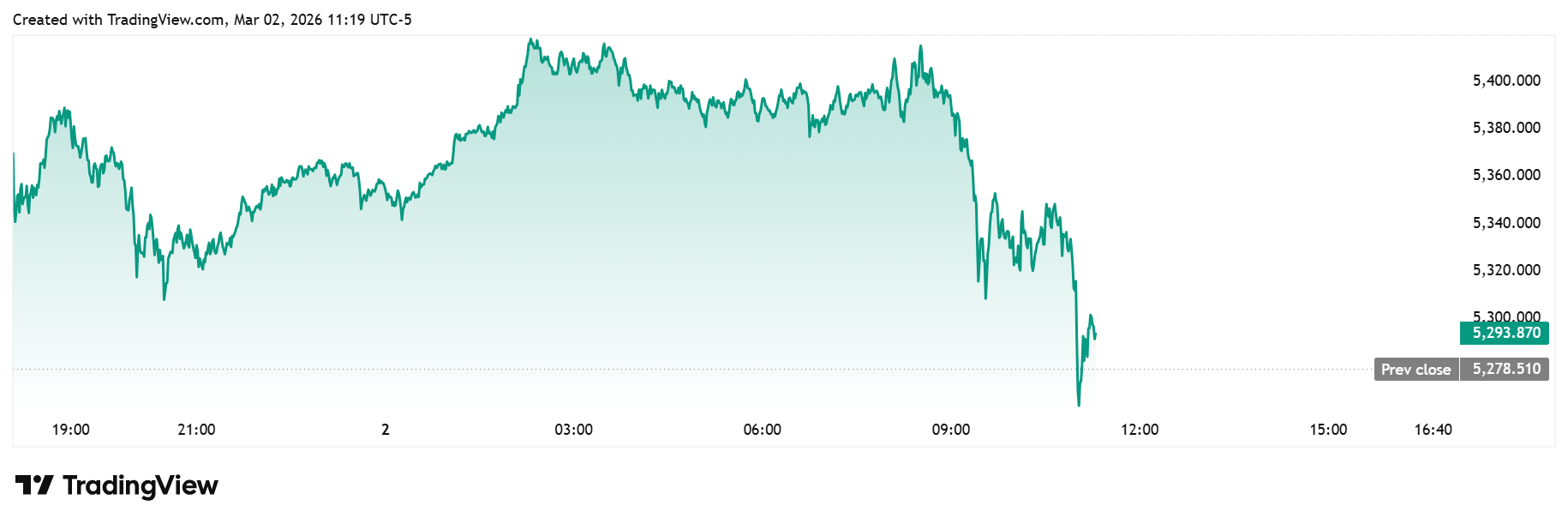
Gold prices are retreating from their early session highs above $5,400 per ounce, setting new session lows. Most recently, spot gold was trading at $5,294.29 per ounce, up 0.30% for the day.
Silver Investment and Market Adjustments
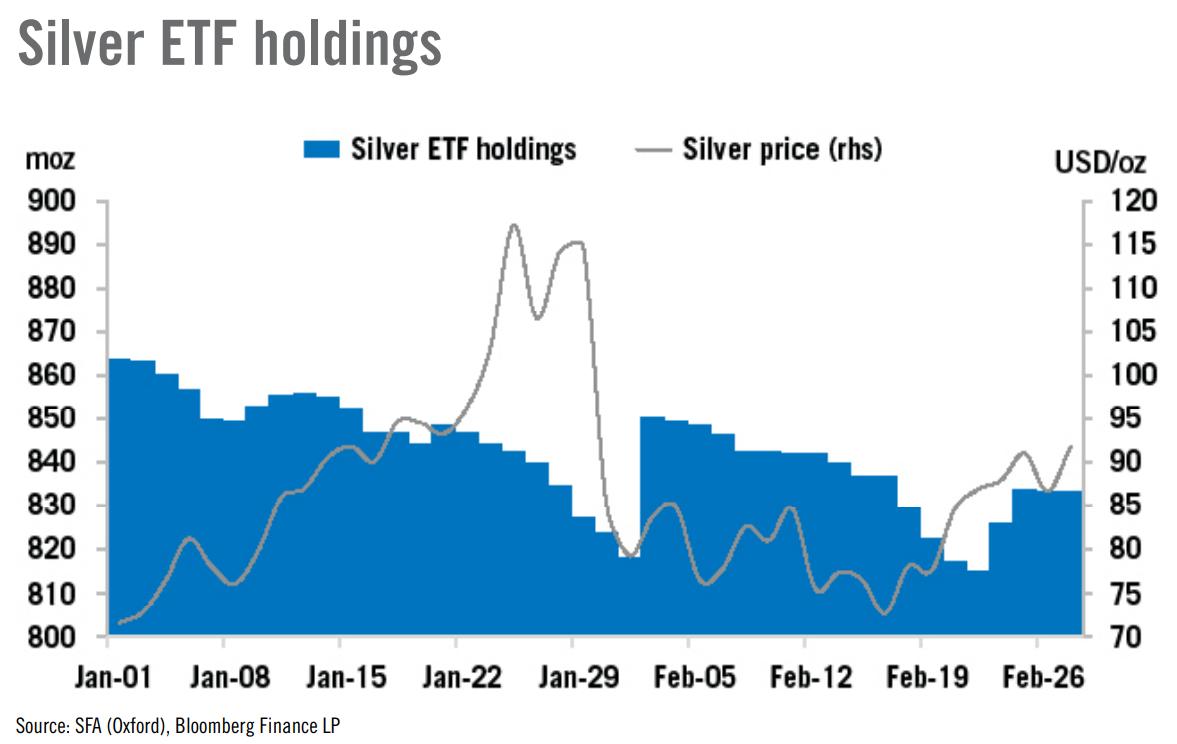
Turning to silver, Heraeus analysts observed that ETF investors remain active, with global silver ETF holdings increasing by more than 18 million ounces last week as the price recovery attracted renewed interest. However, total holdings at 834 million ounces are still below the 864 million ounces at the start of the year and 870 million ounces in late December.
They also mentioned that margin requirements for silver trading in China have been reduced as volatility has subsided. The Shanghai Gold Exchange lowered the margin requirement for silver to 24% from 27%, and the daily price movement limit to 23%. Gold margin requirements and price limits were also cut by 3 percentage points, now at 18% and 17% respectively. While these changes could enhance market liquidity, margins remain relatively high and further reductions may be needed to boost trading volumes.
Silver prices have fallen alongside gold, declining even further after reaching a session high above $96 per ounce during Asian and European trading hours.
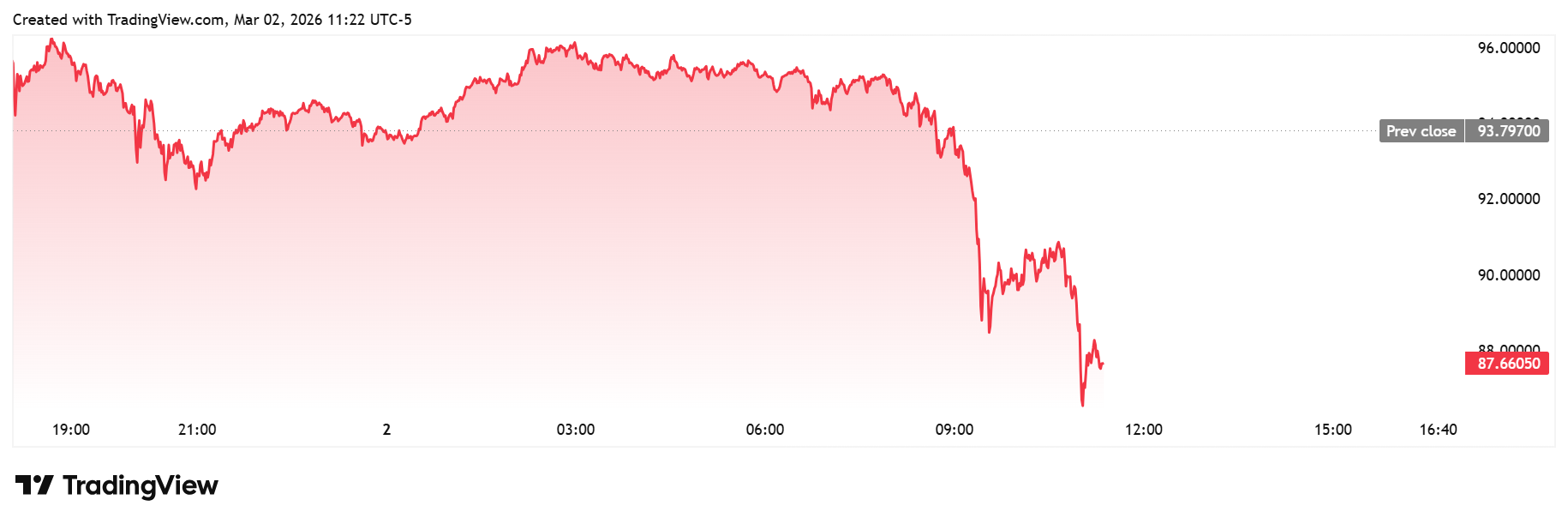
The latest data shows that spot silver was last quoted at $87.66 per ounce, marking a 6.34% loss for the session.
Disclaimer: The content of this article solely reflects the author's opinion and does not represent the platform in any capacity. This article is not intended to serve as a reference for making investment decisions.
You may also like
Why Visa's Prisma and Newpay Deals Come at a Critical Moment
Is Palomar (PLMR) a Solid Growth Stock? 3 Reasons to Think "Yes"
Fabrinet Eyes 800ZR and Co-Packaged Optics as Growth Catalysts
Stantec (STN) is an Incredible Growth Stock: 3 Reasons Why
Trending news
MoreCrypto prices
More





