
Upland Software's Financial Results: A Typical 'Sell the News' Scenario Following Guidance Revision

Market Response: Upland's Earnings Trigger a Sell-Off
Upland's latest financial report prompted a swift sell-off, as investors reacted to confirmation of ongoing revenue contraction. Although the company posted stronger-than-expected profits, the disappointing sales figures eclipsed this positive, leading to a 9.6% drop in share price. The gap between market expectations and reality proved too significant to ignore.
Despite a headline earnings beat—Upland reported an $0.24 adjusted EPS, surpassing estimates by 24.1%—the company missed revenue targets. Quarterly sales reached $49.31 million, falling short by 1.4% and marking a steep 27.5% year-over-year decline. This result continues a prolonged trend, with revenue shrinking at an average rate of 5.8% annually over the past five years.
Looking ahead, management's guidance reinforced the negative outlook. Projected Q1 2026 revenue of $48.5 million is 4.4% below analyst forecasts, indicating a 23.8% year-over-year drop. The market, previously hoping for growth, received confirmation of persistent contraction, rendering the earnings beat largely irrelevant.
Ultimately, expectations have been reset. The sharp decline in share price reflects a deepening disappointment, as guidance signals an accelerating downturn. For a stock trading well below its 52-week high, the gap between anticipated growth and actual performance has widened considerably.
Profitability Focus: Margin Gains Amid Revenue Decline
While declining sales dominated headlines, Upland's shift toward greater profitability emerged as a notable development. Operational improvements are evident, but investors remain cautious about whether these gains can counterbalance the ongoing revenue slide.
Margin expansion stands out: in Q4, Upland's adjusted EBITDA margin rose to 31%, up from 22% the previous year. This improvement was driven by increased recurring subscription revenue and disciplined cost management. Management expects this trend to persist, guiding for a 28% adjusted EBITDA margin in 2026—even as revenue is projected to decline further. This suggests the company is becoming more efficient at generating profit from each dollar of sales.
Strategy Spotlight: RSI Oversold Long-Only Approach
- Entry Criteria: Initiate positions when RSI(14) falls below 30 and the closing price exceeds the 50-day simple moving average.
- Exit Criteria: Close positions when RSI(14) rises above 70, after 15 trading days, upon achieving a 10% profit, or if losses reach 6%.
- Backtest Period: March 3, 2024 to March 3, 2026
Backtest Results
- Strategy Return: 0%
- Annualized Return: 0%
- Maximum Drawdown: 0%
- Win Rate: 0%
- Total Trades: 0
- Average Hold Days: 0
- Profit/Loss Ratio: 0
- Average Win Return: 0%
- Average Loss Return: 0%
- Maximum Single Return: 0%
- Maximum Single Loss Return: 0%
Cash flow further supports the company's operational improvements. Upland generated $7.2 million in free cash flow during Q4 and surpassed its $20 million annual target. Management credits faster receivables collection, highlighting enhanced efficiency—a critical factor for a company with substantial leverage.
However, these profitability gains occur against a backdrop of persistent revenue pressure. Guidance for 2026 still anticipates declining sales, and net debt remains elevated at roughly $290 million. The market's reaction underscores that margin improvements alone are not enough to offset the confirmed revenue contraction. While operational efficiency and cash generation are positive developments, they have yet to convince investors that the company can reverse its shrinking business.
AI Disruption and Strategic Realignment
Upland's recent share price plunge reflects two major challenges: internal operational decline and external technological disruption. The emergence of advanced AI platforms, such as Anthropic's Claude Opus 4.6 and OpenAI's "Frontier" agent, has fundamentally changed the landscape. These innovations enable autonomous agents to bypass traditional CRM and ticketing systems, threatening the recurring revenue model of legacy software providers like Upland.
In response, Upland has initiated a leadership change, appointing Sean Nathaniel as CEO with a focus on AI-driven strategy. Despite this pivot, the company's guidance for 2026 projects core organic growth of just 1%-2%, essentially flat. This trajectory—from a -2% growth rate three years ago to a modest 1%-2% today—suggests the business is struggling to gain momentum, even as it attempts to reposition.
Recent stock performance reflects the market's assessment: shares have fallen 41.27% over the past 20 days and are down 68.6% in the last 120 days. This is not merely a response to disappointing earnings, but a repricing for a future where growth is constrained by both internal challenges and external technological shifts. The threat posed by AI has shifted investor concerns from operational weakness to the risk of obsolescence. For now, Upland is seen as a company becoming more efficient, but facing significant headwinds that could diminish the value of its core offerings.
Key Catalysts and Risks: What Could Drive a Turnaround?
For Upland's stock to recover, the market needs evidence of a turning point—where contraction and leverage risks begin to recede. Three critical factors will determine whether a recovery is possible or if the bearish outlook will persist.
- Organic Growth Rate: Investors are watching for sequential improvement. Management projects a 1%-2% core organic growth rate for the coming year, following a flat trajectory. Signs of acceleration—such as the addition of 110 new customers and 199 expansions in Q4, especially in AI-powered products—could signal a turnaround. If growth remains stagnant, the bearish case is reinforced.
- Balance Sheet Leverage: Net debt stands at about $290 million, with a leverage ratio of 3.6x trailing adjusted EBITDA. While this is an improvement, the debt burden remains substantial. Continued strong free cash flow is essential for managing leverage. Any increase in cash burn or deterioration in debt metrics would heighten financial risk and overshadow margin gains.
- Margin Expansion vs. Revenue Decline: The ultimate catalyst would be a slowdown in revenue decline, coupled with margin gains driving earnings per share growth. Upland's guidance for 2026 anticipates falling revenue but expanding margins. The market needs to see these margin improvements translate into bottom-line growth, offsetting top-line weakness. Until then, the stock is likely to remain constrained by the gap between shrinking sales and improving profitability.
In summary, Upland faces a challenging environment: operational efficiency is improving, but persistent revenue contraction and technological disruption continue to weigh on its outlook. A meaningful recovery will require not just getting leaner, but demonstrating profitable growth once again.
Disclaimer: The content of this article solely reflects the author's opinion and does not represent the platform in any capacity. This article is not intended to serve as a reference for making investment decisions.
You may also like
Global investors pull back from top AI stocks amid rising concerns over oil supply
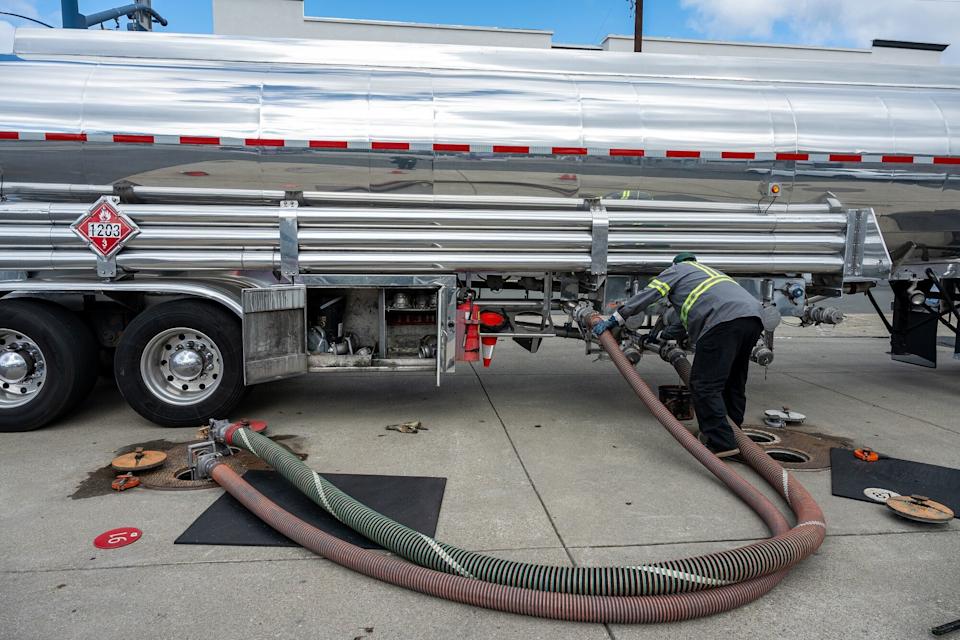
Geopolitical Disruptions in Commodity Markets: Evaluating the Effects on the Broader Economic Cycle
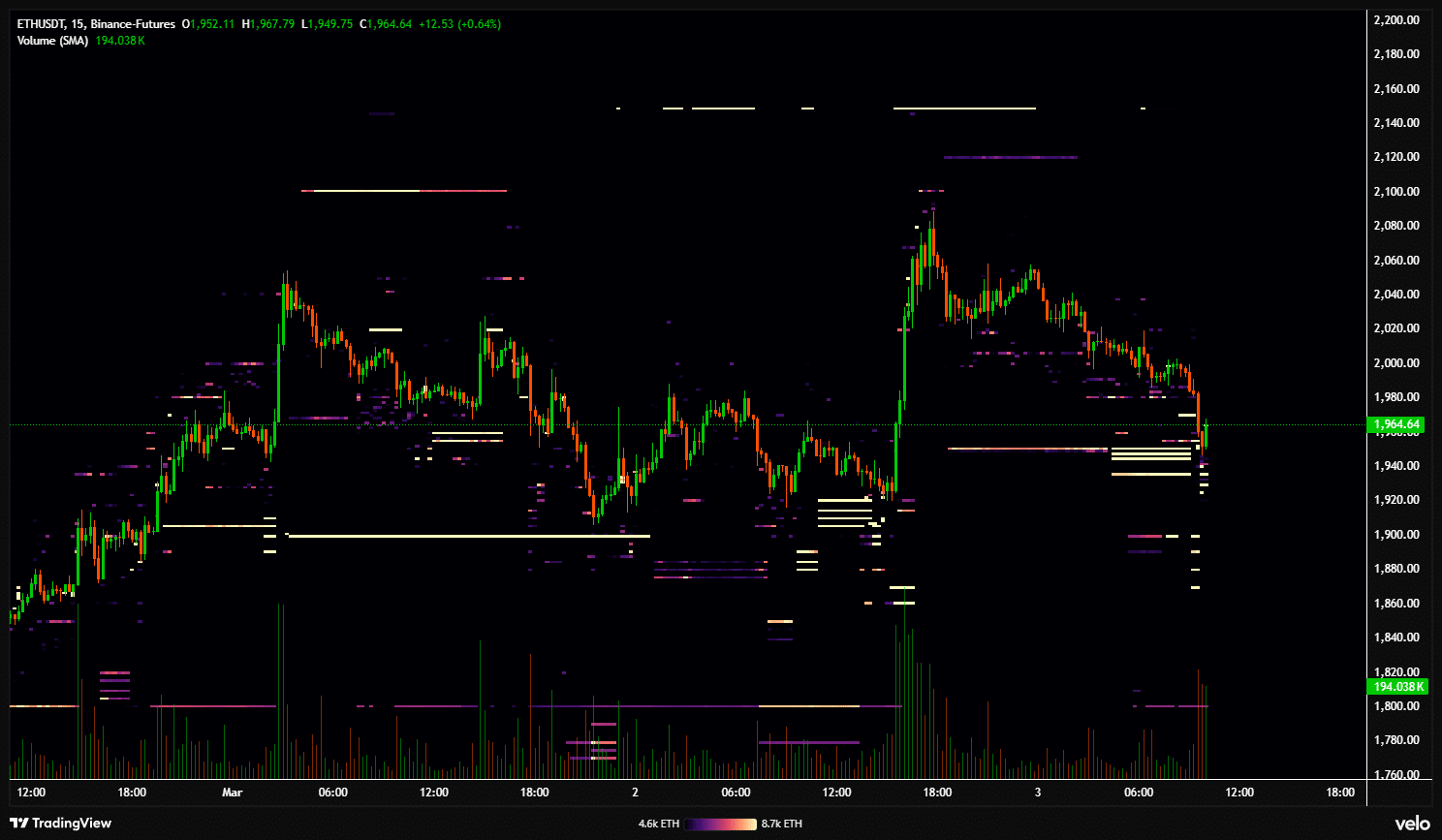
Ethereum – Accumulation spree meets whale-led sell pressure and that means…
Dana's March 25 Catalyst: Testing the $10B Math Against a $35 Price Target
Trending news
MoreCrypto prices
More





