
Upland Software's Earnings: A Classic 'Sell the News' After a Guidance Reset

The market's reaction to Upland's report was a textbook "sell the news" event. Investors had been braced for a tough quarter, but the precise numbers confirmed their worst fears about a contracting top line, completely overshadowing a solid profit beat. The stock's 9.6% decline on the news is the clearest signal that the reality gap was too wide to ignore.
The disconnect was stark. On the surface, the earnings print looked good. The company delivered an adjusted EPS of $0.24, which beat analyst estimates by 24.1%. Yet that beat was entirely overshadowed by a severe revenue miss. For the quarter, sales came in at $49.31 million, a 1.4% miss against expectations. More critically, that figure represented a 27.5% year-on-year drop. This wasn't just a soft quarter; it was a continuation of a deep, multi-year demand slump that has seen revenue fall at a 5.8% annual rate over the last five years.
The forward view sealed the deal. Management's guidance for the upcoming quarter was a clear reset. The Q1 2026 revenue guidance of $48.5 million came in 4.4% below analyst estimates. This projected a 23.8% year-on-year decline for next quarter alone, confirming the market's fears of ongoing contraction. In this setup, a beat on earnings per share was irrelevant. The market was pricing in a narrative of growth and expansion, and the report delivered a stark reality check on the top line.
The bottom line is that expectations were reset. The stock's sharp drop shows that the whisper number for growth was already low, and the guidance reset confirmed that the decline is accelerating. For a company trading at a fraction of its 52-week high, the expectation gap has widened from a modest disappointment to a confirmed deterioration.
The Profitability Pivot: Margin Expansion Amidst Contraction
While the top-line collapse was the headline, a quieter but critical story played out beneath it: a significant pivot toward profitability. The company's operational efficiency is improving, but the question for investors is whether this structural gain can offset the relentless revenue decline.
The numbers show a clear margin expansion. In the fourth quarter, Upland's adjusted EBITDA margin improved to 31%, up sharply from 22% a year ago. This jump was driven by a higher mix of recurring subscription revenue and cost discipline. More importantly, management is guiding for this trend to continue. For the full year 2026, the company expects its adjusted EBITDA margin to expand to 28%, even as it projects a further revenue decline. This guidance implies that the company is getting better at converting each dollar of shrinking sales into profit.
| Total Trade | 0 |
| Winning Trades | 0 |
| Losing Trades | 0 |
| Win Rate | 0% |
| Average Hold Days | 0 |
| Max Consecutive Losses | 0 |
| Profit Loss Ratio | 0 |
| Avg Win Return | 0% |
| Avg Loss Return | 0% |
| Max Single Return | 0% |
| Max Single Loss Return | 0% |
Cash flow adds another layer of validation. The company generated free cash flow of $7.2 million in Q4, and for the full year, it exceeded its $20 million target. Management attributed this to accelerated receivables collection, suggesting improved operational execution in collecting payments. This efficiency is crucial for a leveraged balance sheet, providing a buffer against the revenue contraction.
Yet, this profitability pivot exists in a context of severe top-line pressure. The revenue guidance for 2026 still calls for a decline, and the company's net debt remains high at approximately $290 million. The market's reaction to the earnings report shows it is weighing these competing forces. The sharp stock drop indicates that the expectation gap on growth was too wide to be closed by margin gains alone. For now, the improved margins and cash generation are a positive operational shift, but they are not yet priced as a sufficient offset to the confirmed, accelerating revenue contraction. The setup is one of a company becoming leaner while its core business shrinks-a dynamic that may support the stock over the long term, but one that failed to move the needle in the immediate aftermath of the report.
The AI Narrative Threat and Strategic Shift
The market's brutal repricing of UplandUPLD-12.59% is now a two-part story. The first part is the company's own operational deterioration, which we've detailed. The second, and more existential, part is the external technological threat that has fundamentally altered the growth narrative for its entire sector.
The catalyst was the simultaneous debut of Anthropic's Claude Opus 4.6 and OpenAI's "Frontier" agent platform earlier this month. These releases weren't just incremental updates; they signaled a shift toward autonomous agents that can bypass traditional CRM and ticketing interfaces to perform enterprise work directly. This raises the specter of software applications being reduced to mere features within these frontier models, threatening the recurring revenue of legacy seat-based licensing. The market has aggressively repriced the entire software application layer, and Upland, a provider of specialized workflow tools, is a prime target.
Against this backdrop, the company's internal leadership change is a strategic pivot, but it doesn't change the core growth reality. The appointment of Sean Nathaniel as incoming CEO, with a focus on the company's AI-centric strategy, is management's attempt to align with this new world. Yet the guidance for 2026 is brutally clear: the company expects a core organic growth rate of 1%-2%, which is essentially flat. This trajectory-from a -2% growth rate three years ago to a projected 1%-2% this year-shows a business that is not gaining traction, even as it tries to reposition.
The stock's performance over the past month and quarter is the market's verdict on this new reality. Shares have plunged 41.27% over the past 20 days and are down 68.6% over the last 120 days. This isn't a reaction to a single earnings miss; it's the market fully repricing for a future where its growth prospects are capped by both internal contraction and external technological disruption. The AI narrative threat has reset the expectation gap from one of operational weakness to one of structural obsolescence risk. For now, the market is pricing in a company that is becoming leaner but is also facing a powerful tide that could render its core products less valuable.
Catalysts and Risks: The Path to a Re-rate
For the stock to re-rate, the market needs to see a clear inflection point where the current narrative of contraction and leverage risk begins to reverse. The near-term path is defined by three critical metrics that will confirm whether the bear case is solidifying or if a turnaround is possible.
First, investors must watch for sequential improvement in the core organic growth rate. Management has guided for a core organic growth rate of 1%-2% for the coming year, following a trajectory from -2% three years ago. This is essentially flat, and the market has priced in a continuation of that stagnation. The catalyst for a re-rate would be evidence that this rate is accelerating. Positive signs include the 110 new customers and 199 expansions in Q4, with activity in AI-powered products. However, the real test is whether this momentum translates into a visible uptick in the growth rate in the coming quarters. A failure to move meaningfully above the 1%-2% range would confirm the bear case of a business that is becoming leaner but not growing.
Second, the company's balance sheet leverage remains a key overhang. Net debt stood at approximately $290 million at year-end, with a leverage ratio of 3.6x trailing adjusted EBITDA. While management noted this is better than target, the sheer size of the debt burden is a constant drag. The company's ability to generate free cash flow-exceeding its $20 million target last year-will be crucial for managing this leverage. Any sign of increased cash burn or a deterioration in the debt profile would reignite the risk of financial strain, overshadowing margin gains. The path to a re-rate requires not just margin expansion, but a demonstration that cash flow is strong enough to service debt and fund a potential turnaround.
The ultimate catalyst, however, is a clear inflection where revenue decline slows and margin expansion begins to drive earnings per share growth. The company's guidance for 2026 shows a conflict: revenue is expected to decline, but the adjusted EBITDA margin is projected to expand to 28%. The market needs to see this margin gain start to flow through to the bottom line in a way that offsets the top-line pressure. This would signal that operational efficiency is finally becoming a growth driver. Until then, the stock will likely remain trapped in a range defined by the expectation gap between its shrinking revenue and its improving profitability. The re-rate requires a shift from "getting leaner while shrinking" to "becoming profitable enough to grow again."
Disclaimer: The content of this article solely reflects the author's opinion and does not represent the platform in any capacity. This article is not intended to serve as a reference for making investment decisions.
You may also like
Global investors pull back from top AI stocks amid rising concerns over oil supply
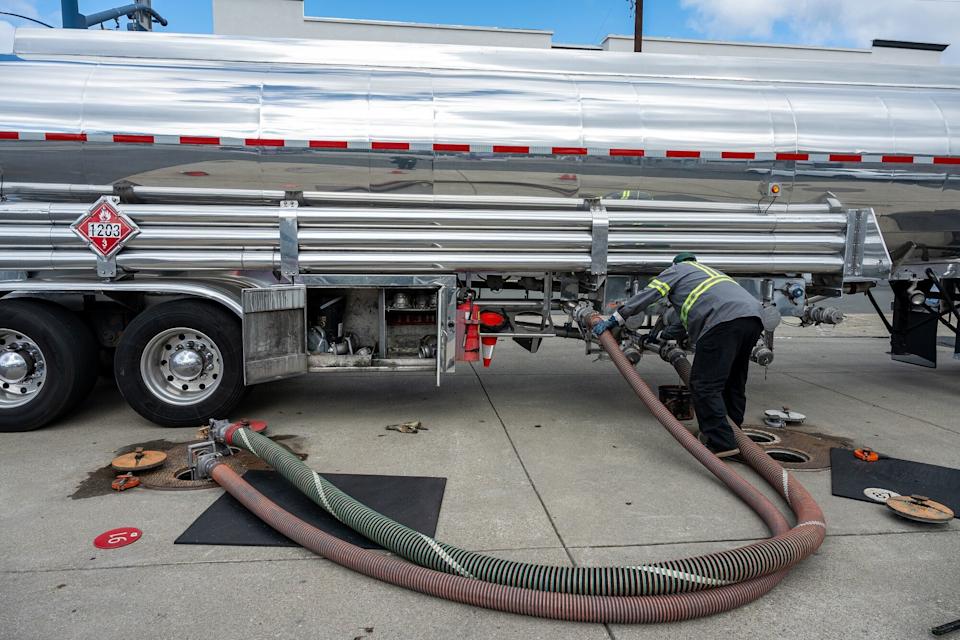
Geopolitical Disruptions in Commodity Markets: Evaluating the Effects on the Broader Economic Cycle
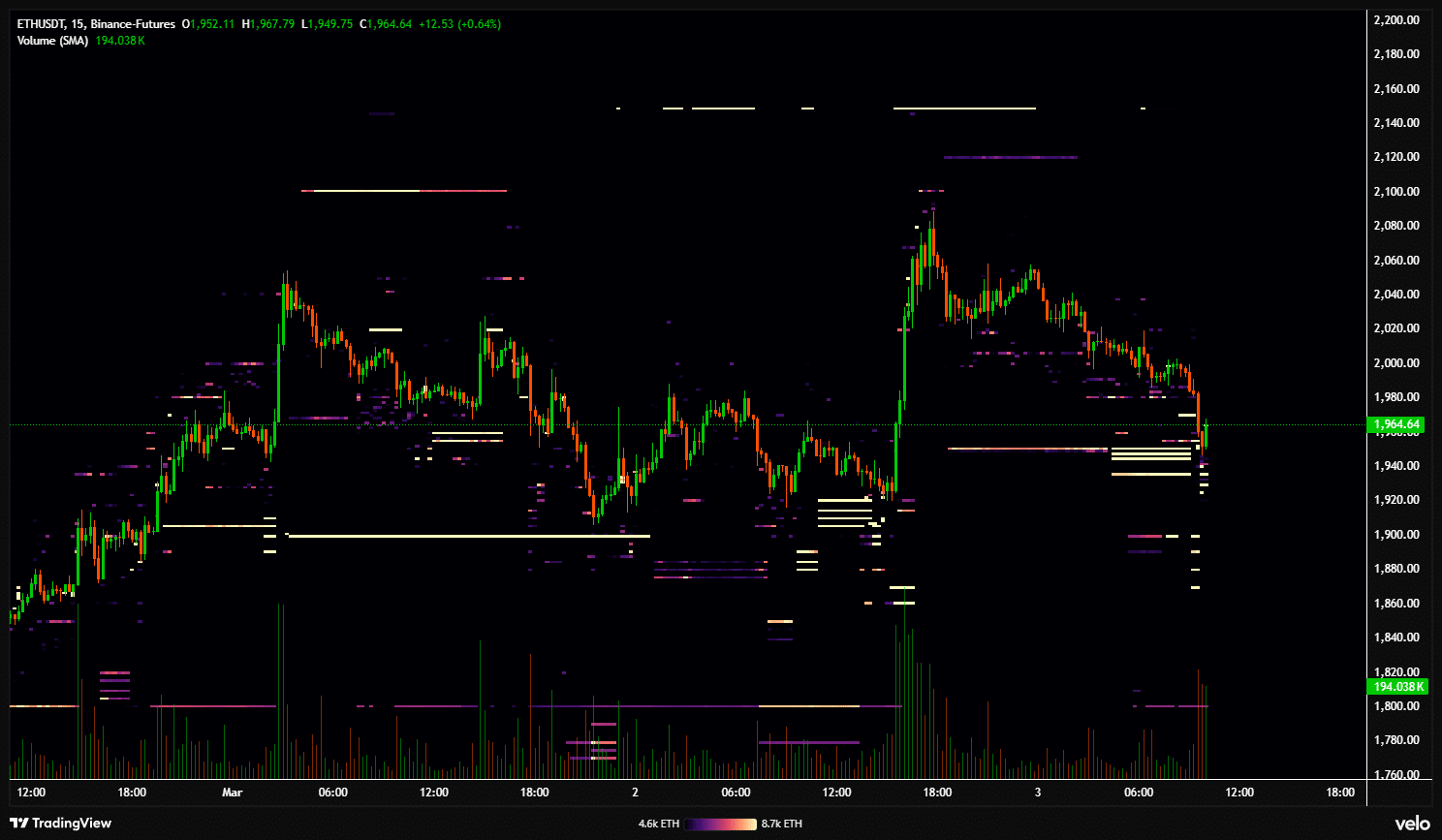
Ethereum – Accumulation spree meets whale-led sell pressure and that means…
Dana's March 25 Catalyst: Testing the $10B Math Against a $35 Price Target
Trending news
MoreCrypto prices
More





