
Tilray's Agreement with Carlsberg: Evaluating the Growth Potential of a Newly Unlocked $100B+ Market

Tilray and Carlsberg: Unlocking a Major U.S. Beer Market Opportunity
Tilray’s recent agreement with Carlsberg is built on a simple premise: it opens the door to a vast, established market. The U.S. beer sector alone generates $45.3 billion in annual sales, making up a substantial share of the much larger total beverage alcohol (TBA) industry, which is valued in the hundreds of billions. This partnership gives the Carlsberg portfolio a clearly defined, sizable Total Addressable Market (TAM). As the fourth-largest craft brewer in the U.S., Tilray is leveraging its established brewing and distribution network to expand its presence and capture a greater portion of this lucrative market.
Scaling Through Strategic Partnership
This collaboration is a textbook example of scaling up efficiently. Tilray plans to utilize its current U.S. operations to produce and distribute Carlsberg’s premium imported beers, aiming to boost their market penetration. Rather than building new facilities from scratch, Tilray will expand its existing platform, making use of its brewing plants, procurement processes, packaging resources, and nationwide commercial team to manufacture these brands locally. This strategy is expected to maximize asset usage and operational efficiency, setting the stage for scalable revenue growth once the agreement is in effect.
A notable aspect of the deal is its long-term structure. The initial contract spans five years, with an automatic renewal for another five years based on performance metrics. This multi-year commitment, tied to specific benchmarks, offers a rare degree of stability in the beverage industry and signals strong dedication from both companies. For investors focused on growth, this arrangement transforms a strategic opportunity into a more predictable income stream, anchored by a massive TAM.
Operational Advantages and Efficient Asset Use
The success of this partnership depends on Tilray’s ability to deliver tangible operational improvements. For Carlsberg, the deal represents an asset-light approach to expanding in the U.S. market. By tapping into Tilray’s existing infrastructure, Carlsberg can bring its premium brands to American consumers without the expense and complexity of building new facilities. This directly addresses the challenge international brewers face when establishing a cost-effective, resilient supply chain in the U.S.
Tilray’s extensive operational base is the key enabler here. The company will rely on its current brewing, procurement, packaging, and logistics capabilities to produce Carlsberg’s products domestically. This isn’t just a theoretical benefit—it’s a practical way to boost asset utilization. Tilray’s brewing operations, which already support its beverage division, can handle the additional production, spreading fixed costs over more volume. The objective is to achieve greater cost efficiency and a stronger supply chain for Carlsberg’s offerings.
This approach creates a scalable platform with a clear path to returns. By leveraging its established sales team and distribution network, Tilray can efficiently introduce these brands across the U.S. Carlsberg benefits from Tilray’s quality standards and operational scale, while Tilray gains by monetizing its underused capacity. For growth-oriented investors, this model transforms fixed assets into engines for new revenue, aiming to improve margins for both companies from the outset and strengthening the long-term growth story.
Financial Implications and Investment Needs
The Carlsberg partnership is a calculated move that relies on Tilray’s financial stability and ability to expand. Entering the deal with a record net cash position of $27.4 million at the close of its second fiscal quarter, Tilray has the liquidity and financial strength to support the necessary operational investments without overextending itself. This is crucial for growth investors, as it means Tilray can seize this opportunity without sacrificing other priorities or taking on excessive debt.
Tilray’s ongoing growth supports this expansion. The company’s beverage segment grew by 19% last year, reaching $241 million in revenue. This demonstrates the scalability of its beverage platform and its ability to manage a broader portfolio. The Carlsberg deal builds on this foundation, accelerating Tilray’s strategy of developing a diversified consumer packaged goods business.
While scaling up production and distribution for Carlsberg’s brands will require significant investment, the risk is mitigated by Carlsberg’s established reputation and proven success in the premium beer market. This allows Tilray to generate revenue from well-known products, helping to offset initial costs. The phased rollout—beginning in 2027 after a multi-year preparation period—provides a clear schedule for capital deployment and allows for staged investments.
In summary, the Carlsberg agreement is a capital-efficient growth initiative. By utilizing existing, underused resources to produce in-demand products, Tilray can convert fixed costs into variable revenue streams. Although the financial impact will become evident in 2027, Tilray’s current financial health and track record in beverages provide a strong base for execution. Investors will be watching to see if Tilray can scale this new venture and capture a significant share of the large TAM, leveraging its financial strength as a launchpad.
Key Milestones, Potential Outcomes, and Risks
The journey from announcement to meaningful revenue is mapped out with a defined timeline and critical milestones. The main trigger is the January 1, 2027 launch. Success depends on Tilray’s ability to complete the final production and distribution setup over the next 10 months. Any delays or operational issues during this phase could hinder Carlsberg’s initial market entry and brand positioning in the U.S.
Initial sales figures in the U.S. will serve as the first real indicator of the partnership’s commercial potential. Investors should closely monitor how quickly Carlsberg’s brands gain traction against established competitors in the premium European beer segment. The key metric will be not just sales volume, but the pace of market share growth. Tilray’s effectiveness in deploying its national sales team to drive distribution and consumer adoption will be crucial from the start.
Delivering on promised cost savings is equally vital. The scalability of the partnership relies on Tilray’s use of its existing brewing, procurement, packaging, and logistics assets to produce these brands locally. The company must prove that this approach delivers the improved asset utilization and operational efficiencies it has outlined, which will be reflected in the margins for the new portfolio and the overall profitability of Tilray’s beverage division.
However, there are significant risks, especially given the mature state of the U.S. beer market. The industry is facing challenges, with craft beer volumes projected to decline by 5% in mid-2025 and more breweries closing than opening. This environment of contraction and retailer consolidation makes it tough for any new entrant, even a premium one. Tilray must compete not only on product quality but also on value and distribution reach.
Competition from established import distributors is another major obstacle. These players have long-standing relationships with retailers and strong consumer loyalty. As a new domestic producer for these brands, Tilray will need to invest heavily in marketing and sales to secure shelf space and win over consumers. Integrating a new premium portfolio into its operations also brings execution risks, requiring seamless coordination across brewing, sales, and logistics teams.
Ultimately, the Carlsberg partnership is a significant test of Tilray’s ability to scale. While the January 2027 launch is the immediate milestone, long-term success will depend on Tilray’s capacity to grow sales in a contracting craft segment, outperform established importers, and achieve the targeted cost efficiencies. For growth-focused investors, the next year will be about tracking early signs of market traction and operational execution before the new revenue stream becomes visible.
Disclaimer: The content of this article solely reflects the author's opinion and does not represent the platform in any capacity. This article is not intended to serve as a reference for making investment decisions.
You may also like
Pound Sterling weakens to near 1.3300 as geopolitical risks bolster US Dollar
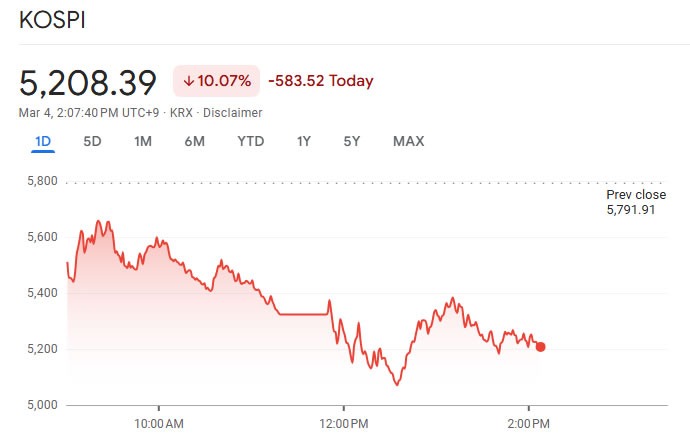
Korea halts trading as key indexes drop 10% on Middle East crisis
DigitalOcean's Agentic Inference Cloud: Creating the Infrastructure for Deploying AI in Production
Trending news
MoreCrypto prices
More





