
Visa’s Reliable Cash Generator Model Encounters a Significant Imbalance Compared to Amex’s High-Risk Premium Approach

Comparing a Decade of Returns: American Express vs. Visa
Over the last ten years, the performance gap between American Express and Visa has been decisive. If you had invested $1,000 in American Express, your investment would have grown to $5,833, representing a 483% total return. In contrast, the same amount placed in Visa would now be worth $4,821, a 382% increase. American Express’s unique approach—combining a payment network with lending and targeting high-end customers—has outperformed Visa’s pure payment processing model. These results are now reflected in how the market values each company.
Shifting Expectations and Market Performance
Initially, investors favored Visa’s asset-light, high-margin business, expecting it to be the superior growth story. Visa’s model, which collects fees on every transaction without assuming credit risk, delivered a 385% total return over the decade. The company benefited from the global move toward digital payments and away from cash, offering steady cash flow and lower risk. This approach was expected to command a premium in the market.
However, American Express ultimately delivered stronger returns by leveraging its dual role as both network and lender. Its focus on affluent clients and consistent double-digit growth in net card fees for over 30 quarters fueled its outperformance. Today, the market has already factored in these historical successes. Both stocks have declined this year—Visa by nearly 10% and Amex by 18.5%—as investors question whether Amex’s premium model can withstand increased credit risk.
Analyst Perspectives: Risk and Valuation
Analysts now generally prefer Visa, citing its lower risk and more attractive valuation. Visa operates solely as a payment processor, making it less risky compared to American Express, which acts as both issuer and network. Visa is seen as a stable, capital-efficient company trading below its historical valuation, while Amex’s stock price reflects its past outperformance and carries a premium. The key question for investors is whether Visa’s lower-risk profile, now available at a relative discount, offers a better balance of risk and reward.
Market Sentiment and Current Valuations
Despite a decade of strong results, current stock prices reflect a more cautious outlook. Both companies are being discounted due to concerns about future growth and macroeconomic pressures.
- Visa: Shares have dropped 9.32% year-to-date and are close to their 52-week low. This decline suggests investors are questioning the sustainability of Visa’s growth and capital efficiency, even though its core business remains strong.
- American Express: The stock is down 18.46% this year and has fallen 20% from its peak. This is notable given the company’s optimistic outlook, including projected 10% revenue growth and EPS of $17.90 or higher. Investors are concerned about potential disruptions from AI-driven commerce and a proposed 10% cap on credit card interest rates, leading to a loss of confidence in Amex’s premium model.
Overall, the mood has shifted toward caution. Visa’s decline reflects doubts about its growth prospects, while Amex’s steeper drop indicates worries about regulatory and consumer risks, despite strong company guidance.
Risk and Reward: A New Dynamic
The risk/reward equation between Visa and American Express has changed. The consensus now leans toward Visa, valuing its lower risk and more attractive pricing, while viewing Amex as a riskier, more cyclical play.
- Visa: Its asset-light, high-margin model provides significant operating leverage and less exposure to consumer credit cycles. As a payment processor, Visa partners with banks that take on the credit risk, while Visa’s costs remain largely fixed. This setup generates strong cash flow, and the stock now trades at a discount to its historical averages.
- American Express: Serving as both network and lender, Amex faces greater risk. While somewhat shielded from direct regulatory shocks, its reliance on premium customers makes it vulnerable to shifts in consumer sentiment. The recent drop in the University of Michigan Consumer Sentiment Index and lagging discretionary spending among affluent clients have heightened these concerns.
Analysts see Visa as better positioned to weather economic and regulatory uncertainty, with a strong balance sheet and global reach. The recent sell-off has brought Visa’s valuation to multi-year lows, making it an attractive option for some. Amex, while still considered a solid company, is priced for perfection and could be at risk if consumer spending slows in 2026.
In summary, Visa’s main risk is tied to growth expectations and valuation, while Amex faces challenges from consumer spending cycles and policy threats. Given current sentiment, Visa’s discounted, lower-risk profile is seen as offering a more attractive risk/reward balance.
Key Catalysts and What to Monitor
The investment case for both companies now depends on near-term execution and external factors. Market caution prevails, but upcoming events and data will be crucial in shaping future performance.
- American Express: The most important short-term indicator is Q1 2026 spending data. With consumer sentiment weakening and the University of Michigan index at 56.6, any slowdown in cardholder spending from the current 8-9% rate could impact earnings. The market appears to be anticipating this risk, but upcoming quarters will reveal whether the slowdown is temporary or more persistent.
- Regulatory Risk: The proposed 10% cap on credit card interest rates remains a significant threat. While Amex’s fee-based model offers some protection, tighter credit availability could still affect its lending and cardholder growth. Any legislative progress on this front could prompt further stock volatility.
- Visa: The main challenge is maintaining its 17% annual growth rate in a potentially slowing economy. Although Visa’s model is less sensitive to consumer credit cycles, a broad decline in transaction volume could still affect revenue. Investors will be watching to see if Visa can sustain its forecasted 11% compound annual revenue growth.
Ultimately, the fortunes of both companies are closely linked to broader economic trends. A downturn would impact Amex’s premium spending and test Visa’s transaction growth. While the market remains cautious, the key risks are now clear: Amex faces a double threat from policy and consumer spending, while Visa’s challenge is to maintain growth amid a discounted valuation. Upcoming data will determine which risk is more accurately reflected in current prices.
Disclaimer: The content of this article solely reflects the author's opinion and does not represent the platform in any capacity. This article is not intended to serve as a reference for making investment decisions.
You may also like
ARIA (Aria.AI) fluctuated by 49.4% in 24 hours: Trading volume surged by 796%, driving intense price volatility
DeFi Withdrawals Underscore Changing Investor Attitudes and Infrastructure Issues
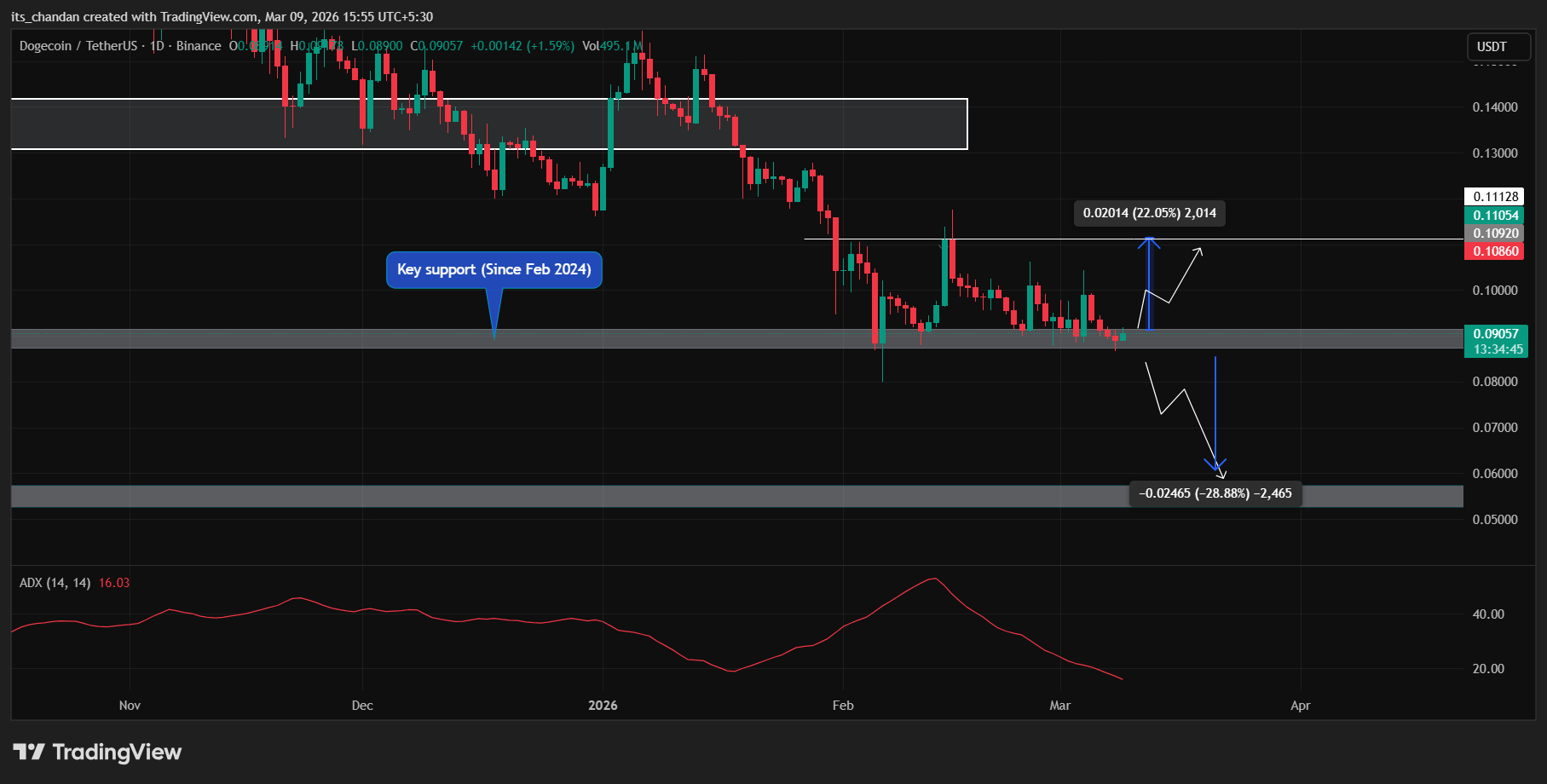
Dogecoin eyes $0.111 after $0.0872 retest – But DOGE’s move holds IF…
Workers Cling to Their Positions Amid Sluggish Hiring and Increasing Layoffs
Trending news
MoreCrypto prices
More





