
JPMorgan cautions that a conflict with Iran may lead to a 10% decline in the market

Wall Street Faces Growing Concerns Over Iran Conflict
Over the past week, financial markets have largely responded to the escalating situation in Iran as if it were just another unsettling news cycle—worrisome and costly, yet manageable with a bit of optimism and strategic trading. However, JPMorgan Chase has now quantified those concerns, giving Wall Street’s anxiety a concrete figure.
According to a Bloomberg report on Monday, Andrew Tyler, who leads global market intelligence at JPMorgan, has adopted a more cautious outlook. He cautioned that U.S. equities are not adequately braced for a significant downturn if the Iran conflict persists and oil prices remain above $100 per barrel. Tyler estimates the S&P 500 could drop by around 10% from its highs, settling near 6,270, even though his overall stance remains largely neutral without major risk reduction.
Despite these warnings, the market’s response has been surprisingly calm, aside from a few minor fluctuations. Even Goldman Sachs CEO David Solomon expressed surprise at how subdued Wall Street’s reaction has been. So what’s fueling the renewed apprehension? Oil prices have surged, with crude reaching $120 a barrel as the conflict intensifies and shipping through the Strait of Hormuz faces increased pressure. U.S. stock futures have declined, the VIX volatility index has spiked to 31.45, and the Russell 2000 briefly entered correction territory.
This tension has been mounting. Last week, West Texas Intermediate crude soared by 35%—its largest weekly gain since the contract’s inception in 1983—while the S&P 500 dipped just 2% and the Nasdaq fell a little over 1%. This disconnect is starting to look less like market strength and more like investors betting that this crisis will pass quickly, just as previous geopolitical shocks have done.
Interestingly, JPMorgan’s internal messaging has shifted rapidly. Only a few days ago, the bank’s analysts characterized major geopolitical events as typically causing a 5%–6% pullback, which is usually recovered within weeks. They noted that many strategists tend to downplay geopolitical risks, often recommending to “buy the dip,” and concluded that the current Iran situation also presented such an opportunity.
But JPMorgan’s perspective has been evolving almost daily. Last Monday, strategist Mislav Matejka suggested that the ongoing geopolitical tensions could actually be a chance to invest further, given positive fundamentals. He encouraged long-term investors to take advantage of market weakness. However, just a week later, Matejka’s outlook had become more cautious, stating that conditions might deteriorate further before improving, though he still believed any downturn would likely be short-lived, lasting days or weeks rather than months.
Energy Prices Take Center Stage in Market Risks
The real driver of market instability isn’t just the conflict itself, but the impact of soaring oil prices on inflation, economic growth, and corporate earnings. Last week, JPMorgan Asset Management highlighted that energy shocks are particularly damaging because they can trigger both recession and inflation. The Strait of Hormuz, which handles about 20% of the world’s oil supply, was identified as a critical vulnerability.
Analysts warned that a complete shutdown of the strait could push oil prices above $100 per barrel and, if the situation persists, could add 1%–1.5% to both U.S. inflation and GDP growth figures. This comes at a challenging time for Wall Street, with inflation already at 3% and February’s jobs report revealing a loss of 92,000 jobs. Such conditions are not conducive to absorbing another energy-driven economic shock and are beginning to resemble stagflation.
In a separate note on Monday, JPMorgan cautioned that an attack on Iran’s Kharg Island—which is responsible for 90% of the nation’s crude exports—would “immediately halt the bulk” of those shipments and likely provoke retaliatory actions in the Strait of Hormuz or against regional energy infrastructure.
JPMorgan isn’t forecasting a catastrophic market collapse, but it is issuing a more targeted warning: Wall Street may be underestimating the risk that a foreign policy crisis could morph into a stagflation scenario with serious implications for corporate profits. The issue now centers on energy prices, and that’s a challenge that’s not easily dismissed.
Disclaimer: The content of this article solely reflects the author's opinion and does not represent the platform in any capacity. This article is not intended to serve as a reference for making investment decisions.
You may also like
ARIA (Aria.AI) fluctuated by 49.4% in 24 hours: Trading volume surged by 796%, driving intense price volatility
DeFi Withdrawals Underscore Changing Investor Attitudes and Infrastructure Issues
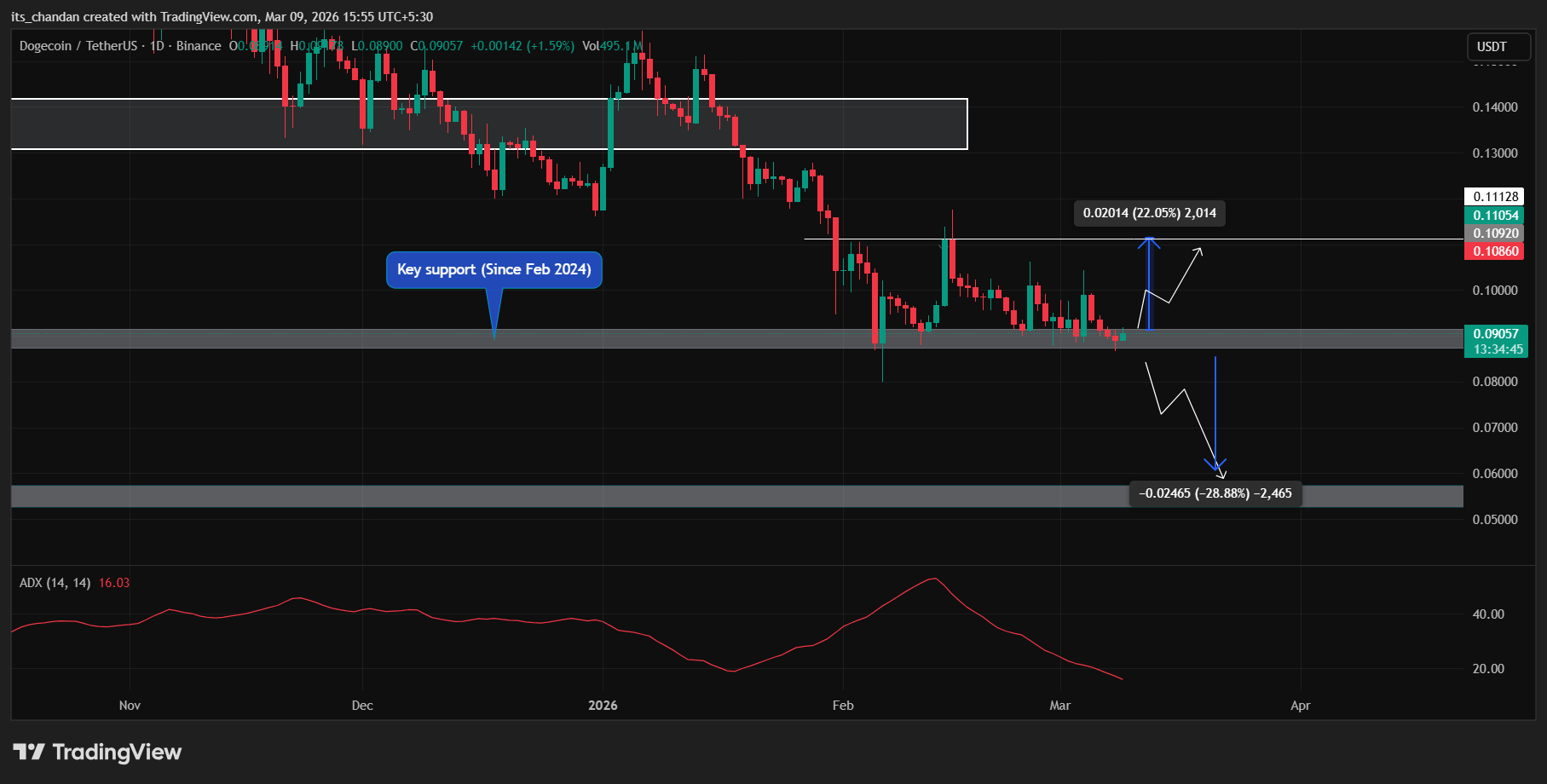
Dogecoin eyes $0.111 after $0.0872 retest – But DOGE’s move holds IF…
Workers Cling to Their Positions Amid Sluggish Hiring and Increasing Layoffs
Trending news
MoreCrypto prices
More





