
Costco’s Higher Pricing Strategy Demands Precision—Monitor U.S. Sales Growth for Signs of Margin Security

Costco’s Competitive Edge: A Value Investor’s Perspective
For those seeking long-term value investments, a lasting competitive advantage—often called a “moat”—is essential. Costco stands out with a particularly robust moat, supported by its membership system, massive scale, and streamlined operations. Such a business, if acquired at a reasonable valuation, can generate significant returns for patient investors. The key question is whether the current share price provides enough cushion for potential missteps.
The Power of the Membership Model
At the heart of Costco’s strength is its membership program. With more than 128 million cardholders, Costco has established a steady and reliable income stream. This isn’t just an annual fee—it’s a commitment that ensures regular customer visits. By requiring upfront payment, Costco creates a loyal customer base that consistently returns, making revenue more predictable even during economic downturns. This approach, pioneered by the company’s founders, transforms shoppers into invested participants and shields the business from fluctuations in consumer spending.
Scale and Efficiency: The Engines of Value
Costco’s vast buying power, achieved through enormous scale and a limited product selection, enables it to secure the lowest possible prices from suppliers. This strategy underpins its reputation for everyday low prices—a challenge for competitors to replicate. The company’s extensive U.S. warehouse footprint—over 90 million square feet—serves as a strategic asset, not just a cost. By focusing sales in fewer, larger locations, Costco achieves industry-leading efficiency.
Operational Excellence
Costco’s business model emphasizes lean operations. With approximately 219,000 U.S. employees managing more than 90 million square feet, the company maintains a streamlined workforce relative to its size. This operational discipline supports high sales per square foot and a tight cost structure, allowing Costco to offer value that rivals struggle to match—even those that mimic the warehouse format.
Valuation: A Wonderful Business at a Steep Price
From a value investing standpoint, Costco is the epitome of a high-quality business. The company has not posted a single down year in the past five years, and its total return over the last decade exceeds 660%. However, the market has recognized this excellence, and the current valuation reflects high expectations. Investors are now paying a premium that requires flawless execution for years ahead. While the moat remains formidable, the price to cross it is steep.
Estimating Fair Value: The $726 Benchmark
Discounted cash flow analysis, which projects future cash generation and discounts it to present value, suggests a fair price for Costco shares is $726.29—about 28% below the recent market price near $1,007. This significant gap reflects the market’s confidence in Costco’s future, but also highlights the risk of overpaying for anticipated growth.
Costco currently trades at a forward price-to-earnings ratio of 53.6, an unusually high multiple for a mature retailer. This valuation assumes the company will continue to deliver outstanding earnings growth for decades. In value investing terms, investors are paying for a long runway of perfect performance, not just recent strong results. When the price is this high, the margin for error is slim.
This scenario puts the margin of safety principle to the test. The margin of safety is the difference between a stock’s market price and its intrinsic value. When the market price hovers near its peak and intrinsic value is much lower, there’s little room for error. At current levels, Costco must execute flawlessly to justify its valuation. Any slowdown in membership growth, changes in consumer behavior, or increased competition could undermine the high expectations built into the stock price.
This dynamic is reminiscent of other iconic companies like Coca-Cola or Johnson & Johnson during their periods of peak valuation. While their strong moats and steady growth warranted premium prices, even these giants faced times when their valuations seemed stretched. For investors, the crucial question is whether the current price provides enough protection against future uncertainties. In Costco’s case, the evidence suggests the margin of safety is minimal—the market has already priced in years of continued excellence.
Risks to the Investment Case
While Costco’s business quality is undeniable, the current valuation leaves little room for setbacks. Three main risks could threaten the investment thesis: intensifying competition, the consequences of past stock performance, and the complexities of international growth.
- Rising Competition: Sam’s Club, owned by Walmart, is actively expanding its membership base and improving its offerings, directly challenging Costco in its core market. With Walmart’s resources, Sam’s Club could pressure Costco’s membership-driven revenue and margins, threatening the narrative that justifies the current valuation.
- Valuation Risk: Over the past decade, Costco shares have delivered a 662% total return. This stellar performance has already factored in years of future success, leaving little buffer for slower growth or unexpected challenges. Even the strongest moats can be eroded by changing consumer preferences or economic cycles, and the current price offers no cushion for such risks.
- International Expansion: While global growth has been robust, each new market brings unique hurdles—from local competitors and consumer tastes to regulatory complexities. Investments abroad may not yield the same returns as the U.S. business, potentially diluting overall profitability and putting pressure on the premium valuation.
These risks are not unique to Costco; even industry leaders like Coca-Cola and Johnson & Johnson have faced similar valuation pressures. The key for investors is to determine whether the current price offers enough margin of safety to weather these challenges. For Costco, the evidence points to a narrow margin, making the investment case vulnerable to any misstep.
Key Catalysts and Metrics to Monitor
For value-focused investors, future performance will hinge on several critical factors that could either confirm or challenge the current valuation.
- Comparable Sales Growth: Keep an eye on U.S. comparable sales, which have been the main driver of growth. Recent figures show 5.9% growth in the first quarter, and a 7.1% increase in January. Sustained momentum is crucial; any slowdown, especially from shifts in consumer spending, could challenge the growth assumptions behind the valuation.
- International Expansion: Growth abroad remains strong, with Canadian sales up 9.0% last quarter and other markets showing promise. Continued success in opening new warehouses globally is essential for justifying the premium multiple. However, as the company expands, execution risks and local market challenges could impact margins and returns.
- Valuation Sensitivity: The most significant risk is the stock’s lofty price. With the market expecting decades of flawless execution, any disappointment could lead to a sharp revaluation. The current share price, near its 52-week high, reflects these high expectations.
In summary, while Costco remains a model of operational excellence and competitive strength, its current valuation leaves little room for error. Investors should closely monitor key performance indicators and be mindful of the risks that could challenge the company’s premium status.
Disclaimer: The content of this article solely reflects the author's opinion and does not represent the platform in any capacity. This article is not intended to serve as a reference for making investment decisions.
You may also like
DeFi Withdrawals Underscore Changing Investor Attitudes and Infrastructure Issues
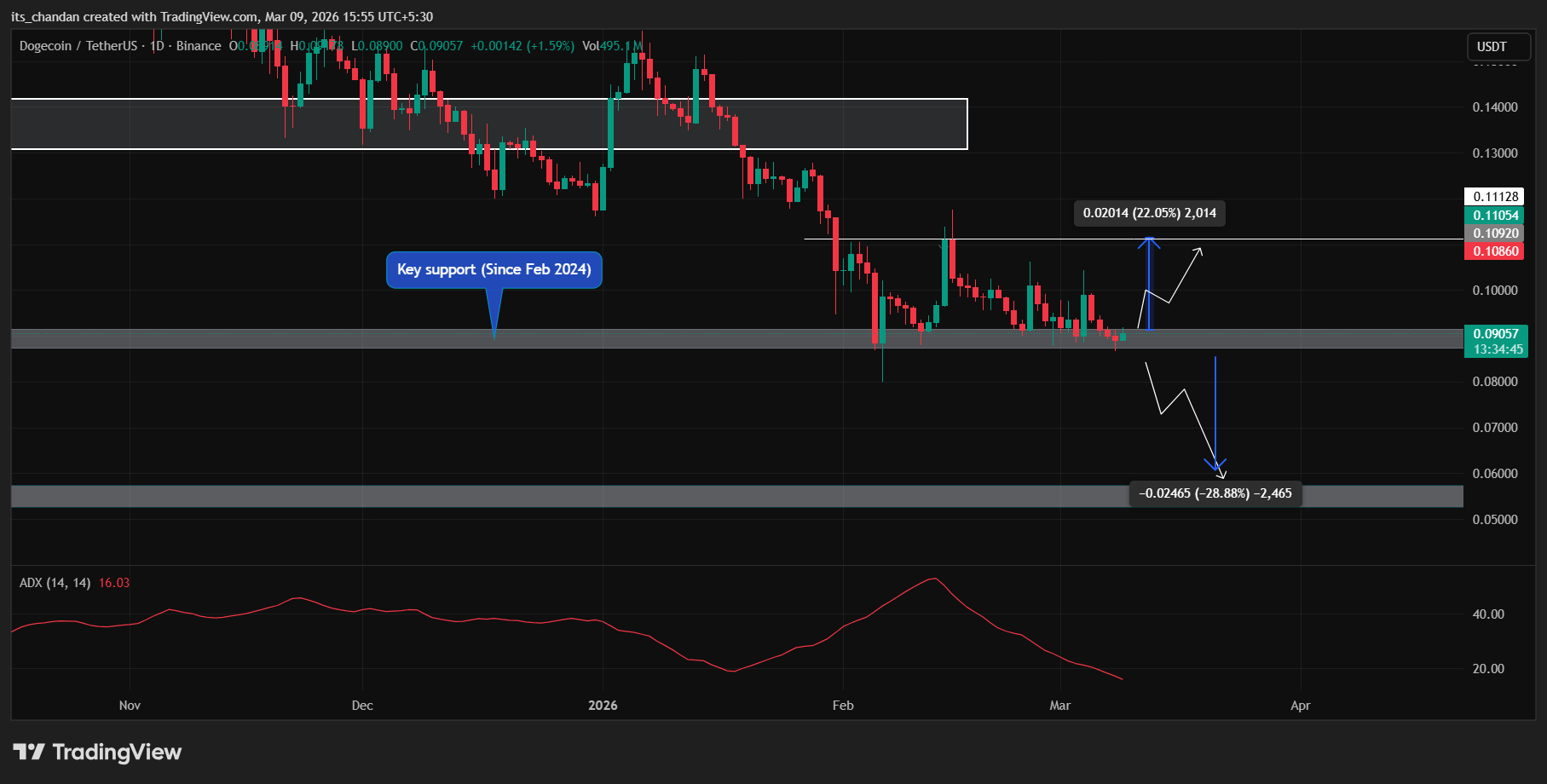
Dogecoin eyes $0.111 after $0.0872 retest – But DOGE’s move holds IF…
Workers Cling to Their Positions Amid Sluggish Hiring and Increasing Layoffs
2 Expanding Stocks Poised for Success and 1 Encountering Difficulties
Trending news
MoreCrypto prices
More





