
MSCI’s drive into wealth management technology alongside Snowden Lane reaches its 467th spot in trading volume, while shares fall by 0.85%.

Market Overview
On March 9, 2026, MSCI (MSCI) ended the trading session down 0.85%, with a total trading volume of $0.30 billion, placing it 467th in daily trading activity. This slight decrease in share price came even after MSCI revealed a new strategic alliance with Snowden Lane Partners, a wealth advisory firm that will now incorporate the MSCI Wealth Manager platform into its suite of services. The subdued trading volume points to a lack of strong investor interest, and the price dip may be attributed to overall market trends or sector-specific influences rather than the news of the partnership itself.
Main Factors Influencing the Market
The collaboration between MSCI and Snowden Lane Partners marks a notable step forward for MSCI’s expansion into advanced portfolio management technology. The MSCI Wealth Manager platform, which offers analytics for both public and private assets, tax optimization, and proposal generation, is now integrated into Snowden Lane’s advisory framework. This enables Snowden Lane’s advisors to utilize sophisticated modeling tools to spot portfolio anomalies, tailor client allocations to investment objectives, and assess risk with greater clarity. The move highlights MSCI’s commitment to growing its presence in the wealth management technology space, an area experiencing increased demand as advisory firms seek digital tools to better serve their clients.
This partnership builds on Snowden Lane’s rapid growth in 2025, which included expanding into alternative assets, hiring senior talent, and opening new offices in the Northeast and Southeast. By leveraging MSCI Wealth Manager, Snowden Lane aims to set itself apart by offering enhanced analytics, detailed risk breakdowns, and personalized investment insights. For MSCI, this deal strengthens its reputation as a provider of data-driven solutions for both institutional and wealth management clients, supporting its broader strategy to move beyond traditional indexing and risk analysis into areas like ESG and private assets.
Leaders from both companies have emphasized the partnership’s focus on transparency and client-focused solutions. Alison Burkett from Snowden Lane highlighted that the integration allows advisors to deliver “transparent and individualized solutions,” while Alex Kokolis from MSCI pointed out the platform’s ability to help clients “manage their unique investment needs efficiently, consistently, and with confidence.” These statements reinforce the competitive advantage of MSCI’s technology in an industry where aligning with client values and risk preferences is increasingly important.
Despite the strategic benefits, MSCI’s 0.85% share price drop suggests that investors remain cautious or that external factors are overshadowing the immediate impact of the partnership. The low trading volume indicates a muted short-term response from investors, possibly reflecting a wait-and-see attitude toward MSCI’s expansion into wealth management technology. The ultimate success of the partnership will depend on Snowden Lane’s ability to effectively implement the MSCI Wealth Manager platform and demonstrate real value for clients. While the agreement broadens MSCI’s product offerings, its financial impact is uncertain without more details on revenue arrangements or rollout schedules.
MSCI’s broader business includes established strengths in index creation, ESG research, and portfolio analytics. The alliance with Snowden Lane fits into its long-term goal of diversifying into wealth management technology, a field where integrated, data-driven platforms are increasingly in demand. However, the recent stock performance underscores the challenge of converting strategic initiatives into immediate investor confidence, especially in an environment where short-term earnings may take precedence over long-term growth strategies.
In conclusion, while the partnership with Snowden Lane positions MSCI to benefit from the digital transformation of wealth management, the recent decline in share price may reflect broader market conditions or a delay in investor appreciation of the deal’s potential. The integration of MSCI Wealth Manager could drive future growth, but its success will hinge on effective execution, adoption rates, and the overall economic climate.
Disclaimer: The content of this article solely reflects the author's opinion and does not represent the platform in any capacity. This article is not intended to serve as a reference for making investment decisions.
You may also like
GAMESTOP Coiling While Market Waits on Cohen’s Next Move
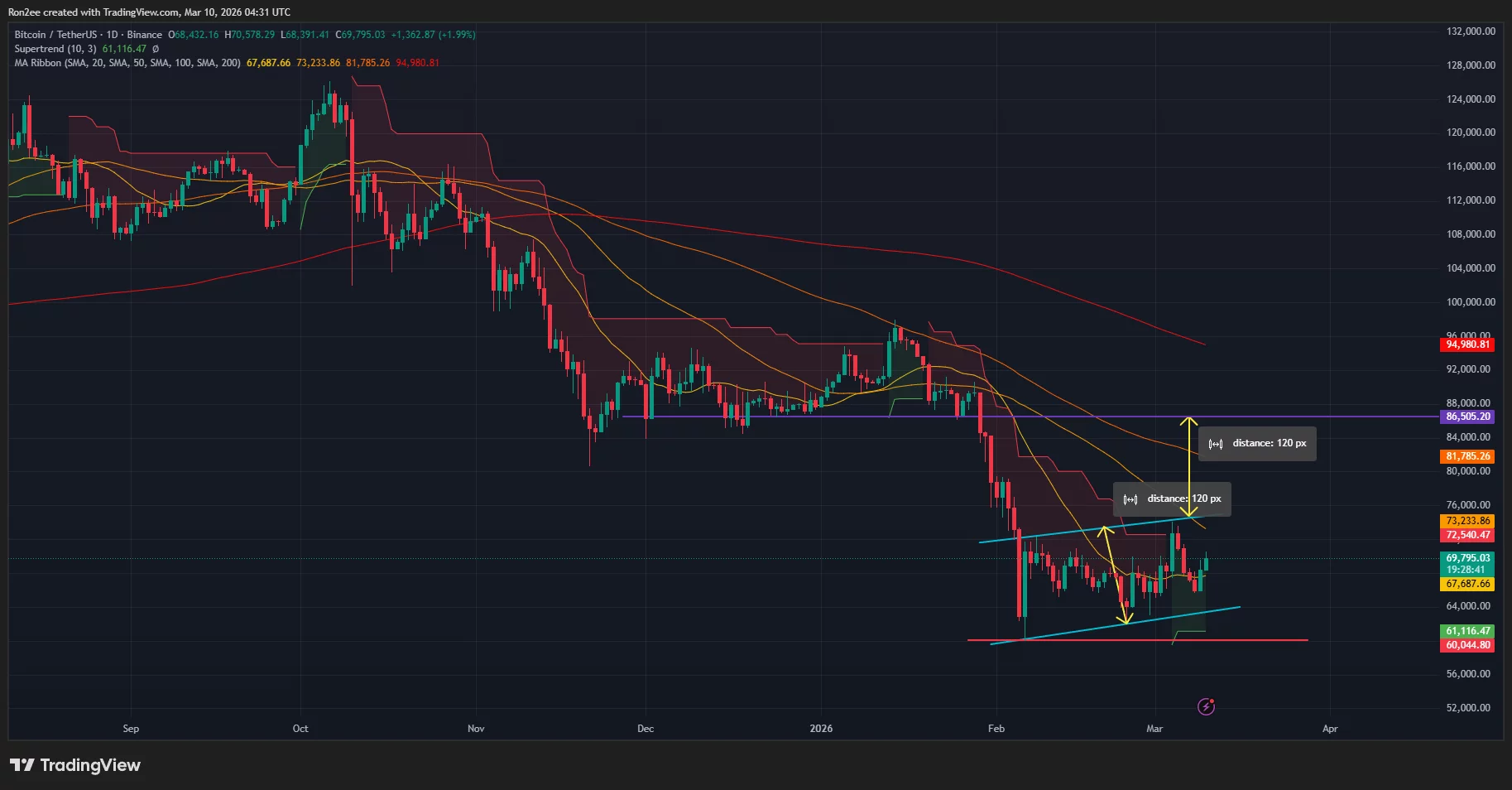
Bitcoin price eyes breakout from bullish channel as ETFs draw in over $1.3B
AP Top Financial News at 12:20 a.m. EDT
VCs Bet $25.5B on Crypto Infrastructure as Hormuz Crisis Hits Oil
Trending news
MoreCrypto prices
More





