
Soaring Gas Costs Spark Renewed Interest in Electric Vehicles

Rising Gas Prices Spark Renewed Interest in Electric Vehicles
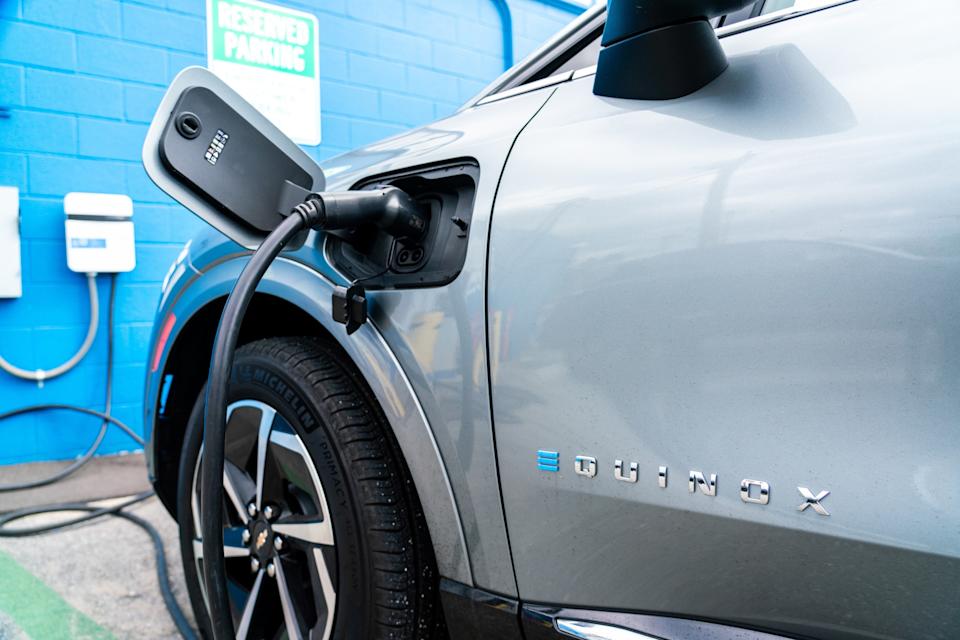
Photo credit: Kyle Grillot/Bloomberg
Michael Prichinello, a cofounder of Manhattan’s Classic Car Club and a lifelong car enthusiast, finds himself reluctantly considering an electric pickup truck. Despite his passion for high-performance, fuel-hungry vehicles, the soaring cost of gasoline—now reaching $50 per day for his commute—has forced him to rethink his options.
“My daily round-trip is 220 miles in a full-size Silverado,” Prichinello shared. “I love my truck and don’t plan to part with it, but continuing like this just doesn’t feel right.”
Top Stories from Bloomberg
Photo credit: Michael Nagle/Bloomberg
The recent conflict in Iran and the resulting spike in fuel prices have reignited American consumers’ interest in electric vehicles (EVs), reversing a period of slowing demand. According to BloombergNEF, US motorists are expected to spend an extra $1.65 billion on gasoline this week alone. As a result, many who previously hesitated are now exploring EVs or evaluating the cost savings of hybrid models.
Steven Cegelka, COO of Ignition Dealer Services, notes that when gas prices approach $4 per gallon, a significant shift toward electric vehicles typically occurs. “Ultimately, the decision comes down to whether a full EV or a hybrid is the better fit,” he said. “This pattern repeats every time prices surge.”
CarEdge, a platform leveraging AI to assist buyers in negotiating with dealerships, reported a 20% increase in EV-related searches the week after the initial attack on Iran. Interest in popular models like the Tesla Model Y and Chevrolet Equinox nearly doubled.
Since late February, the average price for a gallon of regular gasoline in the US has jumped 20% to $4.29—the highest in nearly three years. For most drivers, this means paying about $31 more each month for fuel. Those with luxury vehicles or less efficient trucks and SUVs—like the estimated 50 million Americans driving pickups and 10 million households with large SUVs—face even steeper costs.
Currently, consumers interested in EVs have plenty of options. However, after federal tax credits of up to $7,500 per vehicle ended in September, electric vehicle sales dropped by 36% last quarter compared to the previous year. While automakers have scaled back EV production and future plans, inventory for electric models remains nearly twice as high as for traditional gasoline vehicles.
How Gas Price Surges Influence Car Buying
This period is unusual, as gas prices have generally been stable and low throughout the five years EVs have been widely available. The exception was the summer of 2022, when prices spiked to $5.36 per gallon following Russia’s invasion of Ukraine, leading to a 66% surge in EV sales—before federal incentives were introduced.
Consumers remember these price shocks, especially during times of high inflation. A Carvana LLC survey found that by the end of 2024, saving on fuel had become the top reason for shoppers to consider electric vehicles.
Elaine Buckberg, a senior fellow at Harvard and former chief economist at General Motors, believes the length of time gas prices remain high will be more influential than a single price jump. “Right now, elevated prices are mainly affecting those already in the market for a new car,” she explained. “But if high prices persist for several months, even those not actively shopping may start looking at EVs.”
“Experiencing two major periods of gas price volatility in less than five years could make consumers more reactive to the current situation,” Buckberg added.
Comparing Fuel and Electricity Costs
While rising oil prices can also impact electricity rates, the effect is less direct. Most of a typical US electricity bill covers transmission and service, with only about a quarter to a third tied to fuel. As renewable energy sources have expanded, oil and natural gas now make up less than half of the fuel mix.
On average, an electric vehicle consumes about 7.5 kWh to travel 25 miles, costing roughly $1.30 when charged at home—significantly less than the price of a gallon of gasoline. In some states, electricity costs are higher, but these areas also tend to have above-average gasoline prices.
The Future of EV Adoption
Itay Michaeli, an analyst at TD Cowen, suggests that ongoing volatility in gas prices, rather than a single spike, will continue to drive consumers toward electric vehicles. “People can adjust to higher prices to some extent,” he said. “But with gas at $4 a gallon, there’s always the worry it could climb even higher.”
Michaeli predicts a rapid increase in EV demand as more households with multiple vehicles decide to make at least one of them electric. He estimates that millions of new EVs could be sold in a short period if this trend continues.
“Many American families have the advantage of owning two cars,” Michaeli noted. “Having both an EV and a traditional car offers flexibility, but it’s a transitional phase that hasn’t been widely discussed.”
Buckberg believes automakers are already considering extending production of current EV models and possibly reversing plans to reduce their electric vehicle lineups if gas prices remain high. “Manufacturers are crunching the numbers now,” she said, “but they’re also watching to see how long these elevated prices will last.”
Most Popular from Bloomberg Businessweek
©2026 Bloomberg L.P.
Disclaimer: The content of this article solely reflects the author's opinion and does not represent the platform in any capacity. This article is not intended to serve as a reference for making investment decisions.
You may also like
3 Pipeline Stocks Worth Buying This March

Silver Santa Offloads 40% for Cash as Gold Prices Fluctuate—Is a Squeeze Scenario Brewing for 2026?
Hyperscale Data’s Silver Program: Strategic Diversion or Calculated Safeguard in the Race for $200M Revenue?
Best Crypto to Buy with $500: Analysts Compare Cardano (ADA) and This Cheap Altcoin
Trending news
MoreCrypto prices
More





