
Better Semiconductor Investment: Micron vs. Taiwan Semiconductor – Which Is the Superior Choice?

Micron Surpasses Taiwan Semiconductor in Chip Stock Performance
Taiwan Semiconductor (NYSE: TSM) has long been considered the benchmark for semiconductor investments, especially since the surge in artificial intelligence (AI) innovation began in 2023. However, Micron (NASDAQ: MU) has recently emerged as a standout performer. Surprisingly, since 2023, Micron's stock has soared over 700%, outpacing Taiwan Semiconductor's nearly 400% gain. Both companies kept pace until Micron's shares experienced a significant rally starting in August of last year.
Since that time, Taiwan Semiconductor has appreciated by an impressive 50%, but Micron has skyrocketed 300% in the same period. Such rapid growth raises the question: has Micron become overvalued?
Let's compare these two chipmakers to determine which offers the best investment opportunity today and assess their future growth potential.
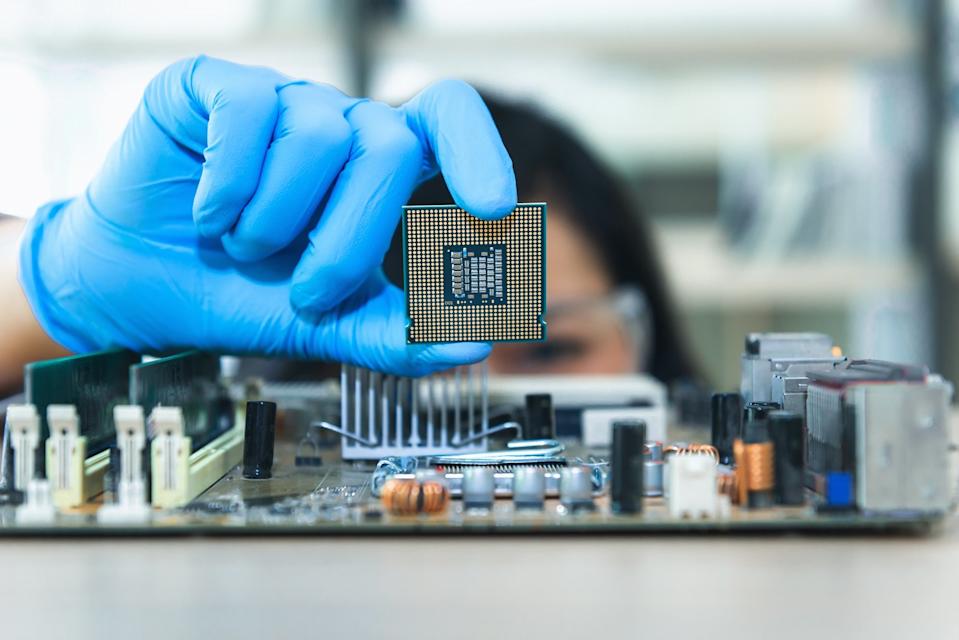
Distinct Markets: No Direct Competition
Although both companies are involved in chip production, they serve different segments of the market. Taiwan Semiconductor specializes in logic chips, while Micron focuses on memory chips. Logic chips are often in the spotlight due to their complexity and the advanced manufacturing processes involved, whereas memory chips are more standardized and interchangeable between manufacturers, making them a commodity product.
Both companies are subject to cyclical demand, but Micron's exposure to the commoditized memory market means its business is more volatile. This volatility requires investors to be more strategic about when to buy and sell Micron shares.
Given these factors, Taiwan Semiconductor appears to have a more stable and focused business model.
Advantage: Taiwan Semiconductor
Micron's Growth Outpaces Its Rival
When it comes to revenue expansion, both companies have posted solid numbers, but Micron's growth trajectory remains strong, while Taiwan Semiconductor's momentum is slowing.
The memory chip sector is currently experiencing explosive growth, with demand far outstripping supply. This imbalance has driven memory prices sharply higher, providing Micron with two powerful growth drivers. In contrast, Taiwan Semiconductor is benefiting from increased demand but not from surging prices, suggesting that Micron's growth advantage may persist for several years.
Advantage: Micron
Micron's Lower Valuation Reflects Its Risks
On the surface, Micron appears to be the more affordable stock compared to Taiwan Semiconductor.
However, this discount is justified. Micron operates in a highly cyclical industry, and the market tends to assign a lower valuation to companies whose primary markets are prone to sudden downturns. Therefore, even though Micron trades at roughly half the valuation of Taiwan Semiconductor, it doesn't automatically make it a clear-cut bargain. Both stocks seem fairly priced given their respective risks and opportunities.
Result: Draw
Which Stock Is Right for You?
After weighing the pros and cons, the comparison ends in a tie. However, your personal investment style should guide your decision. If you actively monitor your portfolio and seek high potential returns, Micron may be the better choice—provided you're prepared to exit if the memory market falters (especially as Micron is expanding its manufacturing capacity). For those who prefer a more hands-off approach, Taiwan Semiconductor offers a more defensible long-term position thanks to its technological leadership.
Ultimately, both companies have their strengths; your preference depends on which qualities matter most to you as an investor.
Is Now the Time to Invest in Micron Technology?
Before purchasing shares of Micron Technology, consider this:
For example, when Netflix was recommended on December 17, 2004, a $1,000 investment would now be worth $514,000*. Similarly, a $1,000 investment in Nvidia on April 15, 2005, would have grown to $1,105,029*.
Currently, Stock Advisor boasts an average return of 930%, far outpacing the S&P 500's 187%.
*Stock Advisor returns as of March 16, 2026.
Keithen Drury owns shares of Taiwan Semiconductor Manufacturing. The Motley Fool owns shares of and recommends both Micron Technology and Taiwan Semiconductor Manufacturing. For more details, see our disclosure policy.
This article was originally published by The Motley Fool
Disclaimer: The content of this article solely reflects the author's opinion and does not represent the platform in any capacity. This article is not intended to serve as a reference for making investment decisions.
You may also like
Gold-Backed Tokens Power Surging Tokenized Commodity Market
Canadian Dollar Outlook: USD/CAD opens the week on a downward trend after the release of Canada’s CPI figures
Simmons First National (SFNC) Might Be an Excellent Option
Why ENGIE BRASL EGA (EGIEY) Stands Out as an Excellent Dividend Stock Today
Trending news
MoreCrypto prices
More





