
Build-A-Bear’s Walmart Initiative Doesn’t Impress—Investors React as Uncertainty Over Wholesale Growth Persists

Build-A-Bear Workshop Embarks on Strategic Shift with Walmart Collaboration
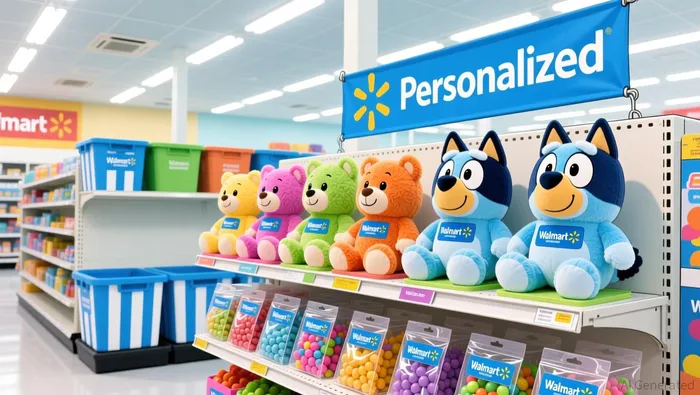
On March 16, 2026, Build-A-Bear Workshop made a significant move by entering its inaugural wholesale partnership with Walmart. This collaboration brings the brand’s Mini Beans and the new Bluey plush toys to more than 1,500 Walmart locations across the United States. This marks a notable departure from Build-A-Bear’s traditional focus on experiential retail, signaling a bold entry into the mass-market arena.
This special collection will be available for a limited period, ending on May 15, 2026, and offers options for personalization. The timing aligns with Build-A-Bear’s recent strategy of launching nostalgic, limited-edition lines, such as the Frosted Animal Cookie collection released earlier in March. While that campaign targeted both in-store and online shoppers with a seasonal theme, the Walmart partnership represents a broader, wholesale approach—distinct from the company’s usual direct-to-consumer or single-store events.
Wholesale Strategy: Leveraging Brand Nostalgia
Build-A-Bear is now exploring new avenues for growth by utilizing its popular licensed characters and nostalgic intellectual property through Walmart’s extensive distribution network. The key question for investors is whether this move is an unexpected innovation or simply the next logical phase in a strategy that has already been anticipated by the market.
Market Expectations: Was the News Already Priced In?
The market’s response to the Walmart announcement highlights the ongoing tension between expectations and reality. Prior to this news, Build-A-Bear’s stock had already fallen 29% year-to-date, reflecting investor concerns about slow growth, margin challenges, and the absence of a transformative catalyst. The Walmart deal was seen as a test of whether the company could deliver a meaningful surprise.
However, the details of the rollout suggest that this partnership may not be enough to shift market sentiment. Unlike Build-A-Bear’s high-margin, experiential retail events, this is a wholesale initiative that prioritizes broader reach over premium pricing. The focus on Mini Beans and Bluey plush at Walmart is a strategic pivot, but one that exchanges higher margins for increased volume—a trade-off the market seems to have already factored in.
Recent company updates further reinforce this narrative. In its latest earnings call, management emphasized a year spent improving internal infrastructure, which delayed key e-commerce upgrades. This behind-the-scenes focus suggests Build-A-Bear is laying groundwork for future growth rather than launching an immediate, high-impact consumer campaign. The Walmart partnership fits this long-term strategy, but may not deliver an instant boost to the stock.
Ultimately, there remains a gap between what the market expects and what the company is delivering. While the Walmart deal is a logical step in Build-A-Bear’s wholesale expansion, it doesn’t appear to be the game-changing event that would dramatically alter investor sentiment. The real challenge will be whether this new channel can generate the sales growth and margin improvement needed to overcome current skepticism.
Stock Performance: Sell-the-News Reaction
The immediate drop in Build-A-Bear’s share price following the Walmart announcement underscores the market’s cautious stance. On March 16, 2026, the stock declined 3.69% during afternoon trading, a classic example of a “sell the news” response. Investors viewed the wholesale partnership as an expected evolution, not a surprising catalyst for growth.
This stands in contrast to the company’s previous earnings report in late February, when shares surged 23.5% in premarket trading despite a revenue miss, thanks to a strong earnings per share and a positive outlook. That rally reflected optimism about operational resilience, while the Walmart news failed to exceed the market’s already modest expectations.
Analyst sentiment remains cautious as well. The average price target is $66.25, far above the recent trading price of $25.90. This wide gap—over 150%—reflects deep uncertainty. For the stock to approach those levels, Build-A-Bear must prove that the Walmart partnership can drive both sales and margin expansion, something the market remains unconvinced about for now.
Key Drivers and Potential Risks: Execution is Crucial
With the Walmart collaboration underway, its ultimate success will depend on the company’s ability to execute and surpass the market’s low expectations. Several factors will determine whether Build-A-Bear can close the gap between skepticism and optimism:
- Margin Protection: Last quarter, gross margin fell 140 basis points due to tariffs. Management has responded with selective price increases, but it remains to be seen whether these will be enough to offset ongoing cost pressures. If the wholesale channel’s lower margins aren’t balanced by higher prices, the partnership could weigh on profitability.
- Incremental Sales: The initial rollout to over 1,500 Walmart stores is significant, but the market will be watching to see if this expands the customer base or simply shifts sales from existing channels. The true value lies in reaching new audiences and generating additional revenue streams.
- Sustainability: The partnership is currently limited to a short window, ending May 15, 2026. With e-commerce demand down 13.6% for the quarter and digital initiatives delayed, a temporary wholesale push may not be enough to change the company’s growth narrative. Investors are looking for a lasting growth driver, not just another seasonal boost.
In summary, the Walmart partnership is a critical test of Build-A-Bear’s ability to execute on its wholesale strategy. The company must demonstrate resilience in margins, generate real incremental sales, and show a path to sustainable growth beyond this limited-time offer. Until these objectives are met, the gap between market expectations and reality is likely to persist.
Disclaimer: The content of this article solely reflects the author's opinion and does not represent the platform in any capacity. This article is not intended to serve as a reference for making investment decisions.
You may also like
VANRY (VANRY) 41.2% amplitude in 24 hours: Trading volume surge drives speculative volatility
Bitcoin tops $74.5K but are pro traders turning bullish again?
VIX Remains High as Diplomatic Efforts Waver—Investor Sentiment Keeps Volatility Poised

ELWT Surges 13% After Hours — But No News to Explain It
Trending news
MoreCrypto prices
More





