
Alcoa’s Unified Advantage: Seizing Opportunities from Aluminum’s Supply Constraints and Enhanced Pricing Authority

Aluminum’s Price Surge: Unpacking the Structural Shortage
Aluminum’s recent price climb is more than a short-lived spike—it’s the result of a persistent and deep-rooted supply shortfall that has developed over several years. While immediate events, such as production reductions at Alba in Bahrain, can trigger sharp movements, the underlying cause is a significant and ongoing imbalance between supply and demand. The market is currently experiencing backwardation, where spot prices exceed those of future contracts, highlighting a tangible scarcity of the metal and establishing a new, higher baseline for prices.
Three Key Forces Shaping the Market
- China’s Production Cap: The Chinese government’s strict limit of 45 million tonnes on aluminum output has become a major constraint. After exceeding this threshold in 2025, China’s production is expected to stagnate in 2026. This policy, intended to prevent overproduction, has instead restricted a key global supply source, just as domestic demand for green technologies rises.
- Energy Competition: Aluminum smelting is highly energy-intensive, and soaring electricity prices have sidelined around 800,000 tonnes of European capacity. Now, smelters are competing with AI data centers for long-term power contracts, with tech companies willing to pay over $115 per megawatt-hour—levels that make traditional smelting unprofitable for many.
- Inventory Depletion: By the end of 2025, total LME inventories (including off-exchange stocks) had dropped to roughly 669,140 tonnes. With such thin reserves, the market is exposed to disruptions, whether from bauxite supply issues in Guinea or geopolitical tensions in the Persian Gulf.
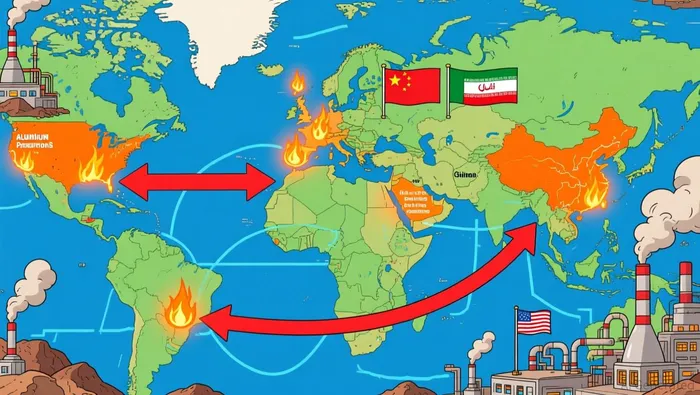
This tight supply is reflected in prices: by mid-January, LME cash aluminum was trading at $3,163 per tonne, a 22.6% increase from the previous year. Futures have recently reached $3,440 per tonne, approaching four-year highs. These gains are not speculative—they represent the market’s response to a persistent shortage.
Alcoa’s Advantage: Turning Market Tightness into Profit
For vertically integrated producers like Alcoa, the current environment is a direct boon. The ongoing supply deficit supports robust pricing, helping to maintain strong profit margins even amid short-term market swings. Alcoa’s structure, which spans the entire value chain from bauxite mining to aluminum production, shields it from raw material price shocks and allows it to fully benefit from rising aluminum prices.
Alcoa’s financial results for the fourth quarter of 2025 highlight this advantage. The company’s revenue jumped 15% sequentially to $3.4 billion, driven by both higher sales volumes and stronger pricing. Adjusted EBITDA (excluding special items) soared to $546 million, up $276 million from the previous quarter. Alcoa also ended the quarter with $1.6 billion in cash and generated $594 million in annual free cash flow.
Looking ahead, management expects recent operational improvements and cost-saving measures to deliver an annualized EBITDA boost of about $645 million by the end of 2025. These initiatives are set to further enhance profitability, demonstrating a commitment to efficiency and cost control beyond simply benefiting from favorable market conditions.
In summary, Alcoa is well-positioned to capitalize on the structural supply shortage, as shown by its strong financial performance. Its integrated operations and strategic cost initiatives provide a dual engine for profit growth, supported by a high market price floor.
Stock Price vs. Analyst Expectations: A Widening Gap
Investors have already recognized Alcoa’s strong position, sending its stock up 124% since June 2025 to around $66.60—a gain that far outpaces the broader market. However, there remains a notable gap between this rally and the more conservative forecasts from financial analysts.
The average analyst price target stands at $54.11, suggesting a potential downside of nearly 19% from current levels and falling below the stock’s 52-week high. This discrepancy indicates that while the market is betting on continued strength, analysts are more cautious, possibly anticipating a peak or correction.
Despite this, most analyst ratings remain positive, with a bias toward Buy recommendations. This suggests that, although official targets may lag behind, the core investment thesis—centered on the supply deficit and Alcoa’s integrated model—remains widely supported. The stock’s momentum may simply be outpacing the slower process of target adjustments.
Ultimately, the market is divided: investors are betting on the persistence of high prices, while analysts are more reserved, often referencing historical averages or near-term earnings. The gap between these perspectives may close only if Alcoa continues to outperform expectations and proves that its current profitability is sustainable.
Looking Ahead: Key Catalysts and Risks
The prevailing view is that the supply squeeze will continue to underpin the market. However, several factors could alter this outlook, and investors should keep a close eye on these potential catalysts.
- Geopolitical Developments: A reduction in regional tensions could quickly erase the recent risk premium in prices. For example, after the closure of the Strait of Hormuz and Alba’s output cuts drove prices higher, they fell back on March 5 as shipping concerns eased. This demonstrates how sensitive the market is to short-term events.
- Regulatory Decisions: Alcoa’s future growth depends on regulatory approvals, such as the EPA’s review of its Australian mine expected by mid-2026. Delays or strict conditions could prolong the supply crunch, while a smooth approval could eventually add new capacity and weigh on prices.
- Policy Changes in China: The 45 million tonne production cap in China is the single most significant constraint on global supply. Any relaxation of this limit, or changes in energy policy that make smelting more viable in high-cost regions, could undermine the current deficit and reshape the market.
In essence, while the current cycle is defined by tight supply and high energy costs, the path forward is likely to be volatile. Investors should monitor geopolitical shifts, regulatory outcomes, and policy changes in China to gauge whether the rally will endure or prove to be a temporary peak. Alcoa’s integrated structure and focus on cost efficiency provide some protection, but its long-term profitability will ultimately depend on the persistence of the global supply squeeze.
Disclaimer: The content of this article solely reflects the author's opinion and does not represent the platform in any capacity. This article is not intended to serve as a reference for making investment decisions.
You may also like
GOOG – Trendline Decision Point
Germany's natural gas reserves fall short in summer as market-driven incentives disappear

Atlantic Lithium's Ewoyaa: Parliamentary Approval May Pave the Way for Ghana's Inaugural Lithium Mine
California's $27 Billion Capital Exodus: Immediate Financial Consequences for the Tech Sector

Trending news
MoreCrypto prices
More





