
Wasabeef’s Factory Halt Signals Supply Shock Spreading Beyond Fuel Prices

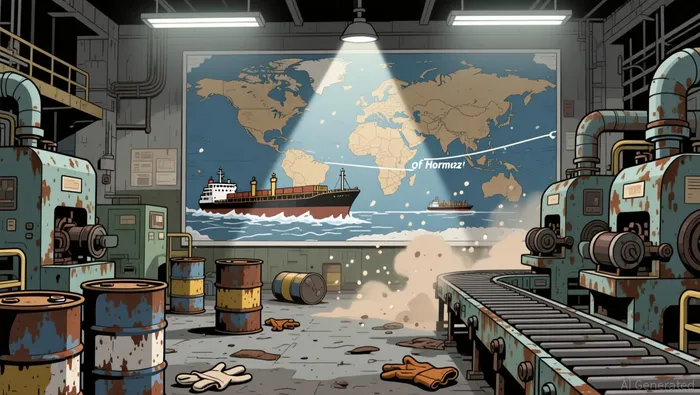
The economic tremors from the Middle East conflict are no longer just a headline. They have reached the pantry. The effective closure of the Strait of Hormuz, a critical artery for a fifth of global oil supply, has sent Brent crude surging more than 40% this month to its highest levels since 2022. For Yamayoshi Seika, the maker of the niche Wasabeef crisps, that spike translated directly to a factory floor halt.
The company's heavy oil wholesaler warned of an expected price hike of 20% to 30% in early March and soon after cut off all supplies citing the conflict in the Middle East. With no cooking oil, the production line stopped. "We had no choice but to stop the factory," CEO Satoshi Kada told Reuters, adding he did not know when production could resume. This incident is among the first tangible consumer-level fallout from the oil shock.
The brand's sudden unavailability sparked a wave of online dismay, pushing Wasabeef to become the third-most trending buzzword in Japan on social media on Tuesday. For a snack that generates about $2.5 million to $3 million in monthly sales, the halt is a stark reminder of how a global supply chain shock can disrupt even the most localized of products. Japan, which depends on the Middle East for around 95% of its crude oil, is releasing strategic reserves to mitigate the blow starting this week. Yet the Wasabeef case shows the vulnerability is not just about fuel prices at the pump; it's about the fundamental ingredients that make everyday goods possible.
Historical Parallels: Japan's Enduring Oil Dependence
The current oil shock is not a new problem for Japan; it is a recurring one. The nation's vulnerability stems from a deep, historical dependence on Middle Eastern crude. Japan relies on the region for some 90% of its oil supply, a figure that has held remarkably steady for decades. This makes the country acutely sensitive to any disruption in the Gulf, as seen now with the closure of the Strait of Hormuz.
Tokyo's response is a direct echo of past crises. The government is releasing a record 80 million barrels of oil from its strategic reserves, a move that marks its first such action since 2022. This is not just a stopgap; it is a policy calibrated by painful experience. The system itself was born from the first major oil shock. After the 1973 oil embargo by Arab OPEC nations, which quadrupled global oil prices and severely battered the Japanese economy, Tokyo established its own stockpile framework in 1978. The current release is the modern application of that hard-won lesson.
The scale of the current move underscores the severity of the threat. The 80 million barrels represent 45 days of domestic consumption and are the largest single release in the nation's history. Yet, as with all such measures, the reserves are a buffer, not a cure. Experts note they mainly buy time and cannot fully offset a prolonged disruption. The government is also taking a longer-term step, planning to reduce the mandatory 70-day reserve requirement for refiners and traders to 55 days, a move that could free up more oil for immediate use.
The parallel to 1973 is structural, not just historical. Then, as now, a geopolitical conflict in the Middle East triggered a supply shock that rippled through a global economy. The embargo forced a fundamental reassessment of energy security, a lesson that persists in Japan's policy today. The Wasabeef factory halt is a modern symptom of a dependency that has shaped national strategy for half a century.
Cascading Economic Impact: From Snacks to Petrochemicals
The shock is moving beyond the snack aisle. For petrochemical firms, the disruption is a direct threat to their core operations. Mitsubishi Chemical reduced the operating rate of its major naphtha cracker last week, a move to conserve dwindling feedstock. Fellow producer Idemitsu has gone further, warning customers it could halt ethylene output if the naphtha shortage persists. This isn't isolated. Other producers like Resonac and Tosoh are already running maintenance that could be extended, while Maruzen Petrochemical says its own operations are only secure for March. The message is clear: a key industrial feedstock is becoming scarce.
This cascade stems from a physical supply chokepoint. The closure of the Strait of Hormuz is not a rumor; it is a reality that is choking off a fifth of global oil supply. The International Energy Agency estimates global oil supply could fall by 8 million barrels per day this month due to shipping disruptions, with Middle Eastern producers cutting output by at least 10 million bpd. The scale is unprecedented. As former IEA head Neil Atkinson noted, the market is facing a situation "the likes of which we have never seen before."
Analysts warn the price impact will be long-lasting. With physical supply being choked off, oil prices could stay above $110 per barrel for months. This isn't just about fuel; it's about the raw material for everything from plastics to synthetic fibers. The Wasabeef factory halt, caused by a cooking oil wholesaler's supply cutoff, is the most visible symptom. It connects directly to this broader industrial cascade, where a disruption in a single global chokepoint is now threatening the feedstock for a wide range of downstream products. The economic tremors are no longer just in the headlines; they are in the production lines.
Catalysts and Market Implications: What to Watch
The immediate market response has been a sharp spike in oil prices, but the real test is what happens next. The shock's trajectory will be determined by three key catalysts that will either contain the damage or deepen it into a broader economic crisis.
First is the coordinated global supply response. Japan's 80 million-barrel release is a significant unilateral move, but it is part of a larger plan. The International Energy Agency is coordinating a release of 400 million barrels from its 32 member countries, including Japan. This coordinated action is the modern equivalent of the 1973 embargo response, a structural policy tool designed to stabilize markets. The scale is immense-400 million barrels is roughly 10 days of global consumption. Its effectiveness will be a critical signal. If it succeeds in bringing prices down and reassuring markets, it will validate the resilience of these emergency frameworks. If prices remain elevated despite the release, it will indicate a deeper, more persistent supply shortage.
Second is the duration and escalation of the conflict itself. The closure of the Strait of Hormuz is the physical chokepoint. The market is watching for any extension of this blockade. More critically, the threat of further strikes on key infrastructure looms large. U.S. President Donald Trump has already struck military targets on Iran's Kharg Island, a vital oil export hub, and warned of more. This is a direct escalation that risks turning a shipping disruption into a direct assault on production capacity. Each strike raises the specter of a permanent reduction in global supply, moving the shock from a temporary logistical problem to a fundamental scarcity.
The third and most consequential risk is the shock's propagation into the broader economy. The Wasabeef factory halt is a warning. If petrochemical feedstock shortages spread to other manufacturing sectors, the impact will be far more severe. This is the historical vulnerability in action. As research notes, the sudden removal of oil production from the Persian Gulf has led to economic recessions in the past. The current situation mirrors that risk. If industrial output slows and consumer spending is squeezed by high energy costs, the economic tremors could turn a supply shock into a recessionary signal. The market's fragility is exposed here: a geopolitical event in one region can now trigger a cascade through global supply chains and financial markets, testing the very systems built to contain such shocks.
Disclaimer: The content of this article solely reflects the author's opinion and does not represent the platform in any capacity. This article is not intended to serve as a reference for making investment decisions.
You may also like
Orbs' March 17 Launch: Volume and Liquidity Metrics

Crypto Treasury Movements: Key Figures Driving Leadership Compensation and Share Price Growth

Trending news
MoreCrypto prices
More





