
NATO Fuel Pipeline Growth Reflects Cold War Thinking—Hidden Energy Infrastructure Emerges as a Key Strategic Driver

NATO Fuel Network Expansion: Revisiting Cold War Strategies
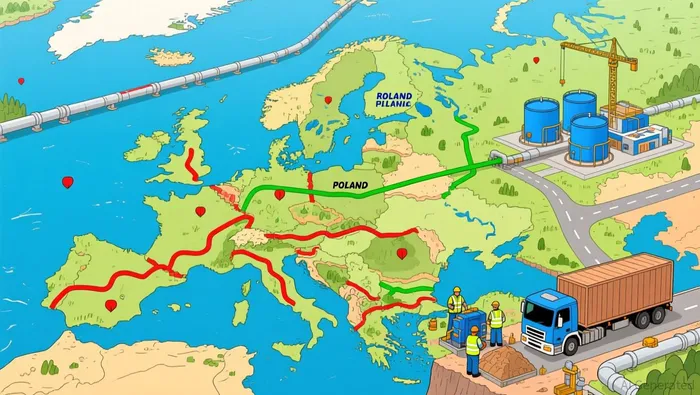
NATO's initiative to broaden its fuel pipeline network is a clear nod to Cold War-era defense tactics. The existing infrastructure stretches 10,000 kilometers underground, originally constructed to support Western air forces in potential confrontations with the Soviet Union. The fundamental principle was to establish a concealed and robust supply route, minimizing the risks associated with exposed logistics. This approach is gaining renewed relevance, especially as Russia’s attacks on Ukraine’s energy facilities highlight the necessity for secure and protected supply chains.
The planned enlargement of the network reflects the scale of Cold War deterrence investments. With an estimated price tag of 21 billion euros and a projected completion time of 20 to 25 years, the project demands sustained political resolve reminiscent of the original network’s decades-long development. The expansion aims to push the system several hundred kilometers eastward, reaching Poland, the Baltic states, Finland, and Romania. This would directly address storage limitations and logistical challenges along NATO’s eastern border.
Ensuring Operational Resilience
From another perspective, this expansion is about maintaining uninterrupted operations. In the event of a major conflict, air forces could account for up to 85% of total military fuel consumption. The pipeline’s capacity to transport jet fuel for aircraft and blend it for ground vehicles offers vital backup. Since the current network terminates in western Germany, a strategic vulnerability exists. Extending the pipeline is not merely about distributing fuel—it’s about establishing a hidden, reliable supply line that guarantees missions can continue even if surface routes are disrupted.
Absolute Momentum Long-only Strategy Overview
This momentum-based investment strategy for SPY involves entering positions when the 252-day rate of change is positive and the closing price is above the 200-day simple moving average (SMA). Positions are exited if the price drops below the 200-day SMA, after holding for 20 trading days, or if a take-profit of +8% or a stop-loss of −4% is reached.
- Entry Criteria: 252-day rate of change > 0 and close > 200-day SMA
- Exit Criteria: close < 200-day SMA, holding period >= 20 days, return >= +8%, or return <= −4%
- Asset: SPY
- Risk Controls: Take-profit at 8%, stop-loss at 4%, maximum holding period of 20 days
Backtest Performance
- Total Return: 14.26%
- Annualized Return: 6.96%
- Maximum Drawdown: 4.51%
- Profit-Loss Ratio: 1.38
Trade Statistics
- Total Trades: 12
- Winning Trades: 9
- Losing Trades: 3
- Win Rate: 75%
- Average Holding Days: 16.08
- Maximum Consecutive Losses: 1
- Profit-Loss Ratio: 1.38
- Average Winning Return: 1.97%
- Average Losing Return: 1.39%
- Largest Single Gain: 3.29%
- Largest Single Loss: 2.4%
Disclaimer: The content of this article solely reflects the author's opinion and does not represent the platform in any capacity. This article is not intended to serve as a reference for making investment decisions.
You may also like
Namib Minerals Announces Date of Full Year 2025 Results and Business Update Call


3 Nasdaq 100 Stocks Worth Watching
3 Essential Consumer Goods Stocks Resilient to AI Upheaval

Trending news
MoreCrypto prices
More





