
Convenience Store Chains Amid Fuel Shortages: Mergers Boost Influence Over Commodities

Convenience Store Industry: Navigating Capacity and Commodity Demand
The convenience store landscape is facing a core challenge: balancing a shrinking number of physical locations with ongoing demand for key commodities. By the end of 2025, the total number of convenience stores in the U.S. stood at 151,975, reflecting a modest reduction of 280 stores, or 0.2%, compared to the previous year—a continuation of the slight downward trend seen in 2024.
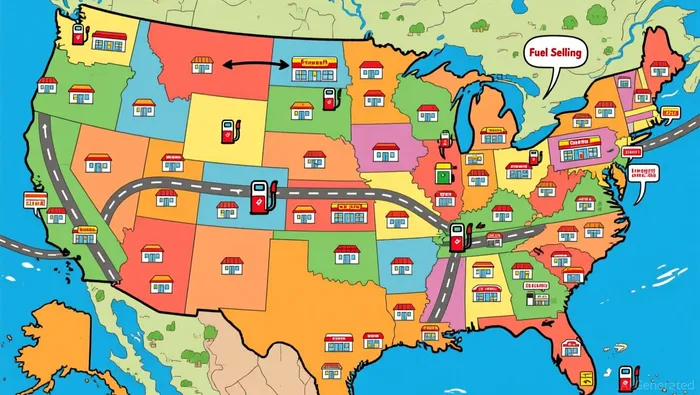
Despite this overall contraction, the segment of stores offering fuel is on the rise. The count of fuel-selling locations increased by 768 (0.6%), reaching 122,620—the highest in eight years. This is significant, as convenience stores account for roughly 80% of all fuel sales to American consumers, making them the primary channel for gasoline and diesel purchases.
With the majority of stores already selling fuel, expansion through simply adding new locations is becoming less feasible. As a result, leading chains are now focused on capturing a larger share of the fuel market within the existing store network. This shift is expected to shape competitive dynamics in 2026, as chains seek to maximize performance in a market with limited physical growth.
How Leading Chains Are Growing
Amidst a plateau in total store numbers, growth is being fueled by two main strategies: consolidation and targeted expansion. Fast-growing small and midsize chains are scaling up through acquisitions or forming strategic partnerships to boost traffic and sales.
The most prominent trend is consolidation. Larger players are acquiring smaller, less competitive chains to increase their market presence. As competition intensifies, smaller operators are finding it harder to maintain profitability, prompting many to sell. This wave of mergers and acquisitions can dramatically alter the growth trajectory of smaller chains, as they are absorbed and integrated into larger organizations. Many of the fastest-growing chains owe their expansion to this process rather than organic growth.
Another approach is illustrated by Wetzel's Pretzels, which plans to double its presence inside convenience stores over the next two years. By expanding into high-traffic fuel locations, the brand is broadening its reach without the expense of building standalone outlets, capturing more consumer spending within the existing convenience store footprint.
This surge in activity is supported by favorable investment conditions. Incentives from the One Big Beautiful Bill Act are encouraging modernization and upgrades in both fuel and convenience store assets, providing the financial resources needed for both organic growth and acquisitions.
Summary: Strategic Growth in a Limited Market
As the number of stores remains relatively flat, growth is becoming more focused and strategic. Whether through acquisitions or partnerships to expand product offerings, the most dynamic chains are finding ways to increase their share of the market, intensifying competition for every customer and every gallon of fuel sold.
Commodity Trends and Market Shifts
Fuel sales represent a massive and concentrated commodity flow within the convenience store sector. In 2024, total industry sales reached $837.4 billion, with motor fuels accounting for $501.9 billion—nearly 60% of all revenue. Since convenience stores handle about 80% of U.S. fuel sales, the remaining 20% and the efficiency of the 122,620 fuel-selling stores are critical to the market balance.
Ownership of these stores is highly fragmented: 63% (95,672 stores) are operated by companies with ten or fewer locations. This fragmentation creates opportunities for larger chains to grow by acquiring smaller operators, reshaping who controls the flow of fuel through the market.
Investment activity remains strong, with 302 convenience store properties currently for sale, nearly all of which include fuel components. These assets are in high demand, trading at an average cap rate of 5.56%—much lower than the 7.63% for non-fuel stores—and averaging $4.92 million in price, reflecting the value placed on fuel-generating real estate.
In summary, the market is shifting from building new fuel sites to acquiring and optimizing existing ones. The scale of fuel as a commodity, combined with fragmented ownership, is driving ongoing consolidation, with capital increasingly targeting the most reliable revenue-generating assets.
Key Drivers and Challenges for the Commodity Market
The future for small and midsize chains in 2026 will depend on several factors that influence their ability to grow and shape the flow of fuel commodities.
- Consolidation as a Catalyst: The ongoing trend of mergers and acquisitions is a powerful engine for growth. Chains like Kent Kwik, which nearly doubled its store count in less than three years, exemplify this strategy reaching 132 locations by the end of last year. As larger operators continue to target smaller, less profitable competitors in a challenging market, market power becomes increasingly concentrated. However, this also means fewer independent operators remain, potentially limiting future acquisition opportunities.
- Risks for Smaller Operators: Smaller chains face mounting challenges in competing with larger rivals, often leading to more sales and further consolidation. Without succession plans or family interest, many are incentivized to exit the market, which can leave remaining independents vulnerable and less able to invest in their operations or compete on price and service.
- Diversification and New Partnerships: While fuel remains the core commodity, expanding into new revenue streams is essential. Wetzel's Pretzels’ plan to double its convenience store locations is a prime example of leveraging high-traffic sites to boost non-fuel sales. Success in these areas can improve margins and customer loyalty, helping offset flat transaction volumes and rising costs.
Ultimately, the market is being reshaped by the forces of capital and scale. While consolidation is likely to remain the main growth driver, the shrinking pool of independent operators and the need to diversify through non-fuel offerings will be crucial. Chains that can both scale up and enhance the value of each fuel-selling location will be best positioned to thrive as the number of stores continues to contract.
Disclaimer: The content of this article solely reflects the author's opinion and does not represent the platform in any capacity. This article is not intended to serve as a reference for making investment decisions.
You may also like
Treasury International Capital Data for January
ProKidney Reports Full Year 2025 Financial Results and Business Highlights

Crypto Market Update – Kaspa and MemeCore Lead the Charge as Altcoins Rally Amidst Shifting Sentiment
While You Were Panic Selling, Pantera Capital Was Watching These 4 Crypto Trends

Trending news
MoreCrypto prices
More





