
Fed Faces Dilemma Amid Iran Conflict and Oil Price Surge—Aggressive Policy Now Threatens Stagflation Risks

Market Overview: Turbulence Amid Conflict and Central Bank Uncertainty
Financial markets are currently navigating heightened volatility, driven by escalating tensions in the Middle East and a Federal Reserve grappling with fresh inflationary challenges. The ongoing conflict has sparked a significant oil supply disruption, compelling the Fed to reassess its monetary policy trajectory.
The surge in oil prices stands out as the most immediate influence on markets. Brent crude has surpassed $100 per barrel, marking a roughly 40% increase over the past month. Prices jumped again following an Israeli strike on Iran’s South Pars gasfield, with oil rising more than 5%. Iran’s retaliatory threats against Gulf energy infrastructure have severely restricted shipments through the vital Strait of Hormuz. Research indicates that over 12 million barrels of oil equivalent per day have been removed from the market, intensifying the supply crunch and fueling further price hikes.
This energy shock has become the central challenge for the Fed. At its most recent meeting, the central bank held interest rates steady between 3.5% and 3.75%, while projecting only a single rate cut for 2026. Fed Chair Jerome Powell emphasized the uncertainty, directly connecting the bank’s cautious stance to the conflict. His remarks highlighted how the war-driven oil spike complicates the inflation outlook, likely delaying any anticipated policy easing. The market responded swiftly, with equities declining as investors adjusted to the new risks.
The interplay between the oil shock and Fed policy is creating a feedback loop. Elevated oil prices pressure the Fed to maintain rates, which in turn supports higher oil prices by preventing significant dollar appreciation. Persistently high energy costs are fueling global inflation, further restricting the Fed’s ability to ease. This scenario is unsettling for stocks, as rising oil expenses squeeze corporate profits and consumer budgets, while inflation-driven bond yields increase borrowing costs. For now, markets remain reactive, closely tracking developments from the Middle East.
Market Response: Sector Impacts and Notable Moves
The combination of surging oil prices and a cautious Fed is manifesting in distinct market shifts and sector-specific challenges. The S&P 500 dropped 0.6% on Friday, marking its third consecutive weekly decline. This pattern of volatility has persisted throughout the week, with stock index futures falling amid oil spikes and inflation concerns.
Airlines are experiencing the most pronounced impact, as their sensitivity to fuel costs has led to their largest monthly losses in a year. The oil price surge directly affects their primary expense, while other travel-related companies, such as cruise lines, are also facing heavy selling pressure, reflecting the strain on consumer discretionary spending.
In contrast, the gold market is sending mixed signals. Despite its reputation as a safe haven during geopolitical unrest, gold has dropped sharply—falling 2% to its lowest point since February. This unexpected decline underscores the influence of inflation and monetary policy. The Fed’s hawkish approach, which favors higher rates to counteract inflation, raises the opportunity cost of holding gold. A stronger dollar and rising bond yields are further weighing on the metal, despite the uncertain geopolitical climate.
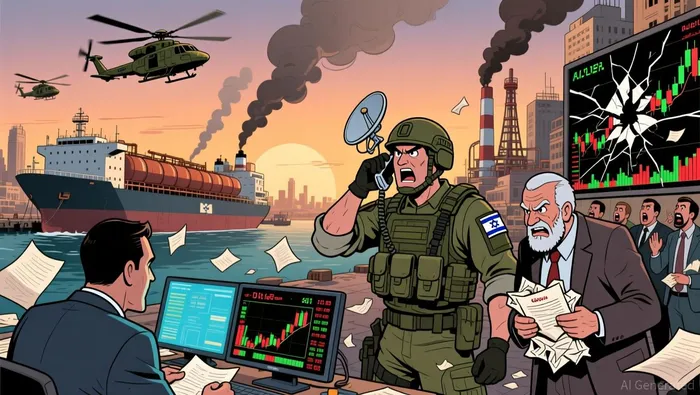
Ultimately, markets are factoring in the risk of stagflation. Elevated oil prices are eroding corporate earnings and consumer spending, while the Fed’s reluctance to ease limits monetary support. This environment is marked by volatility, with traditional safe havens and energy-dependent sectors bearing the brunt of the turmoil.
Current Position: What’s Reflected in Prices and What May Shift
Markets have already adjusted to a significant change, but questions remain about whether the full extent of risk is accounted for. The conflict-driven oil shock has fundamentally altered expectations for inflation and growth, moving beyond short-term fluctuations. The Fed’s projection of a single rate cut this year is now vulnerable to revision, especially if oil prices stay high. Chair Powell has signaled this uncertainty, linking the Fed’s cautious outlook to the conflict. Central bank data shows inflation stubbornly above target, with the core rate at 3.1% year-over-year. Many economists anticipate the Fed will forecast inflation near 3% by late 2026, which would significantly hinder further easing.
Consumers are already feeling the effects. Gasoline prices have jumped, with the national average up 20% since the conflict began. This increase directly impacts household budgets, reducing discretionary spending and slowing economic growth. The result is a classic stagflation scenario: higher inflation from oil costs coinciding with a potential slowdown in activity as consumers tighten their belts. The Fed faces a dilemma, as continued spending reductions could lead to higher unemployment, raising the risk of both rising prices and joblessness.
The broader inflation backdrop adds complexity. The conflict has introduced new volatility to an already persistent inflation environment. The Fed’s preferred inflation measure, excluding food and energy, remains at 3.1%, indicating widespread price pressures. This makes aggressive rate cuts untenable, especially with a fresh supply shock. The outcome is a policy stalemate, supporting higher bond yields and a stronger dollar, which in turn affects global markets and commodities.
In summary, the landscape has undergone a fundamental shift. The situation is not merely noise—it represents a structural change in economic dynamics. While markets have priced in a hawkish Fed and elevated oil prices, the possibility of a stagflationary slowdown may not be fully reflected. If oil remains near $100 and consumer spending weakens, the Fed’s forecast for one rate cut could prove overly optimistic. The immediate outlook depends on how long the conflict persists and the resilience of consumer demand.
Trading Strategies: Key Catalysts to Monitor
For market participants, the near-term risk and reward depend on several critical factors. The current environment is shaped by ongoing conflict and a central bank navigating its consequences. Here are the main triggers to watch:
-
Oil Price Trends and Middle East Escalation:
Brent crude’s price is the primary indicator, having remained above $100 per barrel for four consecutive sessions and reaching $108.66 earlier this week. Further price spikes or attacks on Gulf energy infrastructure could prompt a lasting policy shift. Iran’s threats to facilities in Saudi Arabia, the UAE, and Qatar, along with missile damage to a Qatari gas site, suggest that supply disruptions may become permanent. This would likely force the Fed to maintain rates for an extended period, potentially eliminating any rate cuts this year.
-
Upcoming Inflation Reports (PCE, CPI):
Markets are watching to see if the oil shock translates into broader inflation. February’s producer price index came in strong at 0.7%, exceeding forecasts. The next key data points are the consumer price index (CPI) and the Fed’s preferred personal consumption expenditures (PCE) index. If these show accelerating core inflation, stagflation risks will be confirmed. The Fed’s own data indicates core inflation at 3.1% year-over-year. A move toward 3% by late 2026 would block any easing, regardless of other economic indicators.
-
The Fed’s May Policy Meeting:
This upcoming meeting will be crucial in determining whether the current forecast is at risk. The central bank’s quarterly projections could shift its outlook from one rate cut to none. Chair Powell has already highlighted the uncertainty, tying the Fed’s caution to the conflict. Traders now expect no rate cuts before December. The May meeting will either confirm a hawkish stance or, if data softens, offer a possible reprieve. For now, rates are expected to remain at 3.5%-3.75%, but forward guidance will be key.
In conclusion, the trading playbook is straightforward: monitor oil prices, track inflation data, and watch for the Fed’s next move. Each of these factors will either reinforce or challenge the outlook for a new inflationary regime. The immediate risk is that all signals point toward sustained high rates and continued market volatility.
Disclaimer: The content of this article solely reflects the author's opinion and does not represent the platform in any capacity. This article is not intended to serve as a reference for making investment decisions.
You may also like
Namib Minerals Announces CEO Change, Influencing Binary Trading Before April 2 Earnings Report

Deere Shares Dip 0.56% with 157th-Ranked 700M Volume as Tariffs and Shrinking Ag Market Weigh on Outlook
Trending news
MoreCrypto prices
More





