
QatarEnergy LNG Outage Triggers Oil and Gas Price Fluctuations — Limited Supply and Geopolitical Instability Lead to Volatile Trading Conditions

Major Supply Shock: Iran’s Attack Reshapes Global Energy Markets
Global energy markets have been thrown into turmoil following a coordinated Iranian strike on the Gulf’s energy infrastructure. This aggressive move has triggered significant disruptions in both liquefied natural gas (LNG) and oil supplies, sending shockwaves through international markets.
LNG Disruption: Qatar’s Production Halt Sends Prices Soaring
The most immediate and dramatic impact has been on LNG. Following a drone attack, QatarEnergy was forced to suspend operations at its Ras Laffan plant, the world’s largest LNG export facility, which accounts for roughly 20% of global supply. This unprecedented shutdown has already driven European gas prices up by over 50%, with QatarEnergy declaring force majeure on its contracts. The closure of the strategic Strait of Hormuz has further compounded the crisis, as tankers are unable to transit, leading to potential storage overflow at Qatar’s facilities.
Oil Market Hit: Saudi Refinery Targeted
At the same time, a drone strike ignited a fire at Saudi Arabia’s Ras Tanura refinery, the kingdom’s largest and a key global export hub. Although the blaze was quickly contained, the refinery was shut down as a precaution. With a daily capacity of 550,000 barrels, this facility is vital for Saudi crude exports. The attack is part of a broader wave of strikes that have crippled major shipping routes throughout the region.
Strait of Hormuz Bottleneck: Oil and Gas Flows Severely Restricted
The near-total closure of the Strait of Hormuz—a passageway for about a fifth of the world’s oil and gas trade—has created a severe bottleneck. The United Arab Emirates, OPEC’s third-largest producer, has slashed its output by more than half. Oil prices have responded swiftly, with Brent crude jumping over 2% to $102.69 per barrel, as traders grapple with the reality of acute physical shortages and uncertainty over the duration of the disruption.
Market Response: Volatility and Rapid Repricing
Markets are now in a period of extreme volatility, with prices reacting sharply to both supply shocks and political developments. European gas prices surged nearly 50% in the first week of the crisis, peaking at €56.4/MWh on March 9—the highest since February 2025—directly linked to the halt in Qatari LNG exports.
Oil benchmarks experienced similar turbulence, with prices briefly spiking over 9% as tanker movements through the Strait of Hormuz stalled. Brent crude settled above $102 per barrel on March 17, reflecting the market’s anxiety over restricted supply and the UAE’s production cuts.
Political signals are now driving rapid price swings. For instance, after the U.S. president hinted at a possible resolution with Iran on March 10, European gas prices quickly dropped to €47.4/MWh. This pattern of sharp rallies on supply fears and equally swift declines on hopes of de-escalation underscores the market’s sensitivity to geopolitical news.
In summary, traders are navigating a highly unstable environment, balancing the reality of disrupted energy flows against the potential for diplomatic breakthroughs. Prices remain highly reactive to any new developments.
Secondary Impacts: Supply Chain Strains and Trading Opportunities
The initial supply shock is now cascading into additional disruptions, creating new challenges and opportunities. One of the most immediate effects is a surge in helium prices. Since helium is a byproduct of natural gas processing, the halt in Qatar’s LNG operations has slashed global supply. Spot helium prices have doubled since the crisis began, as Qatar supplies about a third of the world’s helium. With little spare capacity and limited storage, buyers are scrambling, exposing vulnerabilities in supply chains critical to industries like semiconductors and medical imaging.
OPEC+ has responded by increasing oil output to counteract the supply shock, but this is seen as a temporary fix. The fundamental issue remains the physical blockage at the Strait of Hormuz, which cannot be resolved by simply pumping more oil. As a result, the relief is limited and does not address the core logistical constraints.
Another major challenge is the shortage of LNG vessels and spare liquefaction capacity. The sudden stop in Qatari exports has sent buyers searching for alternative cargoes, but limited shipping and processing capacity is restricting the market’s ability to respond. This bottleneck is expected to keep gas prices elevated for an extended period, creating lucrative arbitrage opportunities for exporters with available capacity—especially in the U.S., which is well-positioned to benefit from the price gap between Europe and Asia.
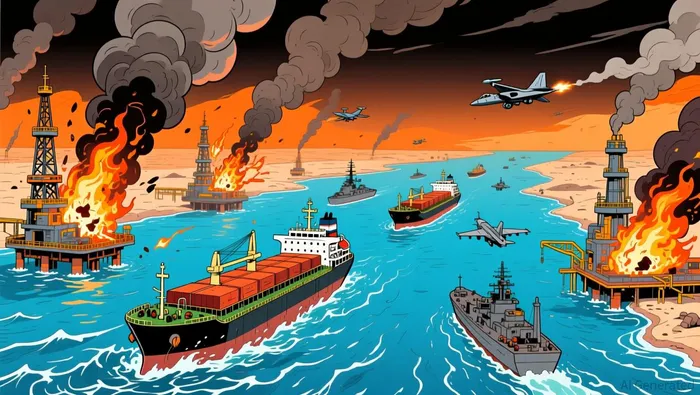
In essence, the initial shock is triggering a series of secondary disruptions. The helium price spike reveals hidden weaknesses in global supply chains, OPEC+’s measures offer only short-term relief, and the shortage of LNG vessels limits the market’s flexibility. For traders, the real challenge—and opportunity—lies in navigating these cascading effects.
Key Catalysts and Risks: How Long Will the Shock Last?
Looking ahead, the market’s direction hinges on two main factors: the duration of the physical supply disruption and the evolution of the geopolitical conflict. Investors are closely monitoring these catalysts to determine whether the current price surge is temporary or marks the beginning of a prolonged shift.
The most pressing risk is how long the shutdown at Qatar’s Ras Laffan facility will persist. If the disruption continues, prices could climb even higher. Goldman Sachs projects that a month-long closure of the Strait of Hormuz could more than double European gas prices. The market remains highly sensitive to political developments, so any indication that the shutdown may be prolonged will keep upward pressure on prices.
Conversely, a de-escalation in the conflict could trigger a rapid reversal. Earlier this month, mere suggestions of a diplomatic breakthrough led to a sharp drop in European gas prices. Any credible sign of easing tensions would likely prompt traders to unwind speculative positions, causing prices to fall quickly.
Escalation Risks: New Iranian Threats
The situation remains precarious, with the latest warning coming from Iran’s Revolutionary Guards, who issued evacuation alerts for energy facilities in Saudi Arabia, the UAE, and Qatar. This signals that attacks on vital infrastructure may not be over, raising the risk of further supply shocks and even higher prices. The market is now on high alert, watching for either a diplomatic breakthrough or further escalation.
In summary, the energy market faces a binary outcome: a swift reversal if diplomacy prevails, or continued volatility and price spikes if the conflict intensifies. Traders and investors must remain vigilant as the situation evolves.
Disclaimer: The content of this article solely reflects the author's opinion and does not represent the platform in any capacity. This article is not intended to serve as a reference for making investment decisions.
You may also like
RBA warns high and rising risk of severe shock to world economy amid Iran war
Vistra's 7.03% Rally Gains Momentum as Technical Indicators Signal Continued Uptrend
Hashrate Drop: A Flow Shock, Not a Security Threat
Zijin's investment division aims to broaden its presence in key metals as worldwide demand rises
Trending news
MoreCrypto prices
More





