
Trump's battle over energy sparks new trade opportunities: Damage at Ras Laffan threatens LNG deliveries for an extended period

Escalation of Conflict: From Military Targets to Energy Infrastructure
The ongoing conflict has entered a perilous new chapter, shifting its focus from traditional military objectives to the vital global energy supply chain. A turning point occurred on March 18, when Israeli forces struck Iran’s South Pars gas field and the Asaluyeh processing hub. This deliberate attack targeted the economic lifeblood of Iran, moving beyond military or nuclear sites. Coordinated with the United States, this operation marked a significant escalation by directly challenging Iran’s fossil fuel sector—an area previously avoided to prevent global price shocks.
Iran’s reaction was swift and pointed. The Revolutionary Guards issued threats of retaliatory strikes against energy facilities in Saudi Arabia, the UAE, and Qatar, specifically naming sites such as Saudi Arabia’s Samref refinery and Qatar’s Mesaieed complex. These warnings quickly materialized when Iran attacked Qatar’s Ras Laffan Industrial City, the world’s largest LNG export facility, inflicting “extensive damage.” This direct hit on a major LNG hub escalated the conflict into overt economic warfare, jeopardizing both immediate shipments and future production capacity.
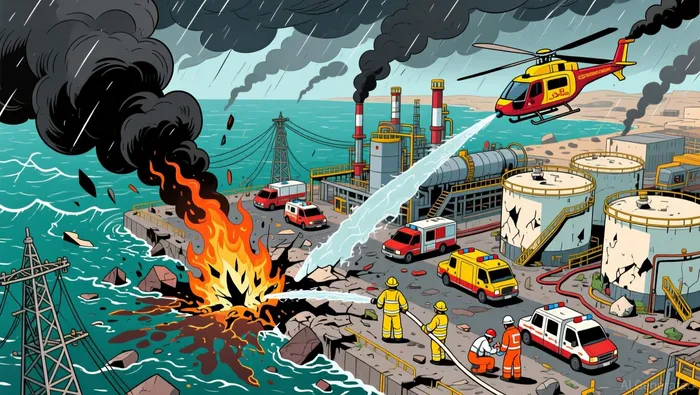
The repercussions for global trade have been immediate and severe. The conflict has effectively blocked the Strait of Hormuz, a critical passageway for roughly 20% of the world’s oil and a similar share of LNG. At the time of reporting, about 150 vessels—including oil and gas tankers—were stranded in the area. This blockade, coupled with targeted attacks on infrastructure, has delivered a double blow to supply. Markets have responded with sharp volatility, as oil and European natural gas prices soared in response to the heightened risk of prolonged disruption.
In summary, these developments have ushered in a new era of economic confrontation. The conflict now directly targets the infrastructure that supports global energy markets, introducing persistent instability and long-term supply risks that will outlast any immediate military resolution. However, a significant factor for potential de-escalation remains: President Trump’s reported reluctance to authorize further strikes may serve as a temporary restraint, even as substantial damage to energy assets has already been inflicted.
Market Impact: Volatility and Supply Disruptions
The conflict’s focus on energy infrastructure has triggered dramatic shifts in global markets. Oil prices have climbed by over 40% this month, with Brent crude briefly surpassing $116 per barrel—levels not seen since 2022. Natural gas markets have also reacted sharply, with Europe’s benchmark price jumping 6% following the attack on Qatar’s Ras Laffan, and U.S. crude extending its rally in after-hours trading.
This is not a fleeting disturbance. The destruction of key facilities has created enduring supply challenges. The strike on Ras Laffan Industrial City has caused significant damage, with analysts warning that the impact will be felt in future production, not just current exports. Even after the Strait of Hormuz reopens, the physical damage will delay a return to normal trade flows.
The structural consequences are profound. Global oil output is projected to drop by 8 million barrels per day in March due to shipping interruptions, with Middle Eastern producers reducing supply by at least 10 million barrels daily. This has pushed some regional oil grades above $150 per barrel. The market is now grappling with the reality that the physical supply chain is under direct threat. As one strategist observed, “The risk of output disruption has increased. Even after the Strait reopens, normalization could take much longer.”
Ultimately, the market faces both a short-term price spike and a lingering vulnerability. While emergency measures—such as the IEA’s planned release of 400 million barrels from reserves—may help temper price surges, they cannot repair damaged infrastructure or ensure a swift recovery in production. The conflict has transformed energy markets from a source of volatility into a direct target of economic warfare, embedding a lasting risk premium into oil and gas prices.
De-escalation Uncertainty: Trump’s Position and Its Limitations
President Trump’s reported opposition to additional strikes on Iranian energy infrastructure is a crucial, yet ambiguous, factor in the current market landscape. According to U.S. officials cited by the Wall Street Journal, Trump is against further attacks on Iran’s energy sector. If credible, this stance could slow the cycle of retaliation. The logic is clear: with the conflict already targeting the world’s largest LNG export hub, further escalation could unleash even greater and more unpredictable price shocks. The market’s intense reaction to the initial strikes highlights the global economy’s fragility.
However, this attempt at de-escalation is quickly undermined by conflicting actions and statements. Shortly after the reported opposition, Trump threatened new strikes on Iran’s Kharg Island oil export terminal and dismissed efforts to initiate ceasefire talks. The administration has also conducted strikes on Iran despite ongoing nuclear negotiations, indicating that diplomacy is not currently a priority. This inconsistency creates a credibility gap, making it difficult for markets to view the reported opposition as a reliable constraint when military threats and actions persist.
In essence, Trump’s stance appears to be a tactical gesture rather than a strategic shift. While it may acknowledge the economic dangers of further escalation, it is not being consistently enforced. The U.S. and Israel have already crossed the line by targeting energy infrastructure, and subsequent actions suggest no intention of reversing course. As a result, the reported opposition has limited capacity to ease tensions or stabilize markets, instead highlighting internal divisions within U.S. leadership between avoiding economic catastrophe and pursuing military objectives. For now, markets must continue to factor in the risk of additional strikes, as actions speak louder than words.
Key Developments to Monitor
The future trajectory of this crisis depends on a delicate balance between military escalation and signals of restraint. Markets should closely watch the following three factors to gauge whether current volatility will persist or subside:
- Potential for Further Attacks: Monitor for additional strikes on energy infrastructure in the Gulf. Iran has openly threatened retaliation against specific sites, including Saudi Arabia’s Samref refinery and Jubail petrochemical complex, the UAE’s al-Hosn gasfield, and Qatar’s Mesaieed complex. The U.S. and Israel have already targeted Iran’s gas sector, and President Trump has threatened further strikes on Kharg Island. Any new attack on a critical energy site would confirm the conflict’s escalation into deeper economic warfare, likely causing another surge in risk premiums.
- Status of Ras Laffan and Supply Chains: Closely follow updates on the operational recovery of Qatar’s Ras Laffan Industrial City. The extent and duration of the damage will determine the disruption to LNG exports from Qatar and other Gulf producers. This physical constraint cannot be offset by reserve releases, embedding a longer-term risk into global gas prices.
- Credibility of De-escalation Efforts: Assess the reliability of signals suggesting a pause in hostilities. While President Trump is reportedly opposed to further strikes on Iranian energy infrastructure, this is contradicted by ongoing threats and the rejection of ceasefire initiatives. The market must weigh these mixed messages, recognizing that the risk of renewed attacks remains high as long as military operations continue.
In conclusion, the market remains on edge, forced to navigate between the possibility of further escalation and uncertain signals of restraint. The situation demands close attention to both military developments and diplomatic overtures, as the risk of additional strikes continues to shape the outlook for global energy markets.
Disclaimer: The content of this article solely reflects the author's opinion and does not represent the platform in any capacity. This article is not intended to serve as a reference for making investment decisions.
You may also like
Morning Minute: Markets Tumble as Iran War Escalates


DLocal Surges 11% in Pre-Market — No Obvious Catalyst

Trending news
MoreCrypto prices
More





