
Dollar’s rise as a safe haven masks a contradiction that threatens economic growth, and traders must pay attention

Global Macro Landscape Shaken by Middle East Crisis
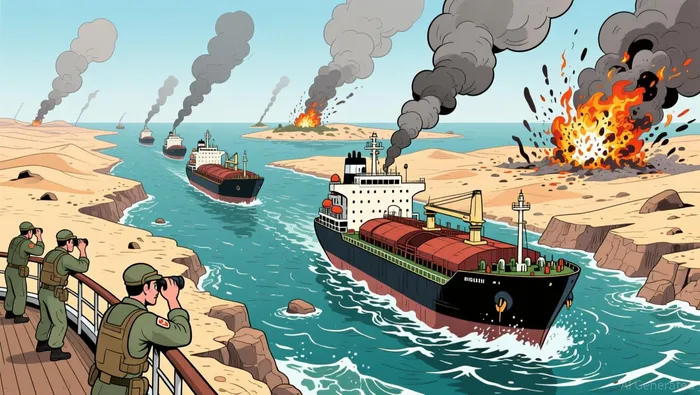
The ongoing conflict in the Middle East has sent shockwaves through the global economy. Following the U.S. and Israeli military action against Iran on February 28, Brent crude oil prices soared by nearly 50%, briefly surpassing $120 per barrel. This dramatic rise was triggered by the near shutdown of the Strait of Hormuz, which disrupted almost 20% of the world's oil supply. As a result, the U.S. dollar has emerged as the preferred safe-haven asset, outperforming traditional refuges like the Swiss franc and Japanese yen. The dollar's resilience is largely due to America's energy independence, which insulates it from the worst inflationary pressures, and the appeal of its robust financial markets to investors seeking security.
However, the dollar's newfound strength is creating a complex and unstable environment. Because the dollar is central to global trade and debt, its appreciation puts pressure on worldwide economic growth, particularly in emerging markets. A stronger dollar tightens financial conditions, reduces overseas profits for U.S. companies, and increases the burden on those with dollar-denominated loans. This creates a paradox where the asset investors rely on for safety can also hinder the very economic growth they hope to preserve.
Markets are beginning to reflect this tension. Although the dollar index reached a ten-month peak earlier this month, it has shown signs of softening recently, with some analysts observing a shift in market sentiment. As major central bank meetings approach, traders are weighing the dollar’s safe-haven status against its potential to slow growth. The recent oil shock has upended the pre-conflict economic outlook, prompting a reassessment of the dollar’s future and the inflation trends that will shape central bank decisions for the rest of the year.
Central Banks: Adopting a More Cautious Approach
The surge in oil prices has forced central banks to reconsider their strategies, leading to a more cautious and restrictive policy stance. Expectations for Federal Reserve rate cuts have been scaled back, with markets now anticipating only about one 25 basis point reduction this year—a significant retreat from earlier, more optimistic forecasts. The European Central Bank is also now seen as more likely to raise rates in 2026, a reversal from the previous expectation of a possible rate cut before the conflict erupted.
This shift toward tighter policy is driven by a clear priority: controlling inflation. Federal Reserve Chair Jerome Powell has emphasized that any rate cuts will depend on clear progress in reducing inflation. With energy costs climbing and producer prices remaining high, central banks are focused on containing inflationary risks. Recent data showing stronger-than-expected U.S. producer prices has further reinforced the Fed’s cautious stance.
In summary, the oil shock has reset the policy outlook. For the Federal Reserve, this means an extended pause in rate changes, with official projections likely to confirm the market’s reduced expectations for cuts. The European Central Bank may even consider additional tightening. This policy environment is less favorable for risk assets and economic growth, adding to the pressures already created by a strong dollar. However, if the oil shock leads to a significant slowdown in global growth, central banks may face a difficult choice between fighting inflation and supporting the economy.
Commodities: Short-Term Spikes Versus Long-Term Trends
The recent oil shock has caused a sharp divergence between immediate price movements and longer-term expectations. In the near term, strong momentum and heightened risk aversion have driven Brent crude well above typical forecasts, with prices jumping nearly 50% since the conflict began and briefly approaching $120 per barrel. The market is reacting to fears of ongoing supply disruptions and geopolitical instability, with some analysts now considering the possibility of prices reaching $150 or even $200 per barrel if the situation worsens.
Despite these dramatic spikes, many experts view them as temporary. For example, Goldman Sachs expects Brent to average over $100 per barrel in March, but anticipates a gradual decline to the low $70s later in the year if the crisis is contained. Their models show that a prolonged two-month closure of the Strait of Hormuz could raise the fourth-quarter average from $71 to $93 per barrel, highlighting how sensitive forecasts are to ongoing disruptions. Ultimately, the expectation is for prices to return to a lower, more sustainable level, with current highs seen as unsustainable deviations from the norm.
Overall, the combination of tighter monetary policy and a robust dollar suggests a bearish outlook for commodities over the medium term. This creates a clear conflict: while the economic cycle points toward lower prices, the current shock is keeping them elevated. Recent volatility, with Brent swinging from highs near $120 to around $107, illustrates this tug-of-war. Although fundamental forces like real interest rates and global growth are expected to eventually drive prices lower, the journey is likely to be turbulent, with repeated tests of the market’s upper limits.
Key Drivers and Risks: Navigating Toward a New Economic Balance
The outlook for the global economy now depends largely on how long and how severe the oil supply disruption proves to be. Each day, markets react to developments in the conflict. The main risk is clear: if the Strait of Hormuz remains blocked and regional oil output stays limited, inflationary pressures will persist, forcing central banks to maintain a hawkish stance. According to Goldman Sachs, this could push the average price of Brent to $93 per barrel in the fourth quarter and keep real interest rates high, reinforcing a strong dollar and putting continued strain on global growth.
The biggest threat to this scenario would be a rapid easing of tensions. A ceasefire or diplomatic breakthrough could cause oil prices to fall sharply, reversing inflation trends and prompting central banks to reconsider their policies. Recent market moves highlight this sensitivity: after Brent neared $120, it retreated to about $107 following comments from U.S. and Israeli officials hinting at a possible resolution. This volatility underscores the market’s forward-looking nature. A swift end to the conflict would likely bring down commodity prices and reduce the dollar’s safe-haven premium, potentially loosening financial conditions quickly.
On the other hand, even if prices retreat from their recent highs, they may settle at a new, elevated baseline. Goldman Sachs still expects Brent to average over $100 per barrel in March and $85 in April. If oil remains expensive throughout much of 2026, the global economic environment will shift, with higher real interest rates and a stronger dollar becoming the norm. This would delay or even prevent a return to the pre-shock equilibrium in the low $70s, establishing a new, more inflationary landscape for the remainder of the year. The challenge for markets is to navigate from the current period of shock-induced volatility toward this uncertain new normal.
Disclaimer: The content of this article solely reflects the author's opinion and does not represent the platform in any capacity. This article is not intended to serve as a reference for making investment decisions.
You may also like
Rivian and Uber: Introducing a Revolutionary Collaboration in Robotaxi Services

OFX Group Encounters Key $0.575 Support Challenge Amid Index Exit and Weak Performance Driving Decline

Hybe’s BTS Return May Signal a Strategic Move as Online Buzz Faces Profit-Taking Challenges

Trending news
MoreCrypto prices
More





