
The oil market is navigating unfamiliar territory and raising concerns for Europe

Energy Markets Face Unprecedented Upheaval Amid Middle East Conflict
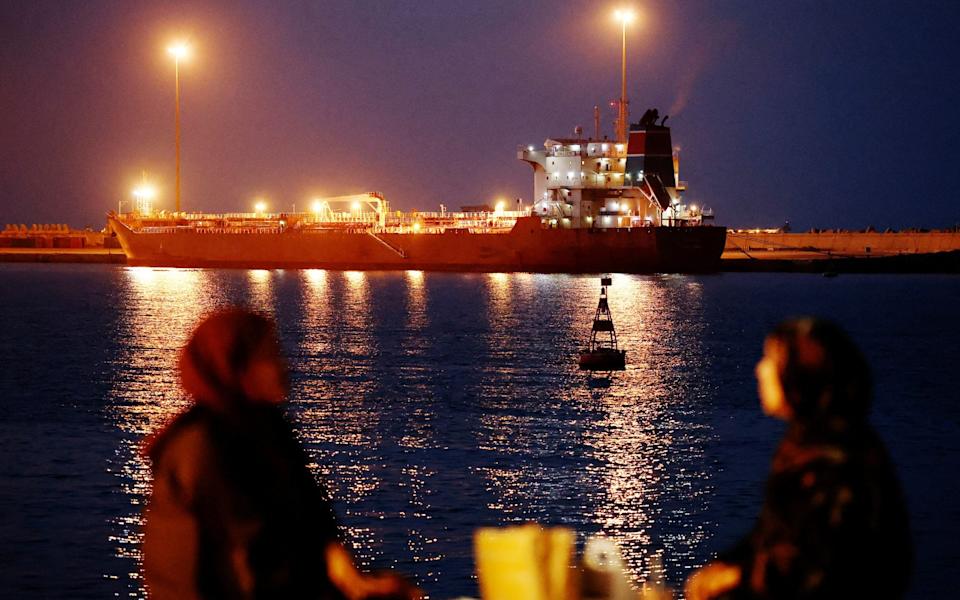
According to Bank of America, if the Strait of Hormuz remains blocked for ten weeks, Europe's TTF gas contract could soar to €500 this winter.
Global Oil Prices Break from Tradition
For a long time, oil prices around the world moved in tandem, reacting predictably to changes in supply and demand. However, the recent military actions by the US and Israel against Iran, along with the closure of the Strait of Hormuz, have shattered this balance.
Recently, oil prices have diverged dramatically, creating uncertainty in the markets and raising concerns for Europe. Experts warn that the $160 per barrel price for Middle Eastern crude signals a market in turmoil and hints at challenging times ahead for the UK.
Major Oil Benchmarks Drift Apart
Dubai crude, along with Brent and West Texas Intermediate (WTI), is one of the world’s key oil price indicators. Typically, these benchmarks are closely aligned. Before the conflict, all three hovered near $70 per barrel. Now, each trades at a distinct price, with US oil significantly cheaper than its European and Middle Eastern counterparts.
This rare disconnect has surprised even seasoned industry observers. Tom Kloza, a veteran oil analyst, notes, “Global energy markets are navigating uncharted territory. No one was ready for this, and there’s no established guide for managing the situation.”
- Brent crude, the standard for UK and European oil, has surged to about $111 per barrel.
- WTI, the US benchmark, lags behind at $98, a gap that usually sits around $3.
- Dubai oil, prized for its quick delivery, has skyrocketed to $160 per barrel and continues to climb.
This marks the largest price gap between Middle Eastern and Western oil in years, prompting questions about the underlying causes and the impact on energy costs at home.
Refinery Constraints and Global Impact
Analysts from Goldman Sachs and others attribute the spike in Dubai crude prices to urgent demand from Middle Eastern and Asian refineries, many of which are designed exclusively for this type of oil and cannot process Brent or WTI.
Greg Newman, CEO of London-based Onyx Capital, explains that oil is shipped globally to wherever prices are highest, meaning these elevated prices will soon affect Europe as well.
He warns that rising energy costs will ripple through the broader economy, increasing food prices and fueling inflation and higher interest rates. Both Newman and Goldman Sachs caution that a prolonged conflict could force the US to limit exports, potentially triggering another wave of price hikes.
Although the US government has currently ruled out such restrictions, concerns persist that this stance could change if the conflict drags on. “If the US halts exports, Europe will face severe challenges,” Newman adds.
Potential for Prolonged Disruption
Ed Crooks from Wood Mackenzie highlights that the most telling statistic is the number of ships passing through the Strait of Hormuz. In peacetime, 150 to 175 vessels transit daily, but that figure has dropped to just eight to ten per day, according to VesselTracker data.
While some oil still leaves the Gulf via alternative routes, these channels can only handle a fraction of the usual volume, ensuring that shortages will persist and the supply gap will widen.
Crooks suggests that a sustained disruption at Hormuz could push oil prices to $200 per barrel, surpassing the 2008 peak of $147 (equivalent to about $241 today when adjusted for inflation). Some analysts believe even this record could be exceeded if the shutdown continues, given the scale of lost supply.
- Global oil demand is approximately 104 million barrels per day, with the Gulf conflict removing nearly 20% of needed supply.
- Worldwide gas consumption is just under 12 billion cubic meters daily, with about 13% traded as LNG and a fifth produced in the Gulf.
Although the Gulf’s share of global gas is relatively small, the situation still has significant implications for prices.
Global Gas Prices Under Pressure
Norbert Rücker, head of economics at Julius Baer, cautions against assuming gas prices will be less affected. The ability to liquefy and ship gas worldwide has transformed regional markets into a global system, meaning even minor shortages can drive up prices everywhere.
He notes, “As tensions escalate and uncertainty grows, energy prices are likely to remain elevated, and the risk of political interventions—such as trade restrictions—could prolong the spike.”
Saad al-Kaabi, CEO of QatarEnergy, recently reported that Iranian strikes have disabled two of Qatar’s 14 LNG processing units and one of its two gas-to-liquids plants, reducing annual liquefaction capacity by nearly 13 million tons for the next three to five years.
Ed Cox of ICIS predicts that gas shortages will persist globally until at least May, with price impacts potentially lasting for years. European gas prices, which were below €30 per megawatt-hour in January, have now doubled to €60.
America’s Energy Advantage
While energy prices have surged in Europe and Asia, Americans are paying much less. WTI remains below the highs of Brent and Dubai, and US gas prices are also significantly lower. UK and European gas prices are at €60 per MWh and could reach $120, while US prices remain under €10.
“America enjoys a privileged position in energy, thanks to its shale oil and natural gas resources,” says Kloza. “There’s a $60 gap between those with domestic supplies and those reliant on imports from the Persian Gulf.”
Former President Donald Trump summed it up: “When oil prices go up, we make a lot of money.” Analysts estimate that US LNG companies could earn over $1 billion in extra profits each week due to the global price surge. If the conflict lasts four months, windfall profits could reach $33 billion, and over eight months, more than $100 billion—representing a significant transfer of wealth from Europe and Asia to the US.
Despite this, Americans are still experiencing higher costs at the pump, with fuel prices rising 33% in the past month. Yet, compared to the UK, where diesel is up 21% and petrol 10.5%, Americans still pay about half as much to fill their tanks. If the conflict continues, energy costs in Europe could climb even higher.
Disclaimer: The content of this article solely reflects the author's opinion and does not represent the platform in any capacity. This article is not intended to serve as a reference for making investment decisions.
You may also like
Cardinal Infrastructure’s Competitive Edge Is Challenged as Market Anticipates Future Expansion

Zebec Network (ZBCN) Price Prediction: ZBCN Jumps 21% After Breakout as Bulls Eye $0.003

Trending news
MoreCrypto prices
More





