
China’s Oil Imports from Iran: Discounted Supply and Its Influence on Market Prices

China’s Oil Imports from Iran: Shifting Dynamics and Market Implications
Iran’s oil exports have dwindled to a narrow, discounted route, with nearly all maritime shipments through the Strait of Hormuz coming to a standstill. The only exceptions are a few tankers delivering oil to China and India, positioning Beijing as the primary recipient. China now receives approximately 1.4 million barrels daily, accounting for 80% to 90% of Iran’s total oil exports.
These shipments are secured under a long-term agreement at reduced prices. Iranian Light crude sent to China has been sold at a discount of $8 to $10 per barrel compared to Brent, thanks to a 25-year deal signed in 2021. This arrangement has been a crucial cost advantage for Chinese refiners, especially the independent “teapot” refineries in Shandong province.
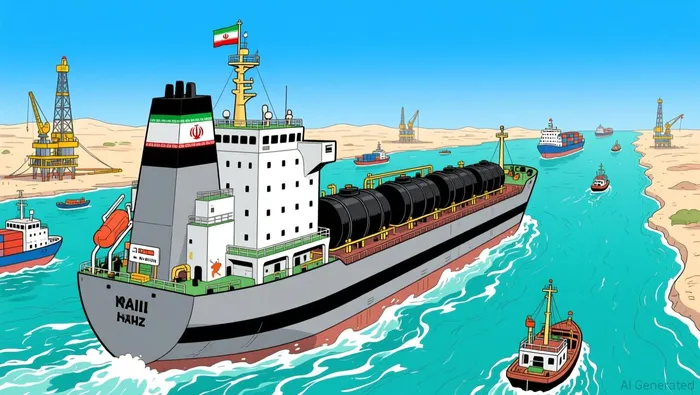
However, this supply route now faces significant threats. Recent US and Israeli attacks on Iran’s Kharg Island oil facilities have inflicted major infrastructure damage, halting both production and exports. This disruption directly undermines China’s long-standing access to discounted Iranian oil.
Price Effects and Market Response
Despite the severe blow to Iran’s export infrastructure, the immediate effect on oil prices has been limited. Brent crude has hovered around $67–68 per barrel—well above the EIA’s 2026 projection of $58—reflecting ongoing risk premiums but not a dramatic surge. The global market has managed to absorb the potential supply gap, partly due to alternative sources such as Russia.
The main challenge now is the cost of finding replacement barrels. Chinese refiners must source 1–1.4 million barrels per day elsewhere, which puts upward pressure on global prices as China competes for alternative supplies. Some analyses suggest that a disruption of this magnitude could drive crude prices up by $10–12 per barrel.
While overall market liquidity remains intact, the collapse of the discounted supply channel forces Chinese refiners—especially the “teapots”—to pay more for crude. The financial advantage they once enjoyed has vanished, shifting higher costs onto importers and potentially squeezing refining margins worldwide.
Key Risks and Financial Triggers
The duration of the Strait of Hormuz closure is the immediate concern. If the shutdown extends beyond three months, China’s strategic oil reserves will be put to the test. The country has been stockpiling, with imports rising 15.8% in January and February as a precaution. Still, the loss of discounted Iranian crude means China must draw down these reserves and seek more expensive alternatives.
A further escalation could have lasting consequences. Continued attacks on critical sites like Kharg Island may permanently cripple Iran’s export capacity, severing the discounted supply channel for good. With the US and Israel already targeting these facilities—and Iran threatening retaliation against any US-linked infrastructure—the risk of a permanent cutoff grows, which would further raise costs for Chinese refiners and tighten margins globally.
As the situation unfolds, market attention will focus on how quickly China depletes its reserves and how independent refiners adapt. The loss of cheap Iranian oil puts direct pressure on the “teapot” refineries, challenging their profitability, while the broader market faces higher prices as China seeks new suppliers.
Disclaimer: The content of this article solely reflects the author's opinion and does not represent the platform in any capacity. This article is not intended to serve as a reference for making investment decisions.
You may also like
Top 2 AI Growth Stocks Worth Buying Following Nvidia's Recent Decline

Ensign’s Leadership Bottleneck Could Cap 2026 Growth Ambitions Despite Strong Momentum

Graham Holdings Trade Update: Market Overlooks Resilient Cash Flow Strength Amid Impairment-Related Decline

Trending news
MoreCrypto prices
More





