
Trump States US May ‘Scale Back’ Military Operations Against Iran

Trump Signals Possible Reduction in US Military Actions Against Iran
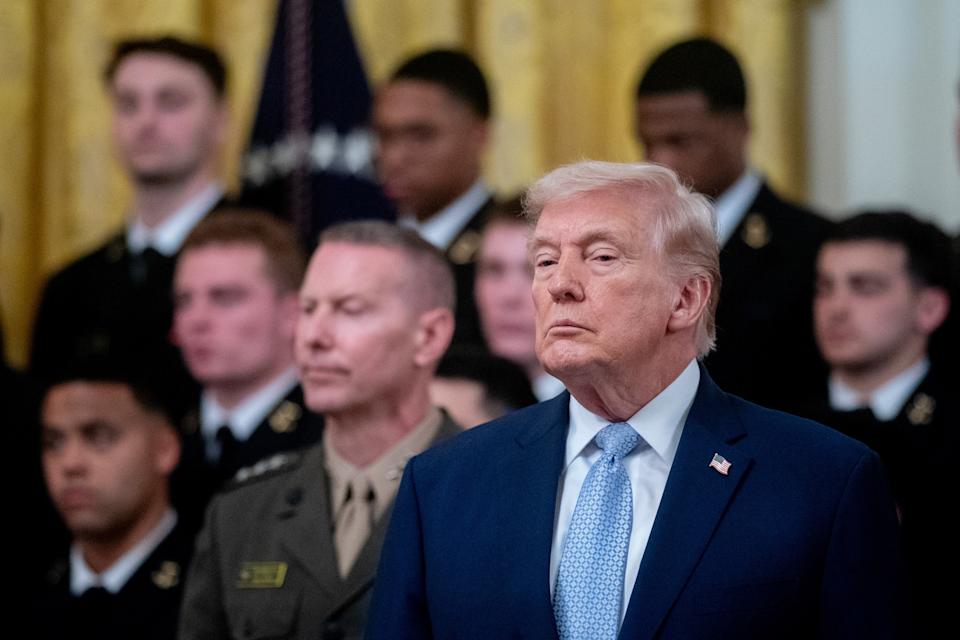
Photo by Stefani Reynolds/Bloomberg
President Donald Trump has indicated he may scale back US military operations targeting Iran, stating that American forces are nearing their strategic goals as the conflict approaches its fourth week and continues to impact both regional stability and global financial markets.
In a Friday social media post, Trump remarked that the US is close to fulfilling its mission in the Middle East. He outlined these objectives as severely weakening Iran’s missile arsenal, dismantling its defense industry, neutralizing its navy and air force, preventing Iran from developing nuclear capabilities, and safeguarding US allies in the region.
Top Stories from Bloomberg
Despite suggesting a possible reduction in military activity, Trump recently dismissed the idea of a ceasefire and left open the possibility of deploying ground troops, underscoring the mixed signals surrounding US and Israeli actions against Iran.
The response from Iran remains uncertain, especially after recent US strikes on its energy infrastructure and the deaths of prominent officials, including security chief Ali Larijani. Iranian leaders have shown reluctance to discuss reopening the Strait of Hormuz, continuing to retaliate against Gulf Arab states.
Trump also commented on the Strait of Hormuz, a vital route for about 20% of the world’s oil and gas shipments, which has been largely closed since the conflict began. He has urged allies to help secure the strait but indicated that other nations should take the lead in protecting it moving forward.
He stated, “Other countries that rely on the Hormuz Strait should be responsible for its security. The United States will assist if requested, but once Iran’s threat is eliminated, it should be a straightforward operation for them.”
Trump’s stance that nations most dependent on Middle Eastern energy should oversee the strait’s security overlooks the global nature of oil markets.
Although the US is producing record amounts of oil, global pricing means disruptions in the strait affect consumers worldwide, including Americans. While the US may be less vulnerable to physical supply interruptions, it is still exposed to price fluctuations.
Market Turbulence and Political Developments
Trump’s remarks capped a volatile day in financial markets, following reports that Iran’s leadership is refusing to negotiate over the Hormuz Strait and that the US is considering deploying ground troops.
Earlier coverage: Iran Unwilling to Talk About Hormuz as Regime Digs In
Oil prices surged on Friday, with Brent crude closing above $112 per barrel—the highest since mid-2022. Prices later eased to around $108 after Trump’s comments about possibly ending the conflict.
Global stock markets continued to decline, with US equities dropping nearly 2% for the week. Treasury yields rose as traders anticipated a 50% chance of a Federal Reserve rate hike by October, while gold experienced its worst week in forty years.
Just over an hour before his social media post, Trump rejected the idea of a ceasefire, expressing confidence that the Hormuz Strait would reopen without external help.
He said, “I don’t want a ceasefire. You don’t call for a ceasefire when you’re decisively defeating the opposition. That’s not our intention.”
Trump has shown increasing frustration as allies have declined to assist with securing the waterway, criticizing partners such as NATO and China.
He commented, “NATO could help, but so far they haven’t shown the resolve. Others could assist, but we don’t rely on them. Eventually, the strait will reopen on its own.”
The administration’s consideration of a ground operation has added to market uncertainty. Trump was noncommittal when asked about plans for Kharg Island, Iran’s main oil export terminal. US officials report that hundreds of Marines may be sent to the Middle East as the White House weighs options to seize the facility.
Trump remarked, “I might have a plan, or I might not. But I wouldn’t disclose that to a reporter.”
Any move to capture Iran’s energy assets with ground forces would increase risks for US troops and expand the scope and cost of the campaign.
The Pentagon has requested an additional $200 billion from Congress to fund the war, raising questions about how long the conflict may continue. Western intelligence suggests Iran’s government remains stable, with officials rallying around remaining leaders.
Rising fuel prices present another challenge for Trump and the Republican Party ahead of the November midterm elections. US gasoline and diesel prices have reached their highest levels since 2022, with California regulators warning against price gouging as some stations charge up to $8 per gallon.
Reporting assistance by Jennifer A. Dlouhy.
Most Read from Bloomberg Businessweek
©2026 Bloomberg L.P.
Disclaimer: The content of this article solely reflects the author's opinion and does not represent the platform in any capacity. This article is not intended to serve as a reference for making investment decisions.
You may also like
Helium Supply Shock: Price Doubles, Shortages Loom
Oracle’s $553 Billion Pipeline: Treasure Trove or Illusion? Latest Earnings Provide the Verdict.
Scatec Encounters "Sell the News" Threat with Tunisian Expansion Already Reflected in Valuation

Trending news
MoreCrypto prices
More





