
Keir Starmer Faces Leadership Threat Amid Labour Unrest and Energy Turmoil

Mounting Challenges for Prime Minister Starmer
Prime Minister Keir Starmer is currently facing mounting pressure from both international and domestic fronts, each posing a significant threat to his leadership. On the world stage, Starmer has issued a grave warning: the ongoing conflict with Iran increasingly endangers the UK economy. This is not a distant geopolitical issue but a direct challenge to the government's ability to shield the country from external economic shocks.
At home, Starmer is contending with a major internal rebellion. Anas Sarwar, leader of Scottish Labour, has moved to unseat him in a last-ditch effort to revive his campaign for Holyrood. The political landscape is fraught, with parties briefing against each other and the SNP capitalizing on Labour's internal strife ahead of the May elections. Figures such as Shadow Scottish Secretary Andrew Bowie have accused Starmer of desperately holding onto power, exposing the party’s deep divisions.
Recent polling underscores the severity of the crisis: Labour has fallen to a record low in the polls, ranking fourth with just 17% support. This unprecedented drop has fueled speculation about a possible leadership challenge, with names like Wes Streeting circulating as potential successors. The combination of economic uncertainty and party infighting is creating the perfect storm for a leadership test under pressure.
Such dual crises are not new in British politics. Historically, major international events have often exposed domestic weaknesses, turning internal party unrest into open crises. With external threats mounting and internal support waning, Starmer must now navigate these turbulent waters to maintain his grip on power.
Economic Risks: Inflation and Energy Dependency
The economic fallout from the Middle East conflict is becoming increasingly apparent. Oil prices have surged to around $114 per barrel, putting further strain on the UK’s persistent inflation. The latest figures show the Consumer Prices Index including owner occupiers' housing costs (CPIH) at 3.2% for the year to January—lower than the previous month but still well above the Bank of England’s target. With energy costs rising, a reduction in interest rates is unlikely in the near term.
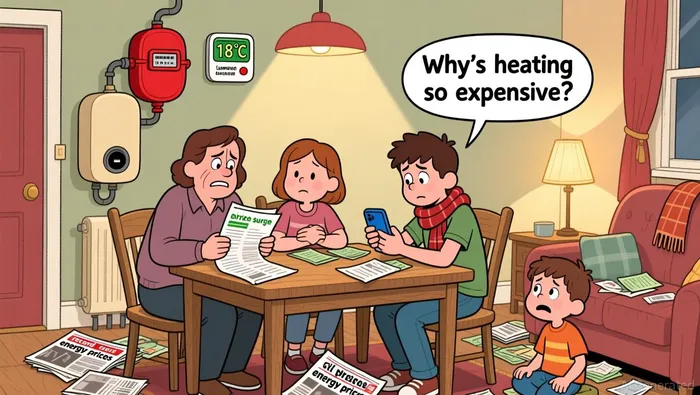
The UK’s energy system makes it particularly susceptible to global price shocks. The country has limited gas storage capacity, leaving it exposed when supplies are disrupted. Additionally, about 85% of UK households depend on gas for heating, directly linking international gas prices to domestic energy bills. Any disruption in supply is felt immediately and acutely by consumers.
Government Measures and Short-Term Relief
In response to these vulnerabilities, Chancellor Rachel Reeves has introduced a 7% cut to the energy price cap in April, offering households an average saving of £150. While this measure provides immediate relief from price volatility, Starmer has acknowledged that it only offers temporary protection; the broader economic risks from a prolonged conflict remain unresolved.
Market Response and Political Uncertainty
Despite these interventions, the government has struggled to reassure financial markets or reduce political risk. UK borrowing costs have soared to their highest levels since 2008, reflecting investor concerns about rising government debt and the possibility of further interest rate hikes to combat imported inflation. The energy cap reduction, while helpful for households, does little to address the underlying fiscal instability driving up borrowing costs.
This financial unease has forced ministers into a reactive posture. Starmer’s team is reportedly developing a new economic plan to address public discontent, but this appears to be a defensive adjustment rather than a proactive strategy—raising doubts about the government’s long-term vision.
Public sentiment remains deeply pessimistic. Many Britons view the United States as a threat, and there is broad skepticism about deeper UK involvement in the Middle East. Economic anxiety is widespread: six in ten expect conditions to deteriorate, and most believe living costs have risen sharply. This lack of confidence extends across party lines, with many voters doubting any party’s ability to manage the economy effectively.
Ultimately, the government’s response amounts to a series of short-term fixes for a long-term structural problem. The spike in borrowing costs signals that markets remain unconvinced, and the government’s hurried economic review suggests a lack of preparedness. With public trust at a low ebb, any misstep could quickly destabilize the fragile situation.
Key Events Ahead: Leadership at a Crossroads
The next few weeks will be critical in determining whether Starmer can regain control or if the internal rebellion will succeed. Three upcoming events will be especially telling:
- Energy Price Cap Reduction: The 7% cut in the energy price cap for April is a direct test of the government’s promise to address the cost of living. If households do not see the expected £150 savings, or if inflation continues to erode purchasing power, the government’s credibility will suffer.
- Scottish Elections in May: The upcoming Scottish elections will serve as a referendum on Starmer’s leadership. Anas Sarwar’s challenge is a bid to revive Scottish Labour, but the results will reveal whether the party remains united or fractures further. A strong showing could signal a break from Westminster, while a poor result may embolden Starmer’s critics.
- Market and Public Reaction to the Conflict: Ongoing reactions to the Middle East crisis will indicate perceptions of the UK’s strength. Statements such as "Britain 'too weak and puny' to get involved in Iran war" highlight concerns about strategic weakness. If the conflict drags on and the UK’s response is seen as inadequate, economic and political instability could intensify, further undermining Starmer’s position.
Starmer’s path forward is narrow. The government must deliver on energy relief, maintain party unity through the Scottish elections, and project strength on the international stage. Failure in any of these areas could turn internal dissent into a full-blown leadership crisis.
Disclaimer: The content of this article solely reflects the author's opinion and does not represent the platform in any capacity. This article is not intended to serve as a reference for making investment decisions.
You may also like
Meta’s AI Pivot Could Justify the Burn—But Time Is Tight
Day One Biopharma Jumps 65% Following $2.5B Acquisition by Servier—Arbitrage Gains May Be in Jeopardy

Bull of the Day: Nvidia (NVDA)
Trending news
MoreCrypto prices
More





