
Aelis Farma's CB1-SSi Platform Faces Make-or-Break Test in Down Syndrome Phase 2B Trial

The launch of the Phase 2B trial is the first major test of a new therapeutic infrastructure. Aelis Farma is building on a first-principles approach: AEF0217 is a first-in-class Signalling Specific inhibitor of the CB1 receptor (CB1-SSi), targeting a core biological pathway distinct from current symptomatic care. This isn't just another drug; it's an attempt to establish a new class of medicine for neurodevelopmental disorders. The company's platform thesis hinges on proving this CB1-SSi mechanism can translate into meaningful clinical benefit where none exists today.
The Phase 2B trial (AEF0217-201) is a multinational, dose-finding study expected to enroll 188 participants with Down syndrome aged 16 to 32 years. The successful start of recruitment, announced earlier this month, marks a critical execution milestone. The first patient first visit was performed in December 2025, and screening is now actively progressing. The trial's design is to confirm and extend the promising Phase 1/2 data, with preliminary results should be available around mid-2027. For the platform to gain credibility, this trial must validate the initial signal in a larger, more diverse cohort.
Financially, the company has built a necessary buffer. The company has implemented several measures that extend its cash runway up to beginning of 2028. This runway provides the critical time and stability to fund this pivotal trial without immediate pressure for external financing. It allows the team to focus on clinical execution rather than fundraising.
The bottom line is that a successful Phase 2B is a necessary step to validate Aelis Farma's CB1-SSi platform as a potential infrastructure layer for treating neurodevelopmental disorders. However, its long-term viability depends on proving exponential adoption potential in a large, aging target population. The trial is the first proof-of-concept for that paradigm shift.
The Market Infrastructure: Size, Adoption, and Exponential Potential
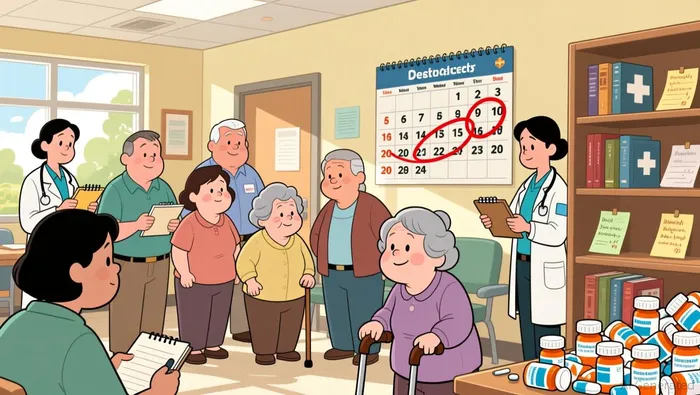
The platform's long-term viability depends on proving exponential adoption potential in a large, aging target population. The initial Down syndrome market provides a critical first test, but its scale hints at a much broader infrastructure opportunity. In the United States alone, the market for Down syndrome treatments was approximately USD 241 million in 2023. This figure, while substantial, is just the starting point. The underlying population is both sizable and growing. Down syndrome affects about one in 650–1000 live births worldwide, and crucially, improvements in medical interventions have led to a substantial increase in longevity, with life expectancy now in the 60s. This creates a larger, aging cohort at significant risk for dementia.
This demographic shift is the key to exponential potential. Virtually all adults with Down syndrome show neuropathological changes of Alzheimer's disease by age 40, due to the overexpression of the amyloid precursor protein gene on chromosome 21. This makes them a unique and high-risk population for neurodegeneration. A successful CB1-SSi platform could address this core pathway, potentially offering a disease-modifying therapy for cognitive decline. If the mechanism proves effective, it would represent a paradigm shift from current symptomatic treatments to a therapy targeting the underlying biological cascade.
The bottom line is that the market infrastructure for Aelis Farma's platform is built on two exponential curves: the rising prevalence of Down syndrome due to better survival, and the predictable, age-dependent onset of dementia in that population. The initial Phase 2B trial in Down syndrome is the essential proof-of-concept for this infrastructure. Success here would validate the CB1-SSi mechanism and open the door to treating a much larger population suffering from neurodevelopmental and neurodegenerative disorders. The company is building the rails for a new therapeutic paradigm, and the scale of the target population suggests the adoption curve could be steep if the platform delivers.
The Platform's Exponential Horizon: Beyond Down Syndrome
The initial focus on Down syndrome is a necessary proof-of-concept, but the long-term infrastructure value of Aelis Farma's CB1-SSi platform hinges on its ability to treat a wider range of conditions. The company's research platform has already enabled early development and preclinical proof-of-concept of a new family of CB1-SSi with distinct and complementary characteristics to its lead candidates. These new molecules target obesity and associated metabolic disorders, as well as other CB1-related brain diseases. This diversification is critical. It suggests the CB1-SSi platform could be an infrastructure layer for treating a spectrum of CB1-related brain and peripheral diseases, not just neurodevelopmental disorders.
This broader potential directly connects to the thesis of exponential adoption. The initial Down syndrome market provides a defined, high-need cohort. But the platform's scalability depends on its applicability to larger, more prevalent conditions. Obesity and metabolic disorders represent a global health crisis with a massive patient population. If the platform's mechanism can be adapted to these conditions, it would dramatically expand the addressable market. The company is effectively building a single therapeutic technology that could be deployed across multiple disease states, each with its own adoption curve.
For the platform to achieve exponential growth, it must demonstrate clinical efficacy across these diverse indications. The primary endpoint for the Down syndrome trial is the Vineland Adaptive Behavior Scales (VABS-3), a key measure for regulatory approval. Secondary endpoints cover cognition, quality of life, and sleep. Success in these measures validates the core mechanism for neurodevelopmental impairment. The same platform could then be applied to metabolic diseases, where efficacy endpoints would naturally shift to weight loss, insulin sensitivity, and other metabolic markers. The underlying infrastructure-the CB1-SSi molecule class and its delivery mechanism-remains the same.
The bottom line is that Aelis Farma is not just developing a drug for one condition; it is building a platform for a new class of medicine. The early preclinical work on obesity-targeting CB1-SSi molecules is the first step toward establishing this infrastructure layer. If successful, it would allow the company to rapidly expand into other CB1-related diseases, accelerating the adoption curve far beyond the initial Down syndrome cohort. The platform's long-term viability is now tied to its ability to prove this versatility.
Execution Risks and Catalysts: The Path to Validation


The successful start of Phase 2B recruitment is a necessary step to validate Aelis Farma's CB1-SSi platform as a potential infrastructure layer for treating neurodevelopmental disorders. Yet the path from this start to a pivotal Phase 3 trial is fraught with specific execution risks and hinges on near-term milestones.
A major risk is the trial's design itself. The Phase 2B study is a dose-finding study, meaning its primary goal is to identify the optimal therapeutic dose for future development. This introduces significant uncertainty. The trial will randomize participants to three different doses of AEF0217 or placebo, and the final decision on which dose to carry forward for a Phase 3 trial will depend on the balance of efficacy and safety data across these arms. A clear dose-response signal is needed, but the design inherently delays the definitive proof of efficacy that would be required for a larger, confirmatory Phase 3.
The primary near-term catalyst is the availability of preliminary results around mid-2027. This timeline is critical. The trial's last-participant-last-visit is anticipated in the first quarter of 2027, with results following shortly after. These preliminary data will determine the path forward. If the results show a statistically significant and clinically meaningful improvement in adaptive behaviors across one or more dose groups, it will validate the platform's mechanism and provide a clear rationale for a Phase 3 trial. If the data are weak or inconsistent, the company may need to pivot its development strategy, potentially delaying the entire infrastructure thesis.
Investors must also watch for recruitment speed and adherence to the Q1 2027 timeline. The trial is designed to enroll 188 participants across 10 specialized centers in France, Italy, and Spain. Delays in screening or enrolling participants could signal operational hurdles or regulatory friction. More importantly, any delay would compress the timeline for data analysis and the subsequent regulatory submissions needed to launch a Phase 3. This is a direct threat to the company's financial runway, which extends only to the beginning of 2028. A prolonged Phase 2B would increase the pressure to seek additional financing before a clear path to a pivotal trial is established.
The bottom line is that the Phase 2B trial is the make-or-break test for Aelis Farma's platform. The dose-finding design is a necessary risk to manage, but it also creates a critical uncertainty. The company's ability to execute flawlessly on recruitment and data collection, hitting the Q1 2027 timeline, is paramount. The mid-2027 results will be the first real signal on whether the CB1-SSi platform can transition from a promising concept to a viable infrastructure for treating neurodevelopmental disorders.
Disclaimer: The content of this article solely reflects the author's opinion and does not represent the platform in any capacity. This article is not intended to serve as a reference for making investment decisions.
You may also like
Crypto market recap: What happened today?
Goldman Sachs Ex-Investment Analyst Predicts XRP Could Hit $1,000

Regulatory red tape ripped away from crypto wallets, granting direct access to derivatives
XRP Price Weakens as ETF Flows Turn Negative

Trending news
MoreCrypto prices
More





