
QuantumScape’s Alpha Leak: EV Profit Loss Transforms into Supply Chain Technology

EV Industry: Financial Challenges and Shifting Strategies
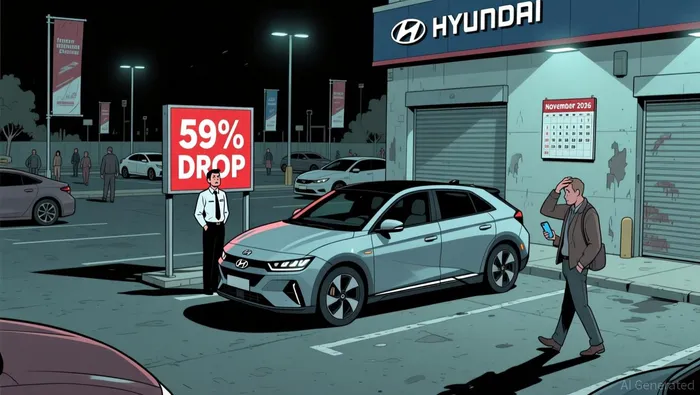
Hard data reveals a tough truth for most automakers: electric vehicles remain a financial drain. The majority of manufacturers are losing between $5,000 and $10,000 on every EV sold, turning the sector into a risky gamble on future economies of scale. This financial strain is compounded by the recent drop in federal tax incentives, which has already led to sharp declines in sales—Hyundai, for example, saw Ioniq 5 sales plummet by 59% in a key month. As the market adjusts, success will not favor those producing the largest vehicles, but those who can adapt to the new landscape.
Where Opportunity Lies: The Supply Chain Advantage
The real potential for returns is shifting away from traditional automakers toward the companies enabling EV technology. Firms such as QuantumScape, which is advancing battery technology, and ChargePoint, which is expanding charging infrastructure, offer exposure to the EV revolution without the same cyclical risks as car manufacturers. The transition is underway, but the path to profitability remains narrow and uncertain.
The Underlying Issue: Why Most EV Stocks Struggle Financially
Impressive sales figures—over 17 million EVs sold in 2024—mask a deeper problem for legacy automakers. For these companies, high sales volumes have not translated into profits. Most continue to lose significant amounts per vehicle, creating a persistent financial drain. Only Tesla and BYD have managed to achieve profitability, leaving the rest of the industry betting on future scale that has yet to be realized.
This lack of profitability is forcing major players like Ford and GM to scale back their EV ambitions and delay new launches, acknowledging that their current strategies are unsustainable. The challenge is not just about future growth, but about stemming ongoing losses that make further investment difficult to justify.
The expiration of federal tax credits has already had a dramatic impact. In November, Hyundai reported that Ioniq 5 sales dropped by 59% compared to the previous year. This sharp decline highlights how dependent demand has been on government incentives. Without these subsidies, many consumers are hesitant, and the value proposition for EVs becomes less compelling.
In summary, the EV market is splitting into winners and losers. Those who can solve the profitability puzzle will thrive, while others will remain trapped in cycles of losses and unpredictable sales. For investors, the most promising opportunities are found in the supply chain, not among the automakers themselves.
Strategies for 2026: Finding Profitable Opportunities
The financial challenges facing EV manufacturers are real, but there are ways to benefit from the sector’s evolution. Here are key strategies for navigating the market in 2026:
- Vertical Integration: Companies that manage their own supply chains and production processes stand to gain. Rivian’s upcoming R2 model launch in the first half of 2026 will be a crucial test. If Rivian can control costs and improve margins through in-house technology, it may break the cycle of losses that plagues the industry. The focus is on building vehicles more efficiently, not just selling more units.
- Invest in the Ecosystem: The real value in the EV market often lies beneath the surface. Companies like QuantumScape are working on solid-state batteries that could revolutionize range, cost, and safety. If successful, they could become essential suppliers to the entire industry. Similarly, ChargePoint is building the infrastructure that supports EV adoption, offering a less volatile investment than carmakers themselves.
- Track State-Level Incentives: As federal support wanes, individual states are stepping in with their own rebates and credits. Democratic-led states are introducing new incentives, such as New York’s increased rebates and Vermont’s $5,000 credit. Companies with strong regional presence or the flexibility to adapt to these programs will have a competitive edge. The policy environment is becoming more fragmented, and success will depend on navigating these local opportunities.
Ultimately, the best opportunities lie with technology providers, cost leaders, and those who can adapt to a patchwork of state policies—rather than with automakers struggling to turn a profit.
Key Events and Risks to Watch in 2026
The outlook for the EV sector is shaped by several pivotal developments and risks. Here’s what to monitor in the coming year:
- Major Milestone: Rivian’s R2 Launch – The launch of Rivian’s R2 model in early 2026 will be a decisive moment. Success in controlling costs and achieving positive margins would validate the vertical integration strategy for EVs. Failure would reinforce concerns about the industry’s profitability challenges.
- Competitive Threat: Chinese Price War – Chinese automakers are aggressively expanding and undercutting prices to capture market share. This intensifying competition threatens margins across the industry, including for leaders like Tesla, and could prolong the period of financial losses for Western manufacturers.
- Policy Landscape: State Incentives – With federal credits reduced, state-level programs are becoming increasingly important. Monitoring which states offer the most attractive incentives and which companies are best positioned to benefit will be crucial for tracking sales momentum and competitive advantage.
In summary: execution on new models, the impact of global price competition, and the ability to navigate a complex policy environment will determine who succeeds in 2026.
2026 Outlook: Slower Growth and Intensifying Competition
The era of rapid, easy growth for EVs is ending. The market is entering a phase of slower expansion and fiercer competition, which will put pressure on profits and reshape the competitive landscape.
- Growth Deceleration: Global EV sales are expected to rise by 19% in 2026, a notable slowdown from the 29% growth seen in 2025. Meanwhile, overall vehicle sales are projected to remain flat, meaning EVs are gaining market share but not expanding the total market. Hybrid vehicles are also gaining popularity, further slowing the adoption of pure electric models.
- Rising Competition from China: Chinese manufacturers are flooding the market with competitively priced EVs, creating intense pressure on Western automakers. This is not just a challenge for established giants, but a direct threat to industry-wide profitability as Chinese firms, led by BYD, leverage global integration and local production to drive prices down.
- Fragmented Adoption: The EV market is highly uneven, with China accounting for about 65% of global EV sales. This creates a patchwork of competition, where success in one region does not guarantee results elsewhere. Western automakers face the dual challenge of catching up in China while managing declining sales in their home markets, requiring more localized and adaptable strategies.
In conclusion, 2026 will be a year of adjustment for the EV sector. Slower growth, tougher competition, and a fragmented market mean that simply increasing sales volume is no longer enough. The most promising opportunities now lie in supply chain innovation and the ability to adapt to rapidly changing market and policy conditions.
Disclaimer: The content of this article solely reflects the author's opinion and does not represent the platform in any capacity. This article is not intended to serve as a reference for making investment decisions.
You may also like

What Will Become of Your Investments If the Stock Market Takes a Nosedive?

Solana Flashing Mixed Signals: $105 Breakout Or Double-Pair Collapse Ahead?

Element Fleet's Rich Valuation Faces Crucial Test as Pullback Exposes Growth Risks
Trending news
MoreCrypto prices
More





