
AFI Group Falls Short on Skin-in-the-Game Criteria as Insiders Remain Inactive and Institutions Keep Quiet

March 2026 AFI Group Shareholder Meetings: What Really Matters
The AFI group is set to conduct its regular shareholder meetings in March 2026. These gatherings are part of their ongoing commitment to transparency, serving as a routine opportunity for shareholders to engage and ask questions. While formal presentations will be delivered across the group’s listed investment vehicles, investors shouldn’t expect new operational revelations. The most meaningful insights are likely to emerge from market activity rather than the scripted stage.
Understanding the AFI Group Structure
The main entities involved—Australian Foundation Investment Co (AFI), Mirrabooka (MIR), Djerriwarrh (DJW), and AMCIL (AMH)—are interconnected listed investment vehicles on the ASX. These are not standalone companies, but rather a tightly coordinated group. The shareholder meetings are largely procedural, intended to maintain regular communication. Savvy investors tend to look beyond these formalities, focusing instead on where insiders and institutions are actually investing their own money. This is the real test of conviction.
Institutional Moves vs. Insider Activity: Where’s the Conviction?
There’s a clear divide in market signals. On one hand, institutional investors are actively accumulating shares in certain companies. On the other, insiders within the AFI group remain notably inactive. This contrast is telling.
Consider Adobe as an example. Despite strong quarterly results, the real story is in the ownership trends. Major funds like Vanguard and State Street have increased their holdings, and IFP Advisors—a smaller but dynamic hedge fund—boosted its stake in Adobe by 113.9% in the third quarter. Such concentrated buying from institutional investors is a bullish indicator, suggesting confidence in the company’s prospects. Institutional ownership in Adobe now stands at approximately 81.8%, reflecting strong belief from large investors.
In contrast, the AFI group’s vehicles—AFI, Mirrabooka, Djerriwarrh, and AMCIL—have not seen similar institutional buying. There are no recent filings from major funds indicating new or expanded positions. This lack of activity is significant, as it signals an absence of broad market confidence.
Even more concerning is the lack of insider investment. The CEO and board members have not purchased shares, and there are no disclosures of insider buying during this period. When executives promote their strategy but don’t invest themselves, it raises questions about their true conviction. The absence of insider buying during a week of scheduled meetings is particularly noteworthy—if leadership genuinely believes in their strategic direction, why aren’t they investing alongside shareholders?
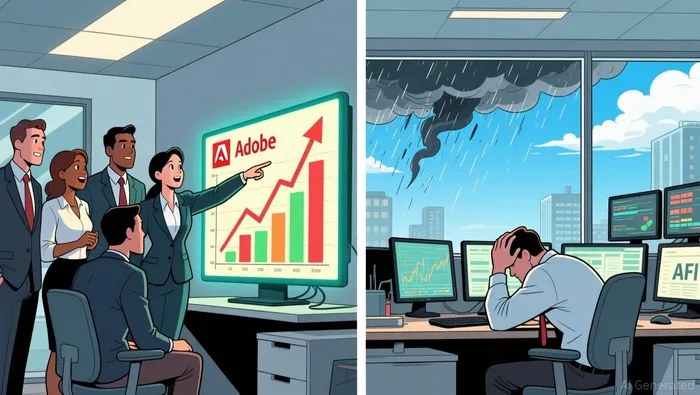
This situation highlights a divergence: while institutional investors are accumulating elsewhere, AFI group insiders remain on the sidelines. For investors, this disconnect is a crucial signal.
Valuation, Income Model, and Upcoming Catalysts
The AFI group’s vehicles operate on a straightforward income-focused model. Djerriwarrh (DJW), one of the largest income-oriented listed investment companies on the ASX, aims to deliver franked income from Australian equities that exceeds the S&P/ASX 200 Index. This is achieved through a blend of dividend growth and option strategies, particularly selling call options to enhance yield. The structure is low-cost and transparent, with shareholders retaining management rights. The group’s scale across AFIC, AMCIL, and Mirrabooka supports this approach.
The main near-term catalyst is the March 2026 shareholder meetings. These events are not intended to provide operational updates, but rather to outline strategic priorities and portfolio positioning. For investors, the most important factor is not the content of the presentations, but whether any insider buying occurs before or after the meetings. If a CEO or board member acquires shares following a positive presentation, it would signal genuine alignment with shareholders.
Until such insider activity is observed, the investment thesis relies on consistent execution. The vehicles are built for stable income, but without evidence of institutional accumulation or insider investment, the question of leadership conviction remains open. The upcoming meetings represent an opportunity to see if management will back their strategy with personal capital. For now, investors are waiting for a clear sign from those most invested in the outcome.
Disclaimer: The content of this article solely reflects the author's opinion and does not represent the platform in any capacity. This article is not intended to serve as a reference for making investment decisions.
You may also like
Palantir Walks a Tightrope: Market Assumes Flawless Execution, Allowing Zero Room for Mistakes


Walmart and Ross Take Distinct Alpha Approaches While Consumer Staples Confront Potential Overbought Pullback

Gulf Airspace Disruptions Force Airlines into Extended Detours, Increasing Costs and Squeezing Profit Margins

Trending news
MoreCrypto prices
More





