
Trump Administration Weighs Increasing Troops to Protect Hormuz—Oil Market’s Geopolitical Jolt Challenges Macro Cycle Limits

Oil Markets Face Major Supply Shock Amid Rising Geopolitical Tensions
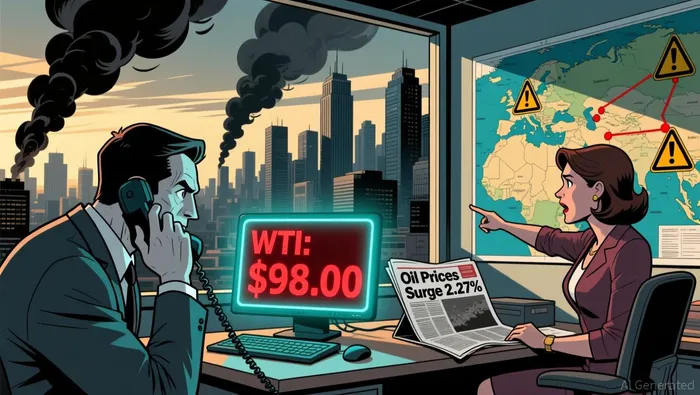
Global oil markets are experiencing significant volatility due to a sudden and dramatic supply disruption. On Friday, WTI crude oil surged by 2.27%, closing near $98 per barrel, while gasoline futures jumped 5.09% to reach their highest level in three and a half years. These sharp increases are closely linked to escalating conflict in the Middle East. The rally intensified following reports that the Trump administration is weighing the deployment of thousands of troops to the region, with objectives that may include securing the Strait of Hormuz or even seizing Iran’s vital Kharg Island oil export terminal. The threat of long-term supply interruptions has become acute. Iranian strikes have already knocked out 17% of Qatar’s Ras Laffan LNG export capacity—a facility that could take years to restore—and have targeted refineries and infrastructure throughout the Gulf.
These geopolitical developments are also fueling a classic flight-to-safety in financial markets. The U.S. dollar index climbed 0.42% on Friday as investors sought refuge from the uncertainty, reflecting fears of a drawn-out conflict. This creates a complex macroeconomic environment: oil prices are spiking due to supply constraints, while the dollar’s strength is adding pressure to global growth and inflation expectations.
With these dynamics in play, the global economy faces a critical test. This external shock will interact with ongoing trends in real interest rates, economic growth, and the trajectory of the U.S. dollar. The key question is whether this surge in oil prices will be short-lived or mark the beginning of a more persistent shift that could reshape the current economic cycle.
Macroeconomic Landscape: Inflation, Interest Rates, and Federal Reserve Challenges
This oil supply shock comes at a time when the Federal Reserve has already tightened its outlook, further limiting its policy flexibility. The Fed recently raised its 2026 PCE inflation projection to 2.7%, up from 2.4% in December, and also increased its GDP growth forecast for 2026 to 2.4%. These adjustments suggest a robust economy but also highlight persistent inflation. As a result, the Fed has less room to maneuver. With core inflation already elevated, a supply-driven rise in oil prices leaves the central bank with little incentive to cut rates aggressively. The updated growth outlook, while positive, does not justify a dovish shift amid rising inflation. The Fed’s projections indicate only one rate cut this year and another in 2027, mirroring its December guidance. However, the higher inflation forecast raises the possibility of a more hawkish approach if price pressures intensify. The central bank is now caught between the need to control inflation and the desire to sustain economic momentum. This cautious, wait-and-see approach is a direct response to the uncertainty caused by the conflict, but it also means the Fed’s options are increasingly limited.
The Fed’s policy constraints are grounded in estimates of the neutral interest rate. According to the New York Fed’s DSGE model, the short-term real natural rate of interest (r*) is projected at 1.6–1.9% for 2026. This rate serves as a benchmark for where policy rates would neither stimulate nor restrain the economy if inflation is on target. With the federal funds rate currently at 3.5%–3.75%, real rates are already positive and within the estimated neutral range. This suggests the Fed is not overly restrictive, but it also means there is little scope for further rate cuts without risking a move into a neutral or negative real rate environment. Should oil-driven inflation accelerate, the Fed may be compelled to keep rates steady or even raise them to maintain a real rate above the neutral threshold.
In summary, the macroeconomic cycle has shifted. The oil shock is not striking a weak economy with low inflation and ample policy space. Instead, it is colliding with resilient growth and a central bank that has already scaled back its easing expectations. This increases the likelihood that the shock will be absorbed through higher prices rather than a swift policy response, potentially extending the period of elevated inflation and tighter financial conditions.
Market Outlook: Price Levels and Economic Constraints
Recent price movements reflect the market’s attempt to digest the shock. As of Wednesday, WTI crude is trading at $98 per barrel and Brent at $110, both well above pre-conflict levels but still below the $100+ range that analysts warned could result from a prolonged war. The market is factoring in considerable risk, but not yet the worst-case scenario. The next phase will be shaped by the macroeconomic constraints now in place.
The main factor limiting further oil price increases is the potential for a more hawkish Federal Reserve. With the Fed already projecting higher inflation for 2026, its ability to cut rates is constrained. If the conflict continues and inflation remains stubborn, the Fed may keep rates unchanged or even raise them to ensure real rates stay above the estimated neutral level of 1.6–1.9%. This would strengthen the U.S. dollar and weigh on global growth, effectively capping commodity prices. The dollar’s recent gains, driven by safe-haven demand, highlight this relationship, as a stronger dollar typically suppresses dollar-denominated oil prices.
However, the key variable for a further breakout is the length of the conflict and the status of OPEC+ production. A drawn-out war that causes lasting damage to Middle Eastern energy infrastructure could remove significant oil supplies from the market. Some analysts warn that such a scenario could drive prices to $120–$130 per barrel. Recent Israeli attacks on Iran’s largest gas and oil facilities have heightened these risks. For now, the market remains cautious, but the upper limit for prices is closely tied to how the geopolitical situation unfolds.

In effect, the market has entered a volatile new range, with the macroeconomic environment acting as a ceiling. The next move will depend on whether the conflict’s duration forces a policy response that the Fed is currently unable to provide. While the trend is upward, the constraints are becoming more pronounced.
Key Factors and Risks: What Will Shape the Next Phase?
Markets are now in a holding pattern, awaiting developments that will determine whether this shock is absorbed or triggers a new, higher-price cycle. Three main factors will be crucial in signaling the next direction:
- Federal Reserve Policy: Watch for any changes in the Fed’s inflation outlook at its next meeting. The central bank has already highlighted the risk of higher inflation due to the conflict and maintained a cautious approach. If the Fed further revises its 2026 PCE inflation forecast upward, it would reinforce a hawkish stance, making rate cuts less likely. This would support the dollar and keep real interest rates high, limiting oil’s upside. The market’s response to the Fed’s next statement will be a key indicator of whether monetary policy remains tight or begins to ease.
- Geopolitical Developments: Monitor any signs of de-escalation in the Middle East, especially regarding the Strait of Hormuz and attacks on energy infrastructure. The main supply risk is tied to the potential for prolonged disruption in this critical region. The recent deployment of additional U.S. troops and naval forces underscores the seriousness of the threat. Any diplomatic breakthrough or reduction in attacks would likely prompt a sharp drop in oil and gasoline prices as the market reassesses the risk premium. However, ongoing statements from Iranian officials that the conflict will persist suggest continued volatility.
- Economic Data: Keep an eye on U.S. and global industrial production figures for evidence of demand destruction due to higher energy costs. The sustainability of the current cycle depends on whether elevated oil prices can be absorbed by consumers and businesses without causing a recession. Signs of slowing manufacturing or construction would indicate that energy costs are beginning to suppress demand, which could eventually put downward pressure on oil prices even if geopolitical risks remain. Conversely, strong industrial output would suggest the economy can withstand higher prices, prolonging the period of elevated inflation and tighter financial conditions.
Ultimately, the future of the cycle will be determined by the interplay of these three forces. The Fed’s policy sets the monetary baseline, the duration of the conflict defines the supply risk, and economic data reveals how much demand can absorb higher prices. For now, the situation remains delicate, but the path ahead will become clearer as these catalysts play out.
Disclaimer: The content of this article solely reflects the author's opinion and does not represent the platform in any capacity. This article is not intended to serve as a reference for making investment decisions.
You may also like
Rachel Reeves confronted with a £20bn setback due to the energy crisis

Chainlink Whale Movements – Trader 0x0833 Nets $169K and Doubles Down on LINK

Carvana's Turnaround Is Real—But Can It Defend Margins and Justify the Premium?

Trending news
MoreCrypto prices
More





