
Lam Research (LRCX) Faces Reality Check as AI Memory Hype Meets Profit-Taking Pressure and Cautious Guidance

Lam Research's story is a classic tale of a stock running ahead of near-term expectations. Year-to-date, shares have climbed about 33%, a stunning outperformance that has left the broader market in the dust. While the S&P 500 has fallen, Lam's rally has been powered by its critical role in the AI memory boom, particularly in high-bandwidth memory (HBM) production. The setup was clear: a key supplier to memory giants like MicronMU-4.81%, which recently signaled massive capital spending, should benefit from a structural buildout. The market has clearly priced in that bullish narrative, driving the stock to new highs.
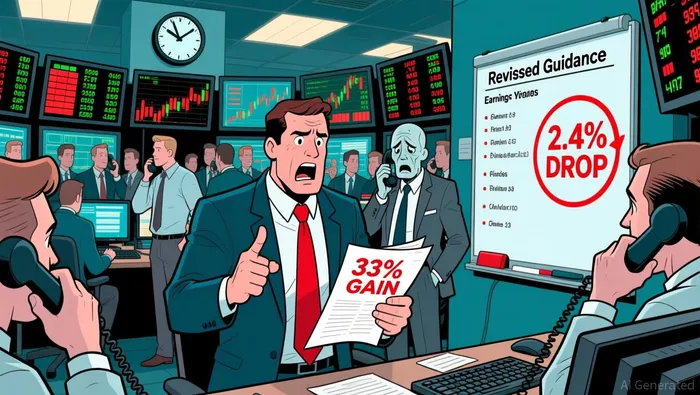
Yet, the recent action suggests a potential reality check. Last Friday, the stock gave back ground with a 2.4% drop to around $228.36, on volume that surged 113% above average. That sharp, high-volume move is a classic signal of profit-taking or a shift in sentiment. It indicates that a stock which has already run so far may be due for a pause, especially if the immediate catalysts-like Micron's spending plans-were already fully anticipated.
The expectation gap here is stark. The 33% YTD gain shows the market's strong conviction in the long-term memory tailwind. But the pullback highlights the risk of "buying the rumor" and "selling the news." Lam's recent quarterly beat and raised guidance were solid, but they may have been the very news that the market had already priced in. The high-volume sell-off suggests some investors are taking profits now, questioning whether the stock can continue its climb without a new, more compelling catalyst. For now, the market seems to be pricing out further easy gains, forcing a reassessment of just how much future growth is already reflected in the share price.
Earnings Reality Check: Beat and Guidance
The recent earnings print delivered a clear beat, but the stock's reaction suggests the market had priced in an even stronger outcome. LamLRCX-2.41% reported Q2 EPS of $1.27, topping the $1.17 consensus by a dime. Revenue also came in above expectations at $5.34 billion, a solid 22.1% year-over-year growth. On the surface, this is a strong report that should support the bullish narrative.
Yet, the stock fell. The key to understanding that disconnect lies in the guidance. For the third quarter of 2026, Lam set an EPS range of $1.25 to $1.45. Analysts view this as a classic "sandbag" strategy-a cautious range designed to manage future expectations and create a floor for potential upside surprises. The market had likely priced in a more aggressive raise, a "beat and raise" scenario that would have signaled even stronger momentum in the AI memory cycle. Instead, the guidance reset the forward view to a more measured pace.
This is a textbook "sell the news" dynamic. The company delivered the good news, but it was the good news that was already fully priced in. The guidance range, while still positive, failed to exceed the whisper number for a significant acceleration. The high-volume sell-off confirms the market's sentiment: the easy gains from the earnings beat were taken, and now the focus shifts to whether the cautious guidance is a prudent reset or a sign of near-term headwinds. The expectation gap has narrowed, leaving the stock to find a new equilibrium.
The AI Demand Engine and Valuation
The fundamental driver for Lam ResearchLRCX-2.41% is clear and powerful: it is a critical supplier to memory manufacturers, directly benefiting from the AI-driven demand for data center storage, particularly high-bandwidth memory (HBM). The company's revenue is tied to the production of these advanced chips, and its recent results show the tailwind in action. For the most recent quarter, memory revenue accounted for 34% of its systems, with DRAM strength specifically supported by investments in HBM and node transitions. Management expects its advanced packaging business, central to HBM production, to expand over 40% in 2026. This makes Lam a pure-play on the memory buildout, a key component of the AI infrastructure boom.
That growth story is reflected in the stock's premium valuation. Lam trades at a forward P/E ratio of 46.99, a multiple that prices in sustained high growth. This is not a cheap stock; it is a growth stock priced for perfection. The market is paying up today for the expectation that AI memory demand will remain robust for years to come. The recent pullback and cautious guidance may be the market's way of testing whether that lofty multiple is justified by the actual trajectory of demand.
Analyst consensus reflects this tension between high growth and high valuation. The stock carries an average rating of "Moderate Buy" with an average price target of $245.35. That target implies about 8% upside from recent levels, which is a measured view. It acknowledges the strong business but also recognizes the high multiple already baked in. The wide range of individual targets-from a $325 high from Susquehanna to a $290 from Wells Fargo-shows the debate over just how much future growth is priced in. For now, the consensus is that the stock has room to run, but the path is likely to be choppier, as any stumble in the AI memory cycle could quickly deflate the premium multiple.


Catalysts and Risks: What Could Close the Expectation Gap
The path forward for Lam Research hinges on a few key catalysts and risks that will determine if the stock can close the expectation gap or if the current run is vulnerable. The next major event is the upcoming earnings report on April 22, 2026. The market will be watching closely for guidance that meets or exceeds the current Q3 EPS range of $1.25 to $1.45. Given the stock's recent pullback and the cautious tone of the last guidance, any move that merely matches that range may be seen as a floor rather than a raise. The real test will be whether management signals a continuation of the strong HBM-driven growth, providing enough conviction to support the premium valuation.
A more fundamental risk looms on the horizon: a cyclical downturn in semiconductor equipment spending. Lam is a bellwether for this cycle, and its fortunes are tied to the capital expenditure plans of its customers. While the AI memory boom is a powerful structural tailwind, the semiconductor industry has historically been prone to boom-and-bust cycles. A slowdown in memory or logic chip investments, driven by inventory corrections or demand softening, could quickly reset growth expectations. The current high valuation leaves little room for error, making the stock particularly sensitive to any shift in the cycle's trajectory.
Adding a layer of sentiment analysis is the recent activity by company insiders. Over the past six months, insiders have made eight sales of stock, with no purchases recorded. This includes significant sales by the CFO and other executives. While insider sales can have various motivations, a pattern of sales at current levels may signal a lack of conviction about the near-term upside, especially when the stock is trading at a premium multiple. It contrasts with the bullish stance of many institutional investors, creating a mixed signal for the market.
The bottom line is that Lam's story is now a game of managing expectations. The next earnings report is the immediate catalyst to watch. The broader risk is cyclical volatility, which could deflate the premium multiple if not managed. And the insider trading activity adds a subtle note of caution. For the stock to continue its climb, Lam must not only meet but likely exceed the already-high bar set by its recent guidance, all while navigating the inherent cycles of its industry.
Disclaimer: The content of this article solely reflects the author's opinion and does not represent the platform in any capacity. This article is not intended to serve as a reference for making investment decisions.
You may also like
Alibaba’s Earnings Fall Short, Highlighting How Pursuit of AI Expansion Comes at the Expense of Profit Margins
Super Micro’s AI Growth Story vs. Scandal Fallout: Is the 123% Revenue Surge Enough to Outrun the Headline Risk?


USDJPY Faces Key Support as Fed's Cautious Stance Clashes with Yen's Underlying Strength

Trending news
MoreCrypto prices
More





